Wikipedia Page for a Doctor, Professor or Researcher: What Notability Requires
Doctors, professors and researchers are judged by different notability standards. What Wikipedia's academic and biography guidelines look for, and what does not count.
Blog
275 posts.
Doctors, professors and researchers are judged by different notability standards. What Wikipedia's academic and biography guidelines look for, and what does not count.
A declined Wikipedia draft can usually be fixed and resubmitted. How to read the decline reason, what a rejection means, and when a draft is better rebuilt than patched.
How WhatsApp marketing works for Indian businesses: the official API, opt-in and DPDP basics, message types, what to automate first, common mistakes and how to measure it.
Three ways to connect WhatsApp to your CRM, which data to sync, and the mistakes that break the integration: phone formats, consent, the 24-hour window and handoff ownership.
A WhatsApp AI agent answers customers in plain language from your own pricing and policies, qualifies leads, books calls and hands off to a person. Here is how it differs from a menu chatbot.
What notability looks like for painters: notable exhibitions, major reviews, independent awards and museum collections, with honest caveats.
Legitimate upkeep means monitoring, sourcing new coverage and proposing talk-page edits. Undisclosed editing and removing criticism are off the table.
Vet an outbound cold email agency on list sourcing, consent and opt-outs, sender identity, and domain setup. A promise of reply or meeting rates is a red flag.
Featured status on Wikipedia is earned through community review, not purchased. Here is how it differs from having a page or being cited, and what to avoid.
An email marketing audit reviews flows, segmentation, cadence, list hygiene, and measurement. Inbox placement is a separate technical review.
An email deliverability audit checks authentication, sending reputation, list quality, complaint signals, and links. It cannot promise inbox placement.
A Wikipedia notability consultant maps independent sources, gives an honest go or no-go, and builds a roadmap for coverage. Here is what that work involves.
A martech stack audit service should return a tool inventory, a data flow map, duplicate and unused tools, integration gaps, and a prioritized fix list.
Hire an email marketing expert by checking sending practice first: list sourcing, opt-outs, and authentication, with a retainer scoped to named deliverables.
Freelance, agency, or in-house: which model fits which kind of subject when you need a Wikipedia writer, and what none of them can promise.
Pick a platform specialist for depth inside one system or an integrator for work across several. Any migration plan needs data mapping, testing, and rollback.
Match the model to your stack: a freelancer for one scoped project, a fractional lead for ongoing ownership, an agency for multi-platform work.
Hire a Klaviyo expert or consultant on verified work: flows you can inspect, a checked Shopify data sync, tracking tests, and changes after live results.
A company gets a Wikipedia page through independent coverage, not its own push. Here is the real path and the sourcing traps that sink drafts.
What a legitimate Wikipedia page creation agency's process must include: notability assessment before pricing, disclosed paid editing, and AfC submission, plus the questions to ask.
Hire a fractional marketing ops lead for project-shaped work like audits, rebuilds, and cleanup. Move to full-time once daily requests need a steady owner.
Answer two questions and get a real recommended tier and price, not a vague industry range: from a one-time audit to a fractional CMO retainer.
Zoho wins on price and app-suite breadth, HubSpot wins on onboarding and marketing-native design. Which one actually fits a growing team, compared honestly.
Wikipedia's paid-editing policy applies to anyone compensated to edit, not just the subject. What disclosure actually requires, and what happens if you skip it.
There's no official fill-in-the-blank Wikipedia page template. What infobox templates actually are, and why generic 'template' drafts get rejected on sight.
Sport-specific notability guidelines for athletes were tightened significantly in recent years, and now generally require real independent coverage too, not just participation.
Subscriber and view counts don't count toward Wikipedia notability for creators: see exactly what does, and get a free eligibility read before you try.
WP:NPOL presumes notability for national and statewide office: see which threshold actually applies to your case, and get a free read before drafting anything.
Nonprofits and NGOs are evaluated under the same strict WP:NCORP standard as companies. Registered charity status carries no notability weight on its own.
WP:NACTOR sets a specific bar for actors and entertainers: significant roles in multiple notable productions, a large fan base, or unique, prolific contributions.
Interakt, WATI, and AiSensy all run on the official WhatsApp Business API but are built for different jobs: shared team inbox, broadcast campaigns, or commerce automation.
D2C consultancy work covers paid social creative velocity, CAC-to-LTV against physical-goods margins, and retention lifecycle, not generic brand marketing.
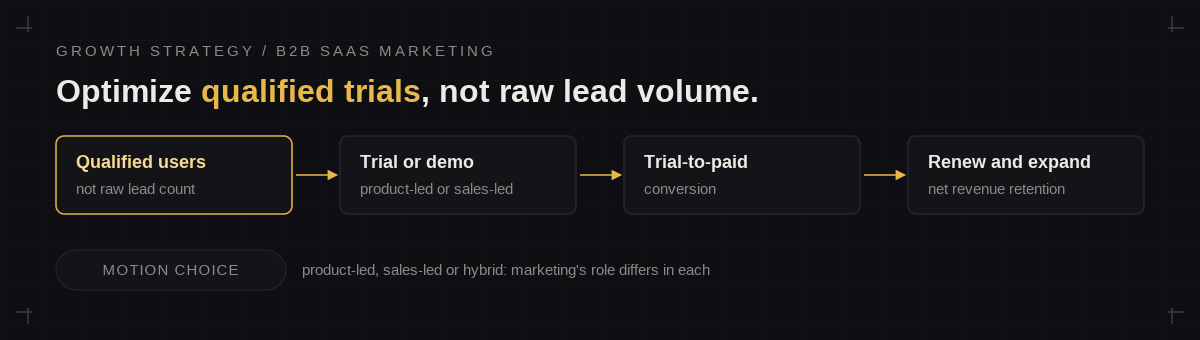
A B2B SaaS marketing consultant works subscription-metrics fluency (CAC, LTV, NRR), PLG vs. sales-led motion, and trial-to-paid conversion, not generic campaigns.
Marketo (Adobe) goes deeper on complex, Salesforce-tied enterprise demand-gen; HubSpot is friendlier and faster to run without a dedicated marketing ops team.
Intercom is a broader platform spanning chat, support, and product messaging; Drift is narrower and built specifically around qualifying and routing sales leads.
Hotjar vs Clarity: Clarity is free with no session caps; Hotjar's paid tiers add surveys, feedback widgets, and filtering. Which fits a CRO workflow.
Wikipedia editors for hire vary widely: check account history, disclosure practice, and the claims that signal a scam rather than a specialist.
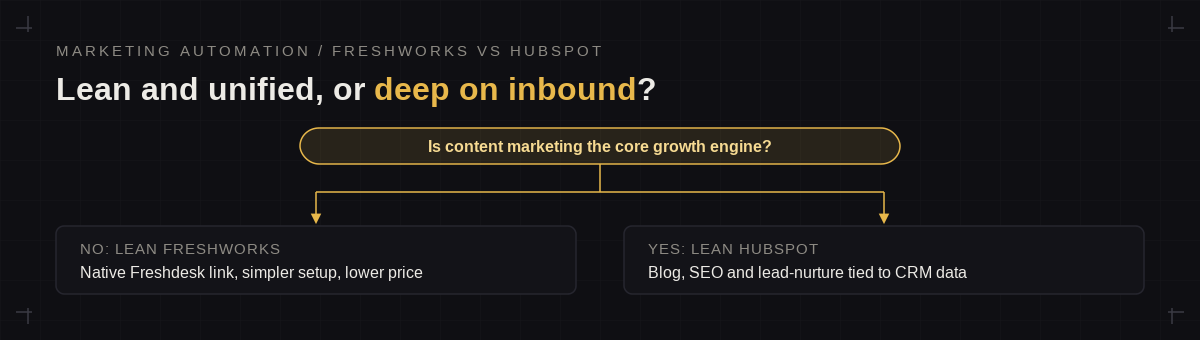
Freshworks vs HubSpot: Freshworks is simpler and more affordable, HubSpot has the deeper inbound-marketing toolset. Which fits a growing team.
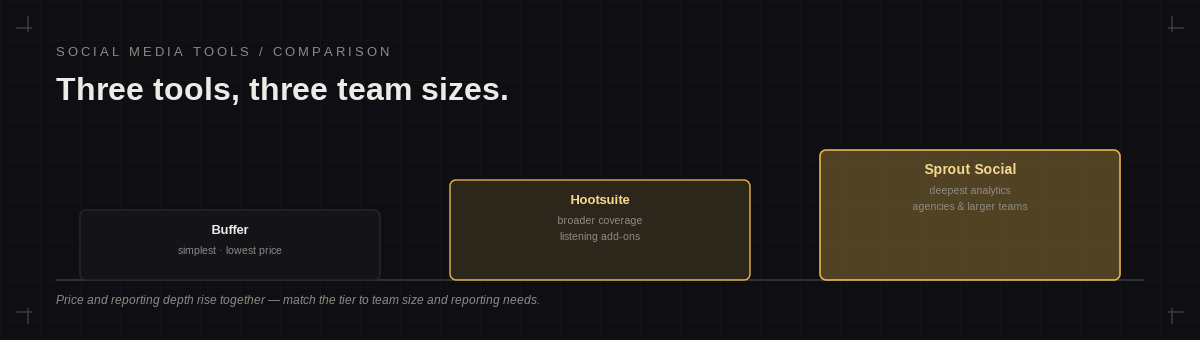
Buffer for simple, affordable scheduling, Hootsuite for broader platform coverage, Sprout Social for deep analytics and reporting. Which one fits which team.
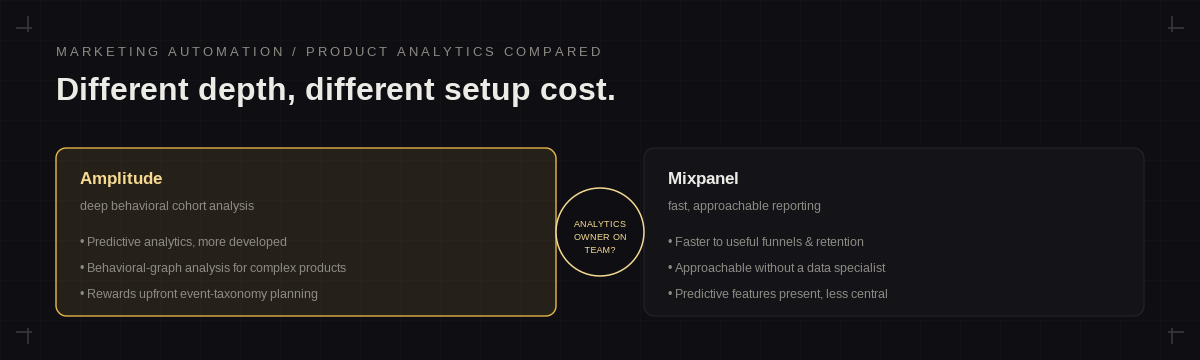
Amplitude leans into deeper behavioral cohort and predictive analysis; Mixpanel leans into faster setup and more approachable funnel and retention reporting.
Wikipedia page removal is possible in narrow cases (privacy, non-notability) through specific processes, and not possible on request simply because content is unflattering.
Why a startup founder faces a much steeper Wikipedia notability bar than an established public-company CEO, and what actually closes that gap.
What changes for a UK company or founder pursuing a Wikipedia page: which UK press outlets carry weight as independent sources, and common notability pitfalls.
What changes for a UAE or wider Gulf company or founder pursuing a Wikipedia page: sourcing patterns, sponsored-content risk, and English vs. Arabic Wikipedia.
WP:AUTHOR and WP:NMUSIC set different, subject-specific notability paths for writers and musicians, separate from the general significant-coverage rule.
WP:NCORP is one of Wikipedia's strictest guidelines, and it hits young companies hardest because most of their press coverage doesn't qualify as independent.
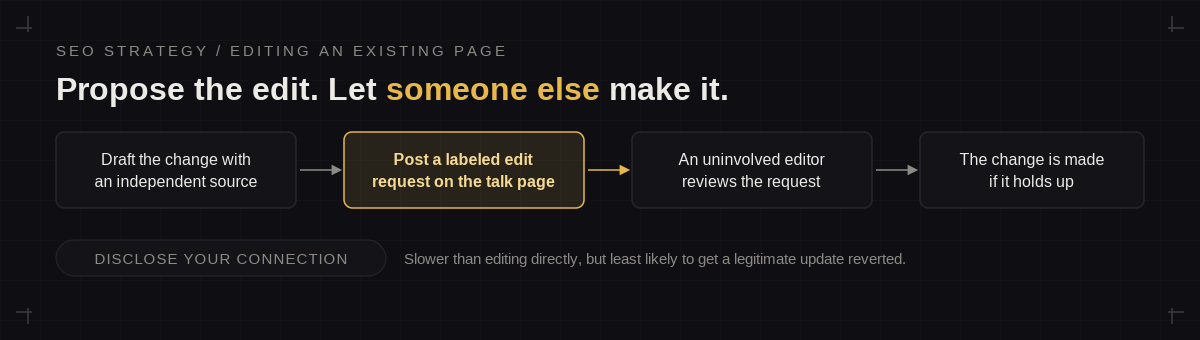
How to update your Wikipedia page without a revert: the conflict-of-interest and talk-page process, and why updating differs from creating a page.
English Wikipedia has more reach and a stricter, more mature review process; Hindi Wikipedia has a smaller but real audience and its own separate notability bar.
What a real estate marketing consultant actually covers: listing promotion, agent personal branding, and hyperlocal SEO, and what a realistic monthly cost looks like.
An Amazon PPC consultant scopes ad campaigns inside Amazon's auction. A marketplace consultant covers listing, catalog, buy-box, and multi-marketplace strategy.
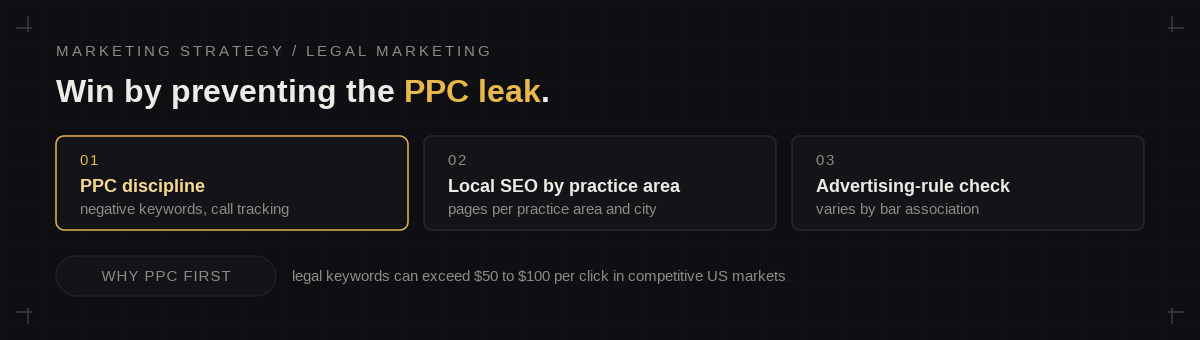
What a legal marketing consultant actually does for a law firm: PPC discipline against expensive legal keywords, practice-area local SEO, and advertising-rule awareness.
A landing page consultant fixes one page for one campaign. A CRO consultant runs funnel-wide, multi-page experimentation. Which one actually fits your problem.
GBP optimization is one tactic inside the broader discipline of hyperlocal SEO. What each one covers, and why relying on GBP alone plateaus in the map pack.
What a healthcare marketing consultant handles that a generalist digital marketer usually cannot: ad-platform health restrictions, YMYL content standards, and patient-trust signals.
A GTM strategist scopes a single launch; a growth marketing consultant compounds an already-live product's acquisition. When each one actually applies.
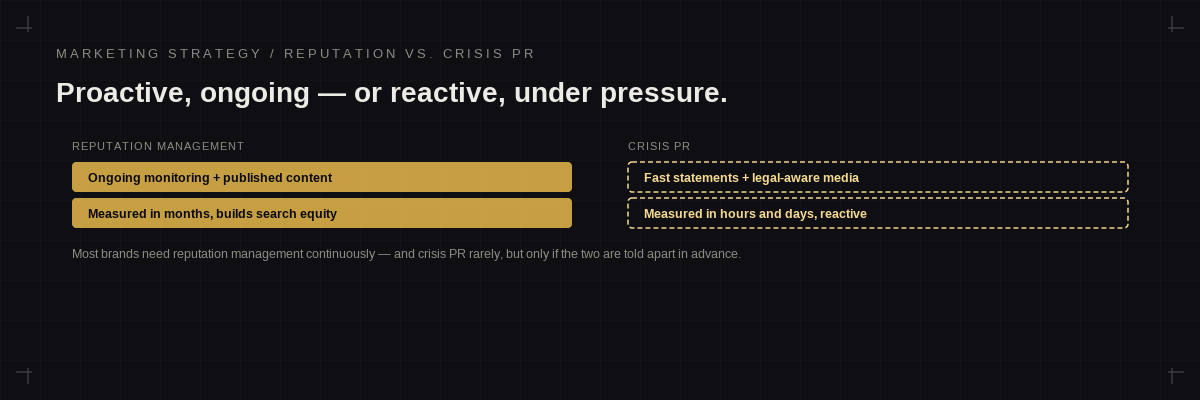
Reputation management runs proactively before anything happens; crisis PR is reactive, fast, and coordinated with legal. What each one actually covers, compared.
How Zapier and n8n compare for marketing automation workflows: hosted simplicity versus self-hosted control, and how each prices out at scale.
How a youtube growth consultant differs from a video ad strategist, and how to diagnose which problem a business actually has before hiring either one.
What Wikipedia's notability guidelines actually require, why most rejected drafts fail on sourcing rather than fame, and how to check notability first.
What a white label marketing consultant does, when an agency should use one instead of hiring, and the red flags that separate a good partner from a bad one.
A plain breakdown of what a digital marketing consultant does day to day, how the role differs from an agency or freelancer, and when it's the right fit.
The concrete signals that mean it's time to bring in a digital marketing consultant, rather than continuing with DIY marketing or a single-channel freelancer.
A web strategy consultant, shopify consultant, and wordpress consultant each solve a different problem. Here's the right order to bring each one in.
A personal branding consultant's guide to proactive executive brand building versus reactive online reputation management, and when each is the right fit.
How Outreach and Salesloft actually compare as sales engagement platforms, on workflow flexibility, reporting depth, and which fits which team structure.
When a startup should invest in organic social content versus paid amplification, and a practical framework for splitting a limited budget between the two.
Why a multi location marketing strategist treats every location as its own local SEO problem, and how a franchise marketing consultant fixes duplicate listings.
A linkedin marketing consultant builds executive presence and organic reach, while an influencer marketing strategist sources creator partnerships instead.
How LinkedIn Ads and Google Ads actually compare for B2B lead generation, on targeting precision, cost per lead, and which stage of the funnel each one wins.
Interim cmo, fractional cmo, and virtual cmo get used inconsistently across the industry. Here is what actually separates the three titles and roles.
Why a saas marketing consultant, healthcare marketing consultant, or real estate marketing consultant outperforms a generalist agency.
A hubspot consultant, klaviyo consultant, and salesforce marketing cloud consultant solve different problems. Here's how a crm consultant picks the right fit.
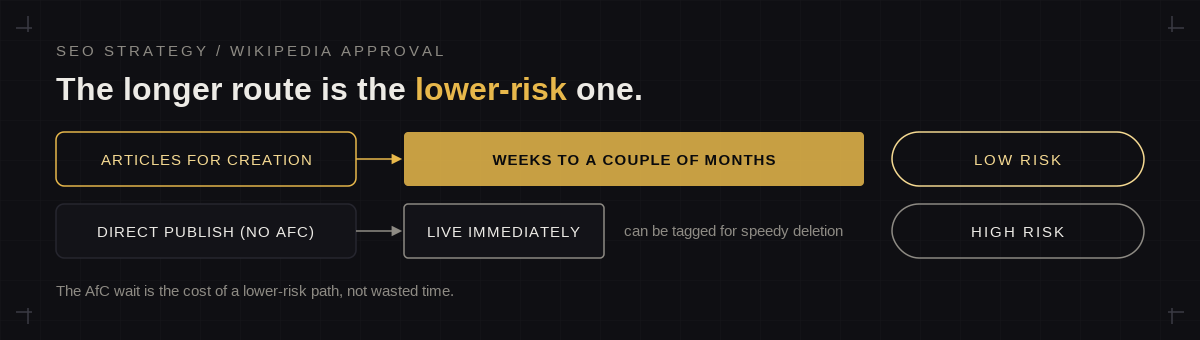
Wikipedia's Articles for Creation queue typically runs weeks to a couple of months: what actually speeds up or slows down a decision, and why direct publishing is the riskier shortcut.
A google ads consultant captures existing demand, a paid social consultant creates it. Here is a framework for splitting a paid media budget between them.
A go to market consultant's core framework for a B2B launch: ICP first, real customer language for positioning, and sequencing that builds proof before spend.
A GA4 consultant fixes broken conversion tracking first, while an AI marketing consultant automates decisions on top of clean data. Sequencing matters.
An enterprise seo consultant, technical seo consultant, and ecommerce seo consultant solve different bottlenecks. Here is how to tell which one applies.
Does a digital marketing consultant handle app store optimization? See where an app store optimization consultant's work ends and growth work begins.
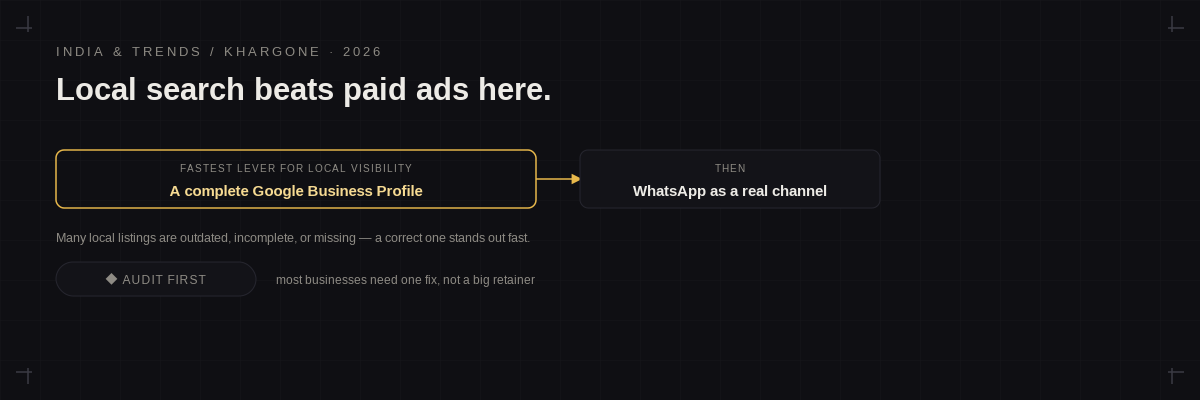
What a digital marketing consultant actually does for agri-business, textile, and retail owners in Khargone, and why local search matters more than paid ads.

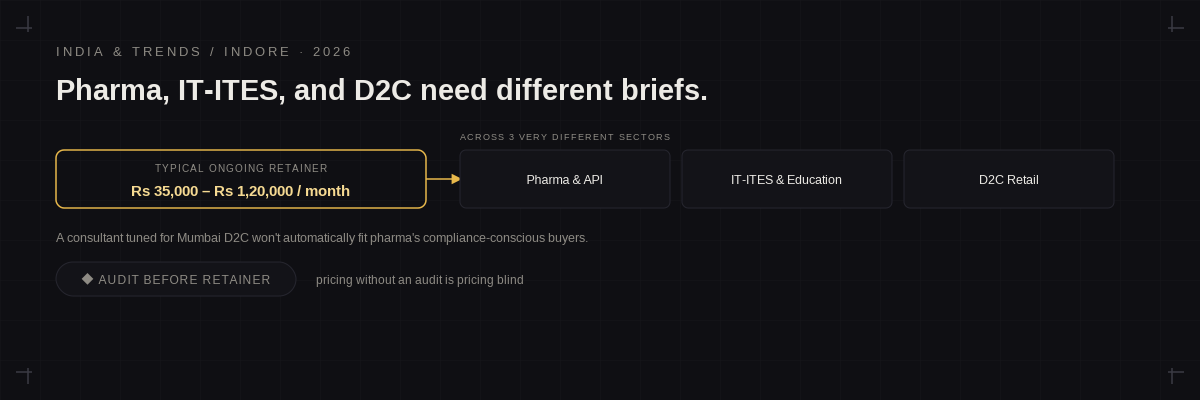
What Indore's pharma, IT-ITES, and D2C businesses actually need from a digital marketing consultant, and what a fair retainer looks like.
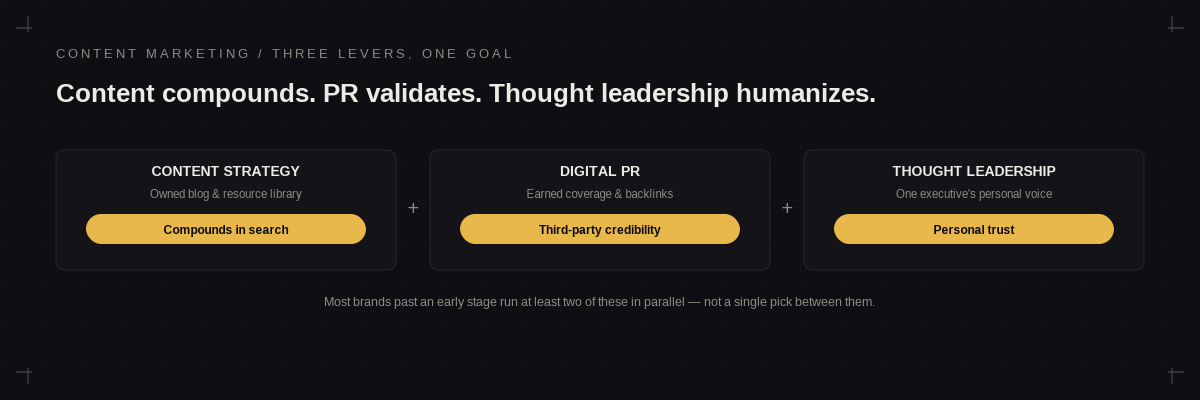
A content strategy consultant builds owned assets that compound in search, while a digital pr consultant earns coverage brands can't self-publish.
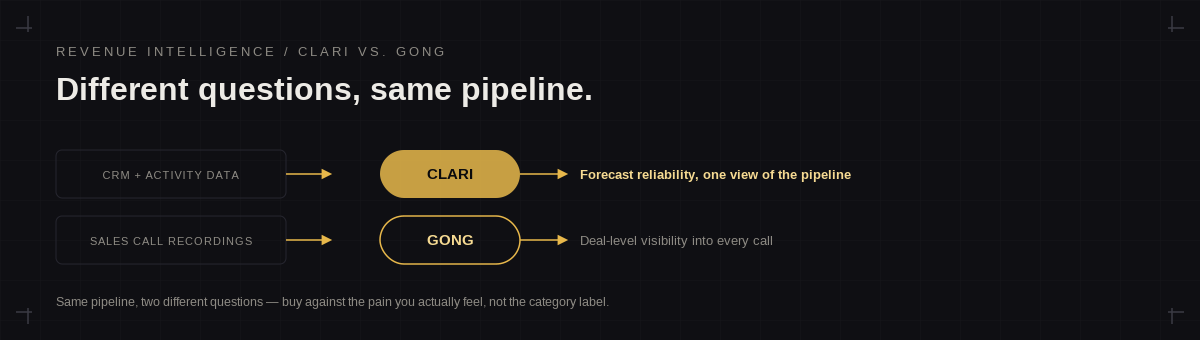
How Clari and Gong actually differ for revenue intelligence: forecasting focus versus conversation intelligence, and which fits a growing sales team.
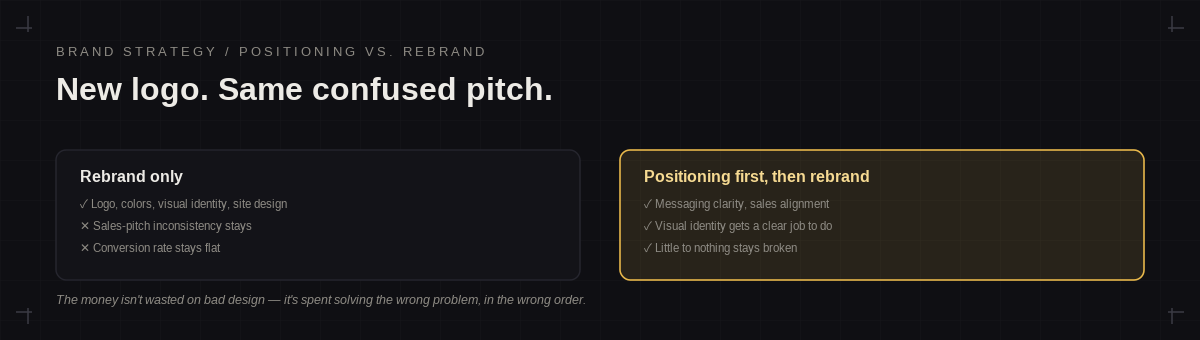
Why a brand positioning strategist, not a new logo, is what fixes a messaging problem that a visual rebrand alone can't solve.
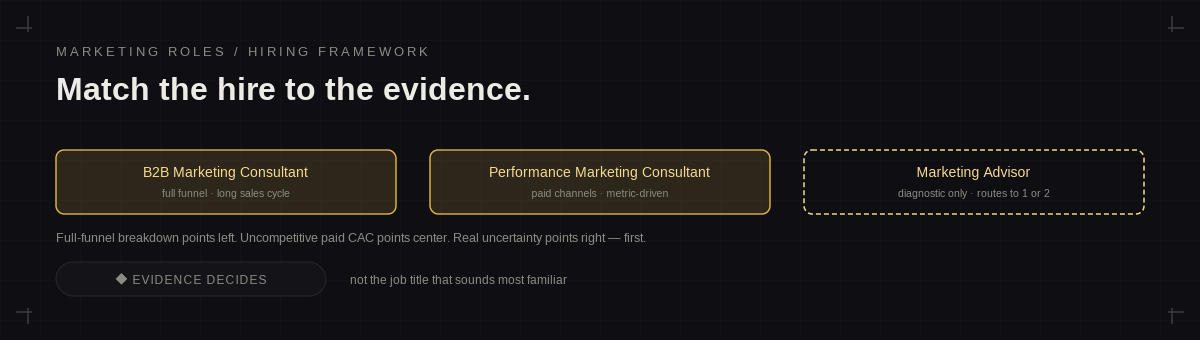
A b2b marketing consultant, a performance marketing consultant, and a marketing advisor solve different problems. Here is how to tell which one fits.
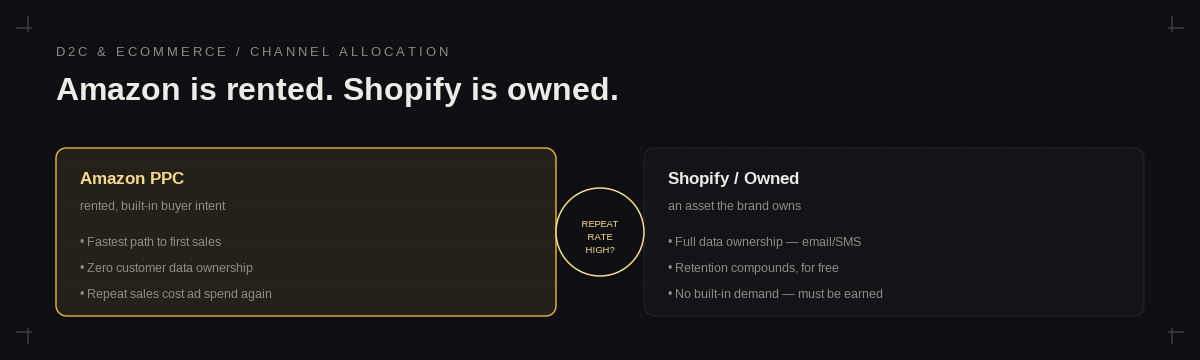
An ecommerce growth consultant's framework for splitting budget between Amazon PPC and Shopify ads, based on margin, data ownership, and brand stage.
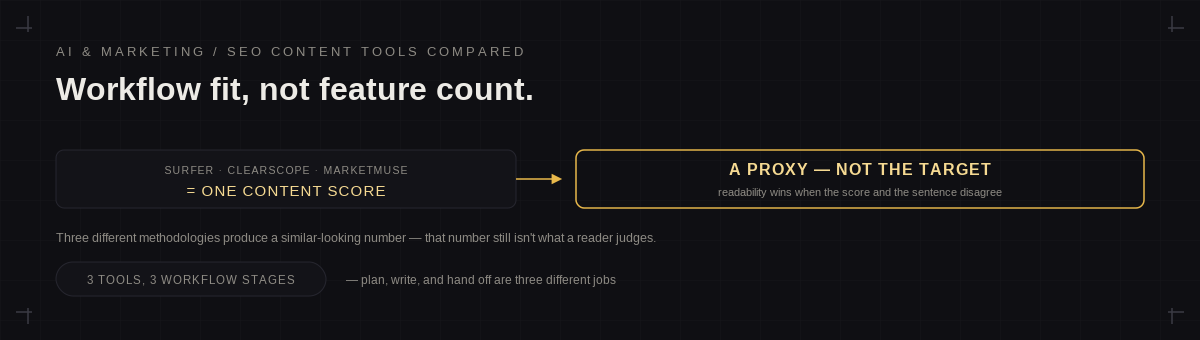
How Surfer, Clearscope, and MarketMuse actually differ for AI-assisted content optimization, on scoring methodology, topic modeling depth, and workflow fit.
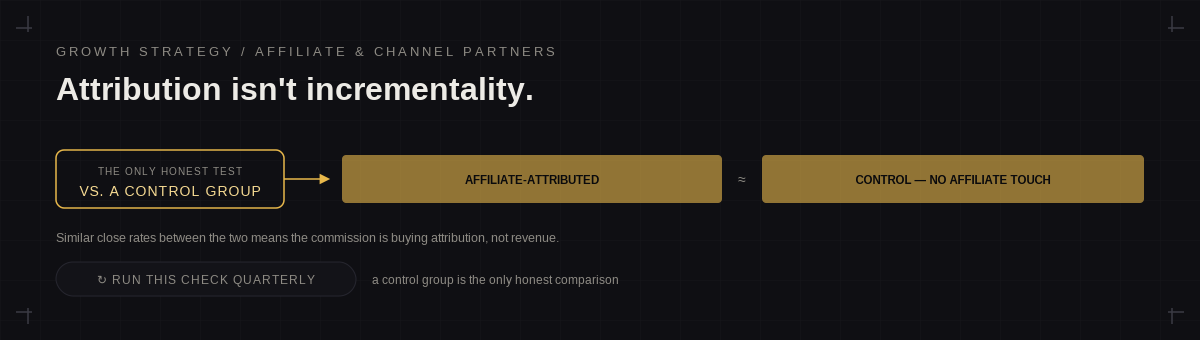
An affiliate marketing consultant's approach to structuring a partner program that adds net-new revenue, not commission on sales that would close anyway.
A decision framework for choosing account based marketing versus traditional b2b lead generation based on deal size, sales cycle, and market size.
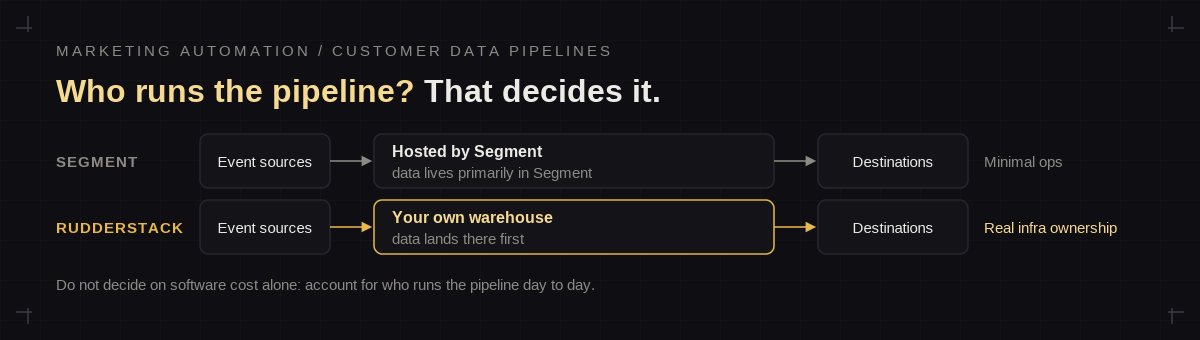
RudderStack vs Segment for customer data collection and routing, compared on architecture, pricing model, data ownership, and vendor lock-in.
The tool categories that make up a practical RevOps stack, beyond lead routing, and how to sequence adoption without buying tools ahead of an actual need.
What reverse ETL actually does that a CDP doesn't, how tools like Census and Hightouch fit a marketing stack, and when a team actually needs one.
How Triple Whale, Northbeam, and Hyros actually differ as ecommerce and direct-response attribution tools, beyond what native ad-platform reporting shows.
How HubSpot and Salesforce compare for a growing team's CRM needs: setup ease, customization ceiling, pricing, and when each becomes the wrong fit.
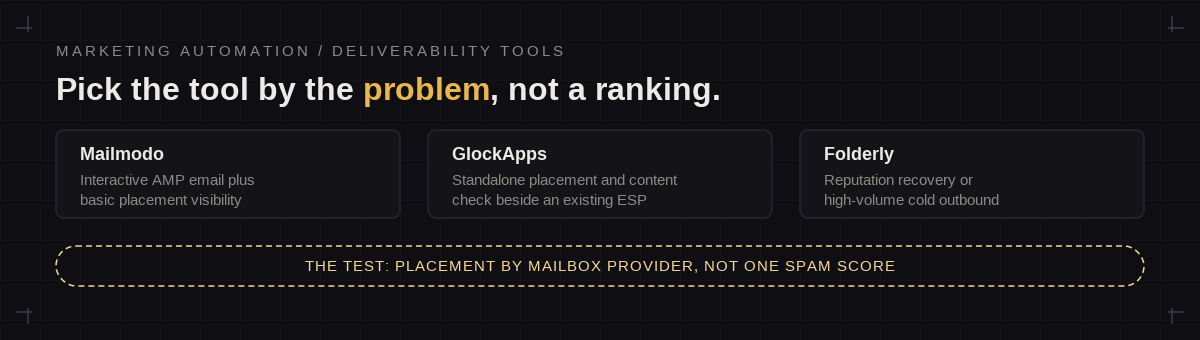
How Mailmodo, GlockApps, and Folderly actually differ for monitoring and improving inbox placement, beyond basic SPF, DKIM, and DMARC setup.
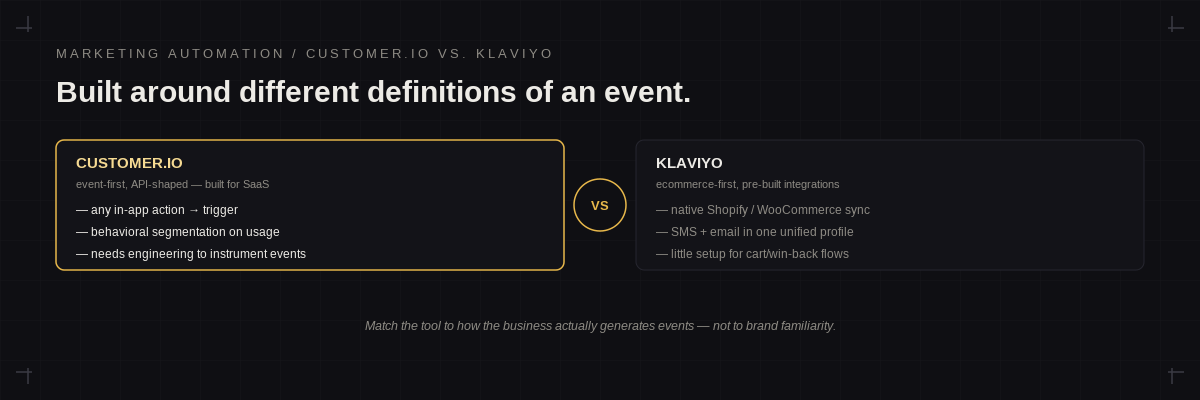
How Customer.io and Klaviyo actually compare for SaaS lifecycle messaging, on event-based triggering, ecommerce-specific features, and pricing fit.
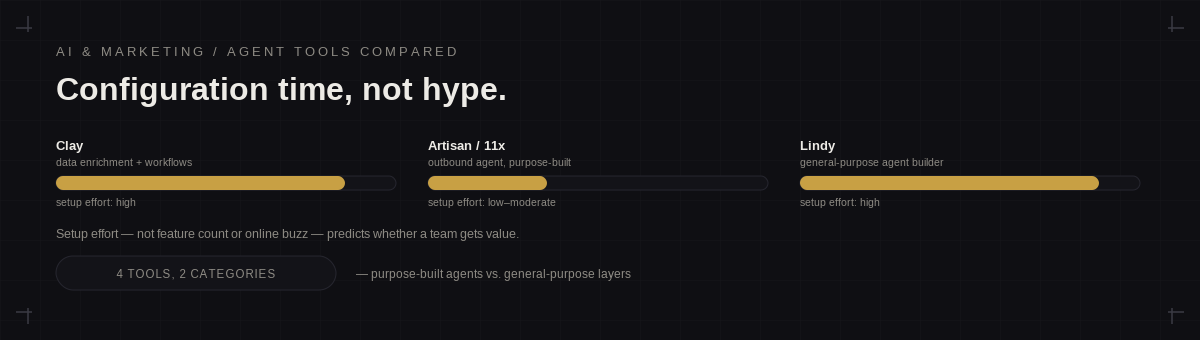
How Clay, Artisan, 11x, and Lindy actually differ as AI agents for marketing and sales workflows, on data enrichment, outbound automation, and flexibility.
How Zapier and Make actually compare for marketing automation workflows, on ease of use, pricing, and complex logic, and when each is the wrong choice.
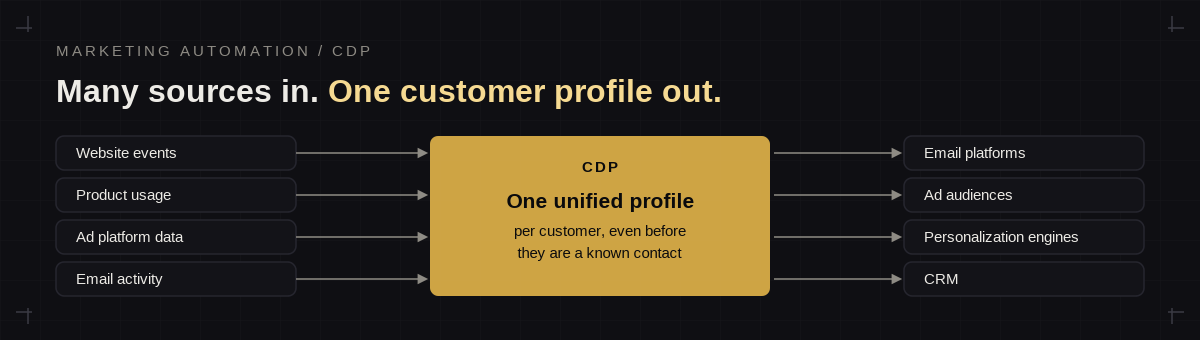
What a CDP does that a CRM or analytics tool doesn't, how to tell if your startup needs one, and how to build a customer data platform if so.
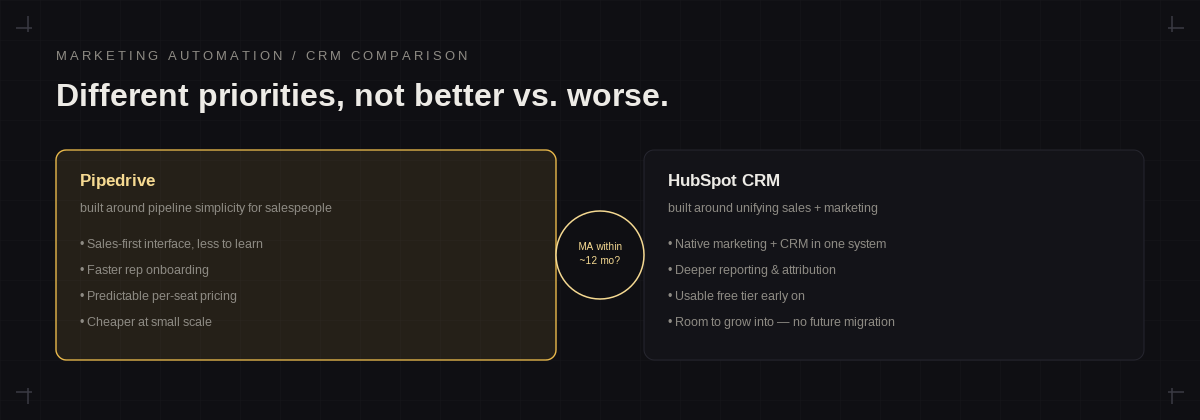
How Pipedrive and HubSpot's CRM actually compare for a small sales team, on simplicity, pricing, and marketing integration, and when each is the wrong fit.
A practical martech stack audit checklist: unused tools, broken integrations, duplicate spend, and data that no longer flows correctly.
What should happen in the first 90 days after hiring a marketing consultant, so the engagement produces results instead of stalling on access.
When a startup should outsource IT infrastructure to a managed services provider versus hire in-house, and what actually breaks in each model.
How lead routing actually works, the tools that handle it, and when a startup should move beyond manual assignment or basic round robin.
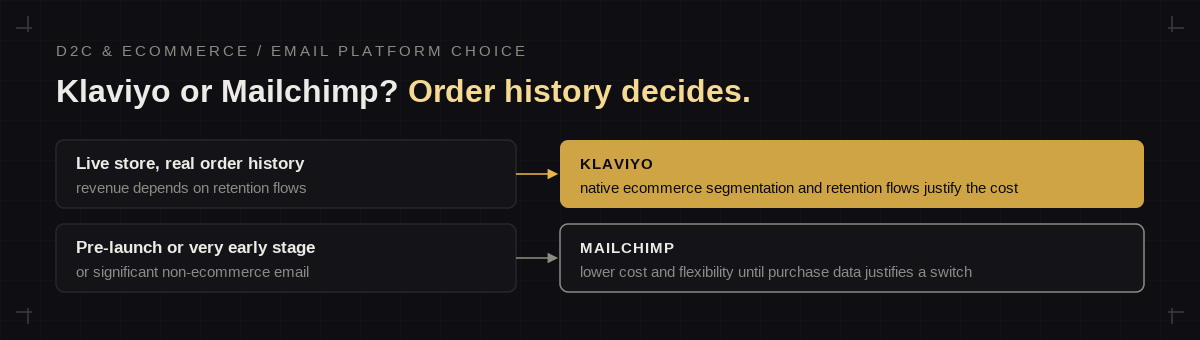
How Klaviyo and Mailchimp actually compare for D2C email and SMS marketing on ecommerce data depth, automation, pricing, and when each one is the wrong choice.
Typical IT infrastructure consultant pricing for startups, one-time audits versus ongoing retainers, and what actually changes the number.
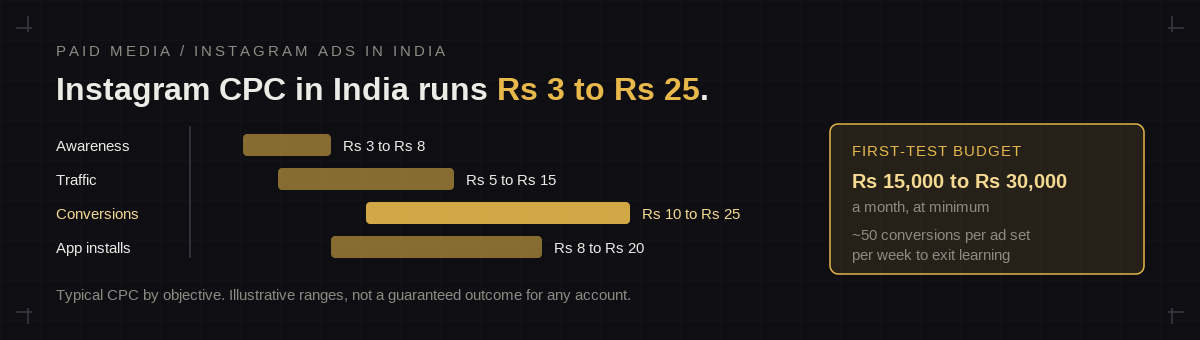
Instagram ads cost in India: typical CPC and CPM ranges by objective and industry, and realistic monthly budgets for D2C and app-based brands.
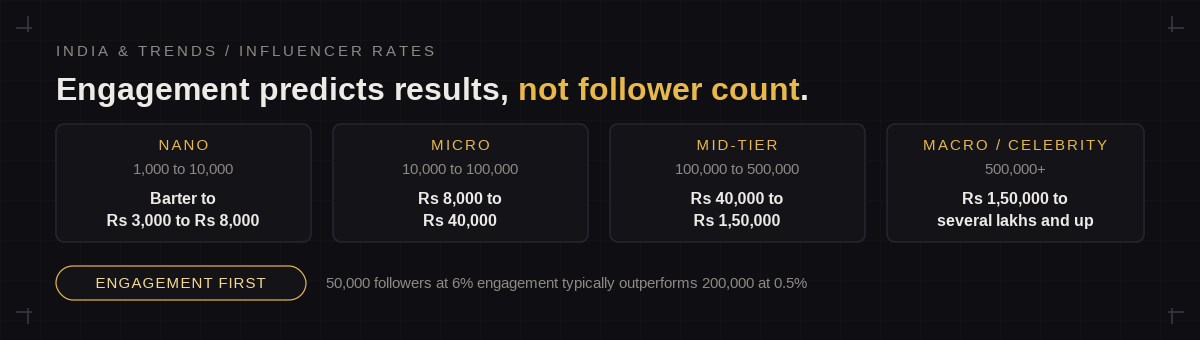
Influencer marketing cost in India: realistic rates by follower tier and platform, and why engagement rate matters more than follower count when budgeting.
What server-side tagging with GTM actually solves versus client-side, when it's worth the setup cost, and a realistic implementation path.
What UK founders and marketing leads pay for a digital marketing consultant in 2026: day rate, hourly, project and retainer pricing versus agencies.
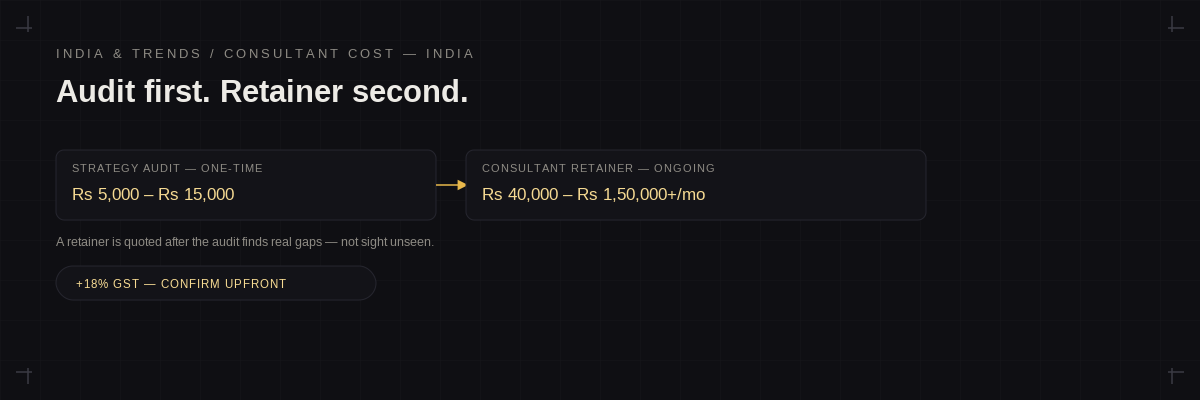
What Indian founders and D2C brands actually pay for a digital marketing consultant in 2026: hourly, project, and retainer pricing compared to agencies.
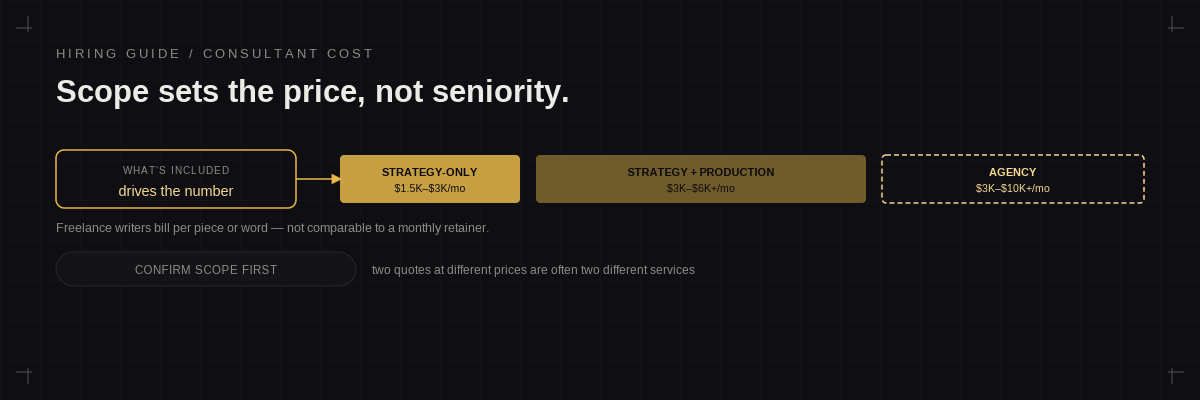
Typical content marketing consultant pricing, strategy-only versus strategy-plus-production, and what actually determines the number.
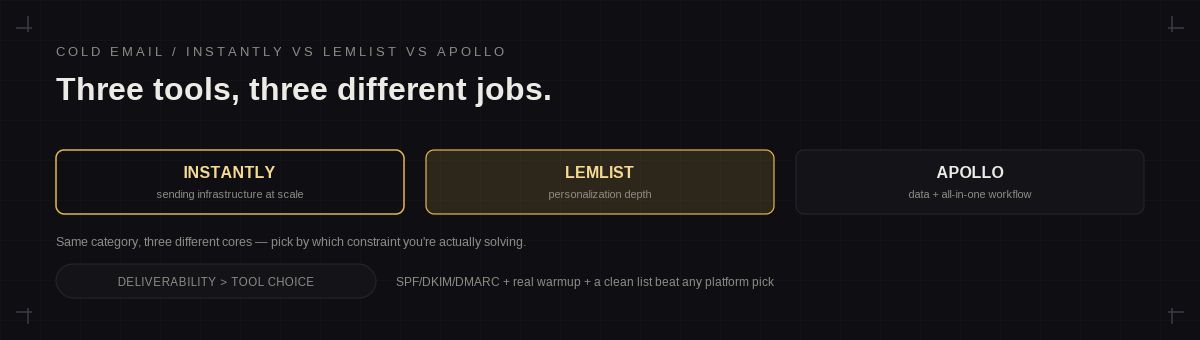
How Instantly, Lemlist, and Apollo actually differ for cold outbound, deliverability infrastructure, personalization, and data, and which fits which use case.
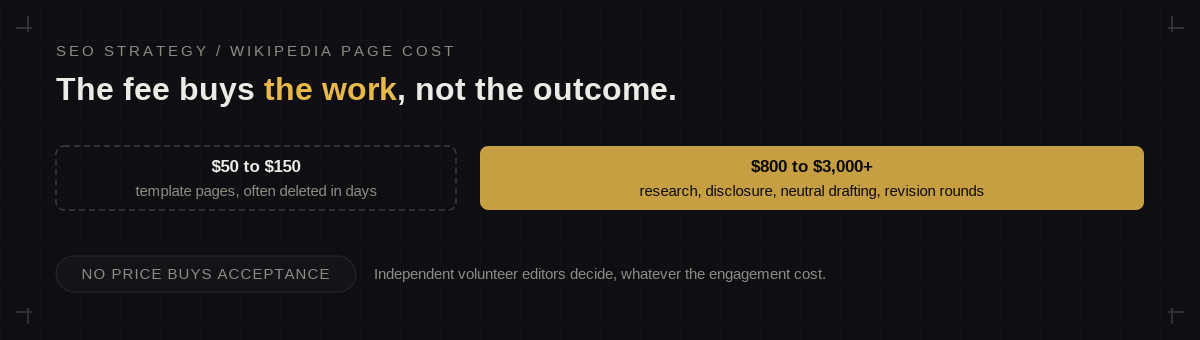
Wikipedia page creation cost explained: why the cheapest offers are the riskiest and what legitimate pricing reflects in research and editorial risk.
A simple framework for calculating what an hour of website downtime actually costs your business, beyond the obvious lost-sales estimate.
A social media content calendar built around content pillars and platform-specific cadence, not a generic grid that collapses under real posting volume.
Shopify vs WooCommerce for D2C brands: how they compare on cost, control, SEO flexibility and what breaks as you scale, without picking a side upfront.
A re-engagement email sequence framework for winning back inactive subscribers, and the honest criteria for when to stop trying and suppress the list instead.
A practical positioning statement framework for B2B SaaS founders, and why a positioning exercise that doesn't change any real decisions wasn't worth doing.
What a digital marketing consultant in the UAE costs in 2026: hourly, retainer and project pricing for UAE businesses compared to agency retainers.
How marketing budget allocation should shift across pre-seed, seed, and Series A for Indian startups, and the common mistakes at each stage.
A slide-by-slide LinkedIn carousel framework for B2B: the hook, structure, and design choices that separate carousels people finish from ones they scroll past.
A practical IT infrastructure audit checklist for startups scaling past their early ad-hoc setup: security, uptime, access control, and vendor sprawl.
A practical framework for measuring content marketing ROI that accounts for attribution lag and compounding value, instead of vanity metrics or false precision.
Growth marketing vs performance marketing: how they differ in scope, metrics and mindset, and why most companies need both rather than a choice.
Typical Google Ads CPCs in the UK by industry, realistic monthly budget minimums to get usable data, and why VAT and agency fees change the real number.
Typical form conversion rate ranges by industry and form length, and why field count usually matters more than the industry benchmark itself.
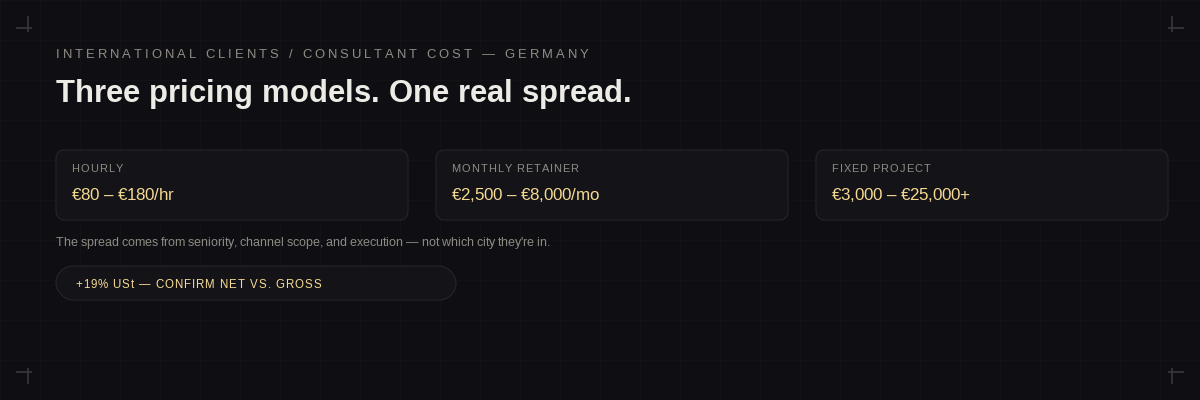
What German founders and Mittelstand companies actually pay for a digital marketing consultant in 2026: hourly, retainer, and project pricing compared.
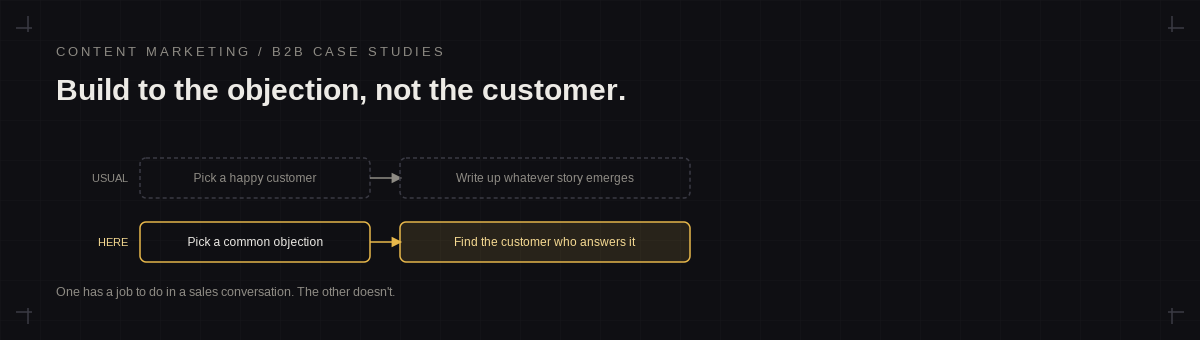
A B2B case study framework built around the specific objection each case study needs to overcome, not a generic problem-solution-result template.
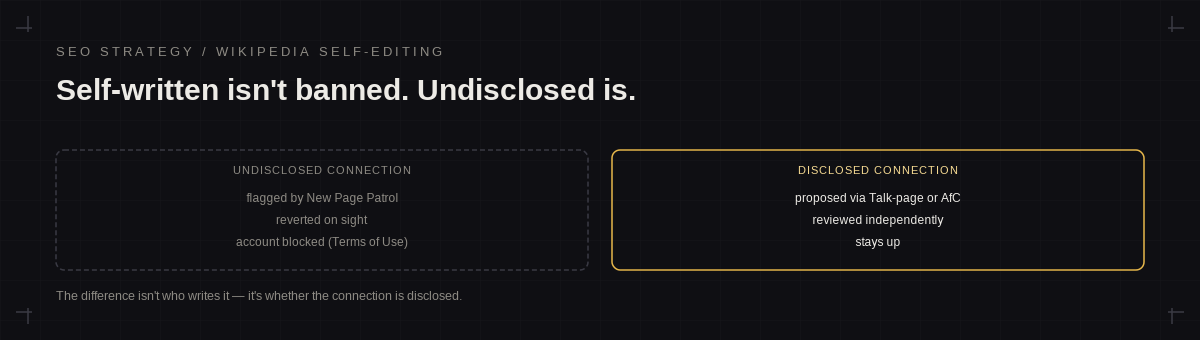
Wikipedia doesn't ban self-written pages, but it requires mandatory COI disclosure under WP:PAID: here's what the policy actually says, and why it backfires.
Agentic SEO means AI agents executing multi-step SEO tasks with less human oversight per step: here's where that genuinely helps, and where it's still risky.
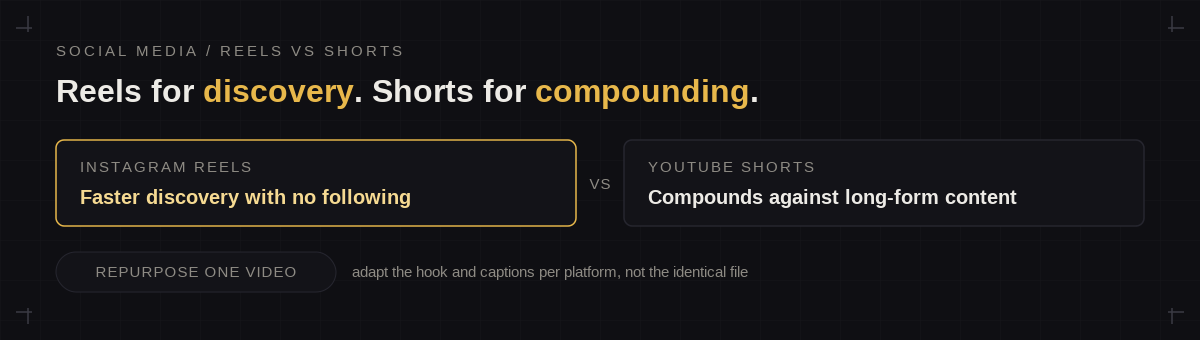
Reels wins for cold discovery on a new account; Shorts compounds once you already have long-form YouTube content behind it. How to actually decide, with the tradeoffs Indian brands hit most.
How to read agency pricing minimums and ROI claims like average ROAS or total revenue driven: what they actually mean, and the questions to ask first.
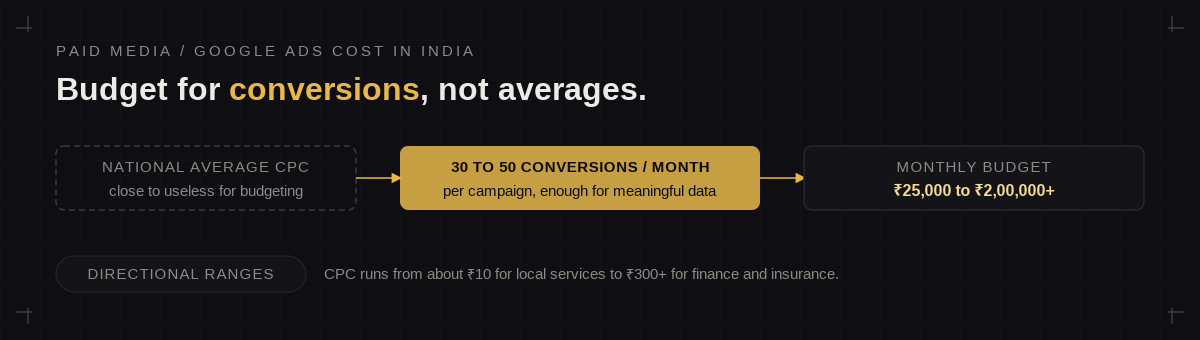
Google Ads pricing in India: typical CPCs by industry, realistic monthly budget minimums to get usable data, and why national averages mislead.
GEO and SEO optimize for different outcomes: being cited in an AI answer vs. ranking in a list of links. Here's the real difference and how they work together.
Wikipedia pages get deleted through speedy deletion, PROD, or an AfD discussion: here's why each one happens, how to avoid it, and how to appeal.
Set up uptime monitoring, automated backups, and error logging before launch, so downtime reaches you from a bot alert, not a client's angry email.
Security headers, a firewall or WAF, spam protection on forms, and locked-down admin access: the security basics checklist to run before a site goes live.
A step-by-step way to test contact forms, newsletter signups, and checkout flows end-to-end before launch, and confirm the data actually lands where it should.
Confirm meta titles, canonical tags, Open Graph tags, structured data, and a live sitemap.xml before launch, and check share previews render.
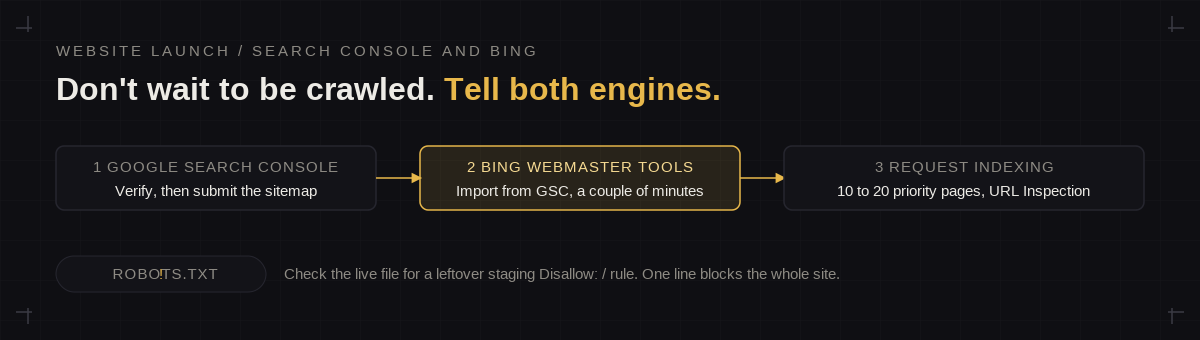
Verify ownership, submit your sitemap, and request indexing in Search Console and Bing, plus the robots.txt mistake that blocks a whole site.
Install GA4 and a tag manager, fire a test event, and set up conversion tracking before launch, not after.
Verify DNS resolves, the SSL certificate is valid, and HTTP redirects to HTTPS before launch: catch mixed-content warnings early.
Set up a branded 404 page, redirects for old URLs, and privacy, terms, and cookie consent pages before launch, especially for US or EU traffic.
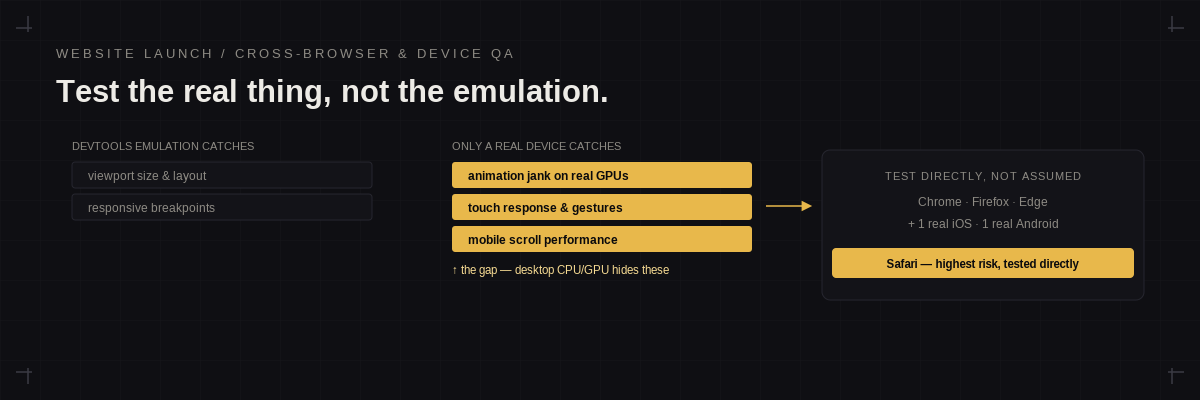
A pre-launch QA checklist for Chrome, Safari, Firefox, Edge, and real mobile devices, where animation-heavy sites hide layout and performance breaks.
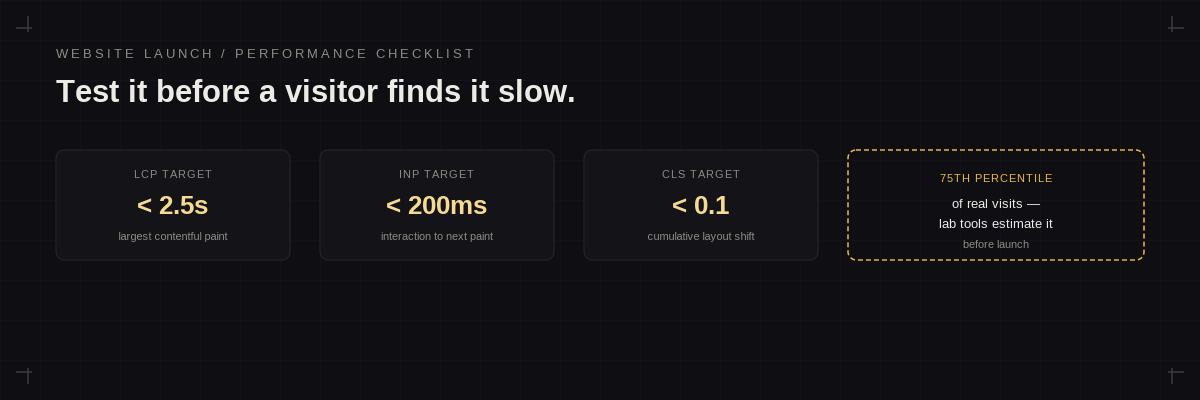
Run PageSpeed Insights and Lighthouse, compress images, enable caching and a CDN, and confirm mobile scores before slow loads cost conversions.
What performance marketing actually means, the KPI framework that separates it from brand advertising, and the mistakes that quietly waste the most spend.
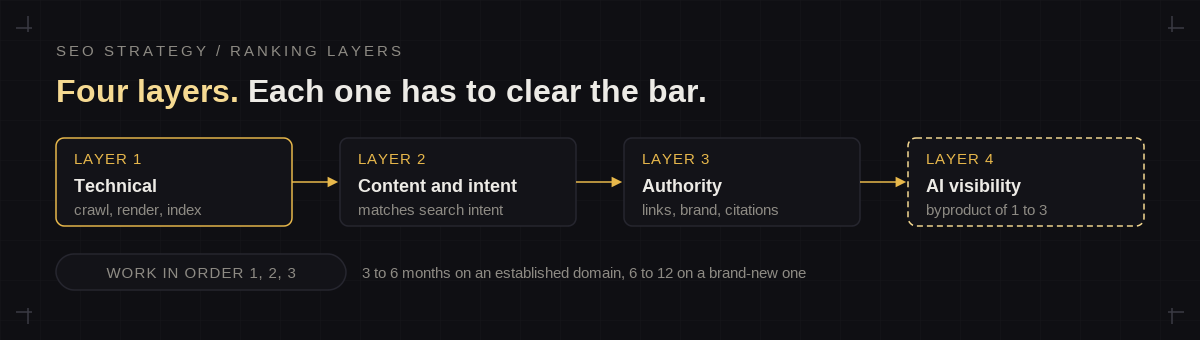
How to rank on Google in 2026: the four layers that determine rankings (technical, content, authority, AI-answer visibility), and the order to work on them.
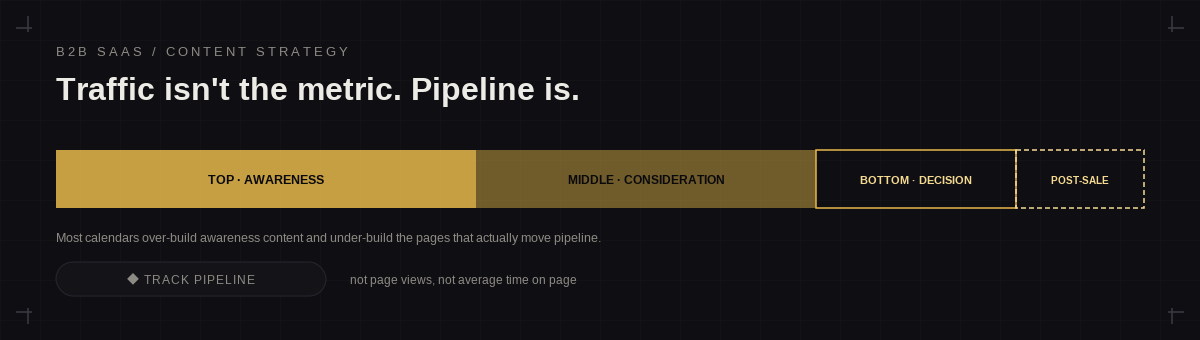
A content-type to funnel-stage framework for B2B SaaS content marketing that generates pipeline instead of vanity traffic.
When to hire a SaaS marketing consultant for growth: an ARR-stage readiness framework for B2B SaaS startups weighing a growth marketing consultant.
A side-by-side comparison of SEO and paid ads for B2B SaaS on speed, cost, compounding value, and control, and which to prioritize first.
A channel-by-channel framework for lowering B2B SaaS customer acquisition cost without sacrificing lead volume.
A founder's priority checklist for B2B SaaS technical SEO: what to fix first, ranked by impact versus effort.
Wikipedia page creation for a business or founder: the notability bar, sourcing standards, and the disclosure rules that prevent deletion.
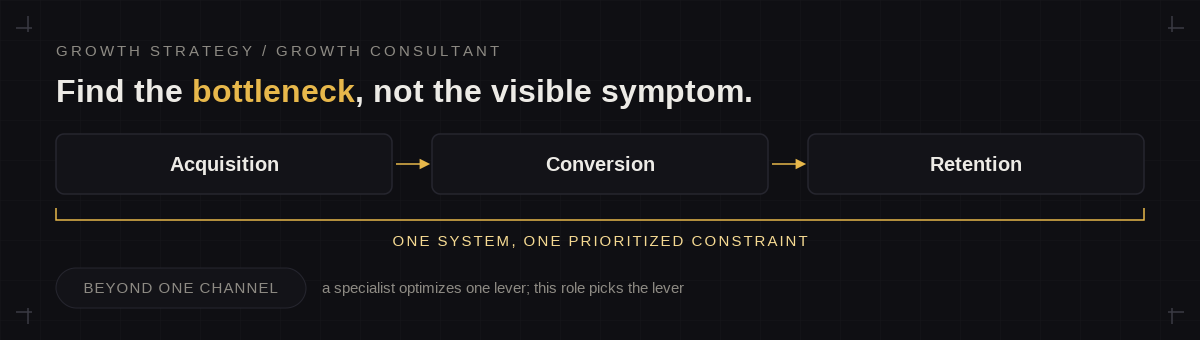
What a growth marketing consultant actually does day to day: how the role differs from a channel specialist, and what to expect from an engagement.
A welcome email sequence framework: what each email in the series needs to do, realistic timing, and the mistakes that turn a welcome series into noise.
A practical SPF, DKIM, and DMARC setup guide for cold email: what each record does, and the domain warm-up mistakes that tank deliverability anyway.
Seven concrete signs you need a fractional CMO rather than another channel hire, plus the signs that mean the opposite is true.
A Shopify-specific SEO checklist: collection page structure, duplicate content traps, and app bloat fixes that generic SEO checklists miss.
A practical SEO playbook for startups: what to prioritize before and after product-market fit, and the mistakes that waste the first six months.
Which schema types actually matter for a local business, how to implement them correctly, and the validation step most sites skip before publishing.
A current on-page SEO checklist for 2026: title tags, content structure, schema, and the AI-answer-era additions that older checklists don't cover yet.
A framework for choosing a North Star metric that actually guides prioritization: the criteria that separate a real one from a vanity number.
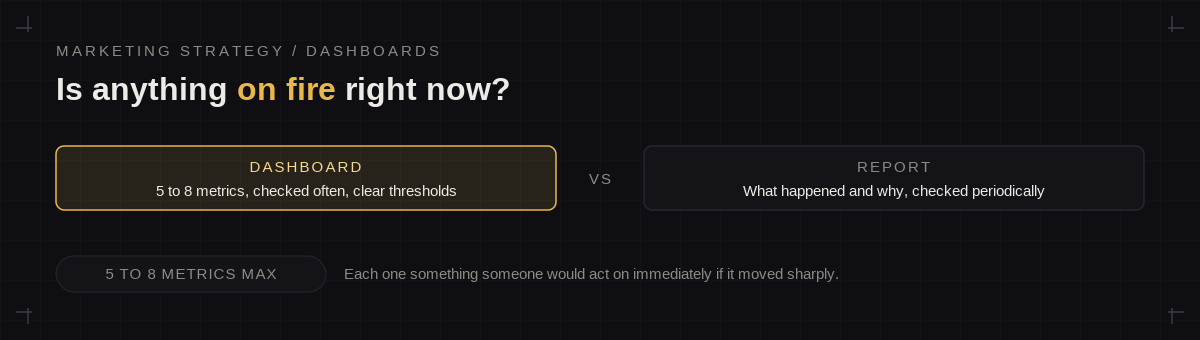
What actually belongs on a marketing dashboard versus a deeper report, and the layout principles that keep a dashboard from becoming a wall of ignored charts.
Last-click, linear, time-decay, and data-driven attribution compared, which model fits which business, and where every one of them still misleads you.
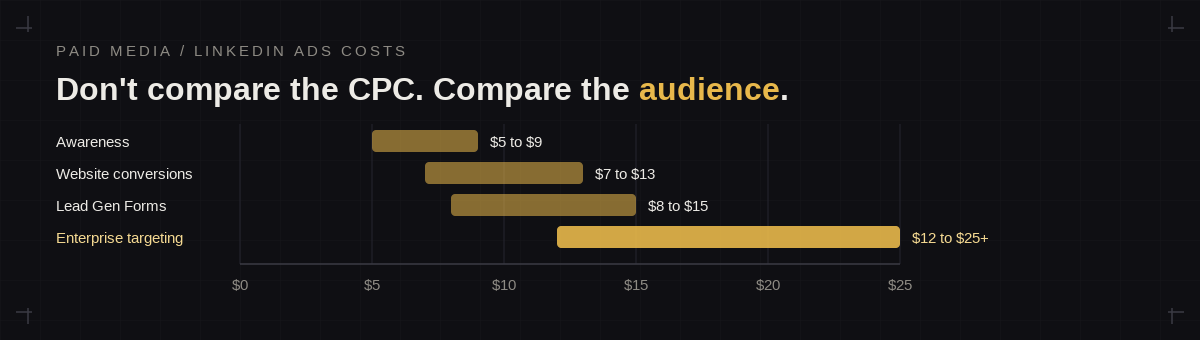
LinkedIn Ads cost benchmarks for B2B in 2026: typical CPC and CPL ranges by objective, and why comparing cost directly to Google or Meta misleads.
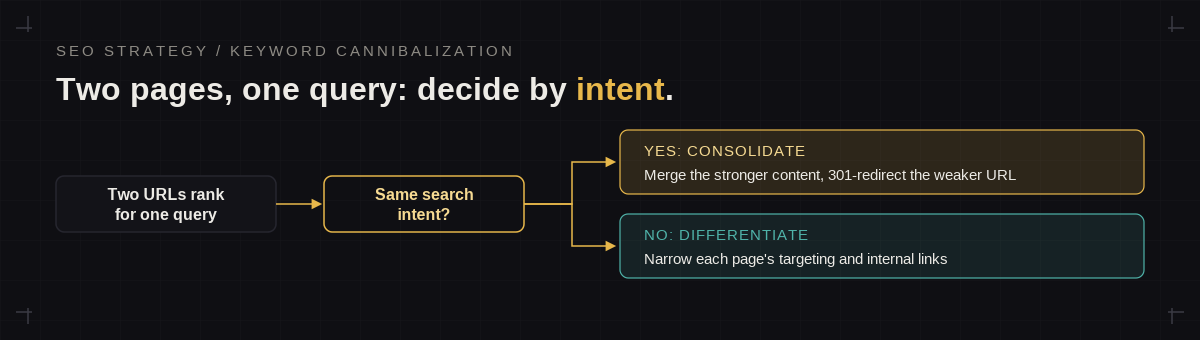
How to detect keyword cannibalization in Search Console and the consolidate-vs-differentiate framework to fix it without losing the rankings you already have.
A practical internal linking framework: pillar/cluster structure, anchor text rules, and the crawl-depth fixes that move rankings without another backlink.
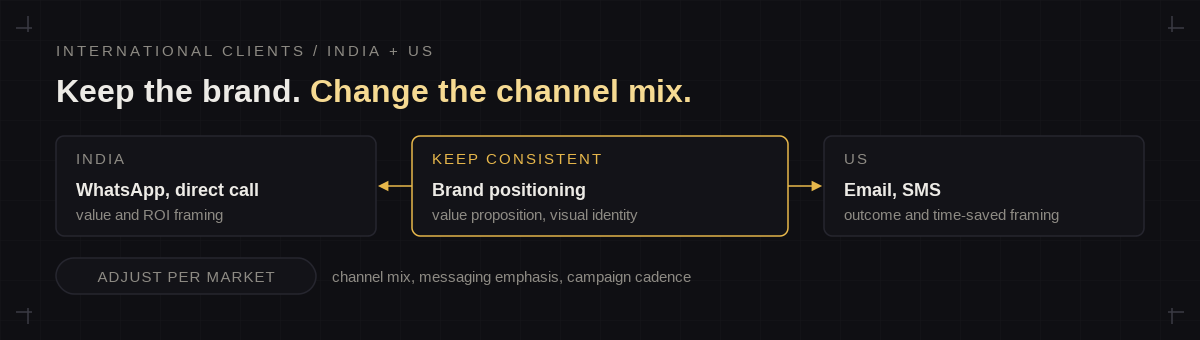
What changes when running digital marketing across India and the US: channel mix, cost benchmarks, and messaging that doesn't translate directly.
A practical HubSpot vs. ActiveCampaign comparison for growing startups: pricing cliffs, workflow depth, and when each one is the wrong choice.
Growth loops vs. funnels explained: why loops compound and funnels don't, and why most businesses still need both rather than picking one model.
A Google Business Profile optimization checklist: categories, services, posting cadence, and the review habits that actually move local rankings.
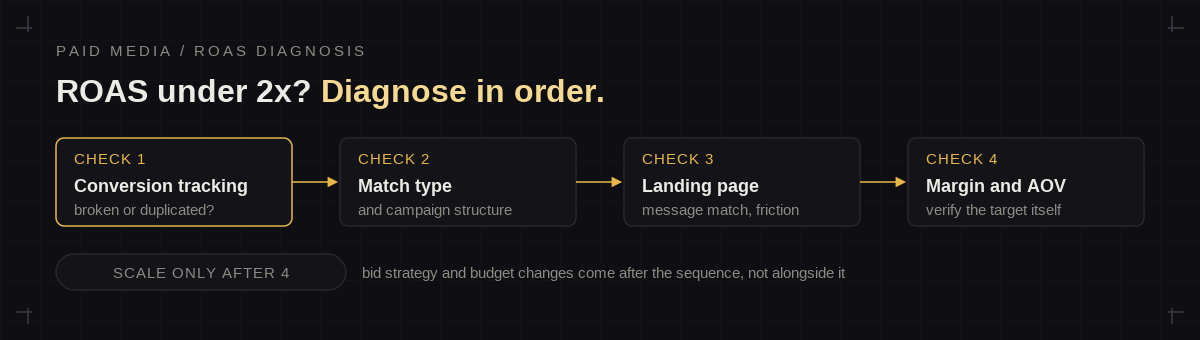
A diagnostic sequence for Google Ads ROAS stuck under 2x: the four most common root causes, checked in the order that finds the problem fastest.
A step-by-step guide to improving Google Ads Quality Score: the three components that make it up, and the fixes that actually move each one.
A real cost comparison between a fractional CMO and a full-time hire: salary vs. retainer, hidden costs each side leaves out, and when each makes sense.
The fractional CMO interview questions that actually reveal how someone thinks: prioritization, past misses, and how they'd approach the first 30 days.
The SEO, paid media, and AI marketing shifts Indian startups and D2C brands need to plan for in 2026.
15 digital marketing statistics for 2026 covering SEO, paid media, content, and AI search, and what each should change about how you spend budget.
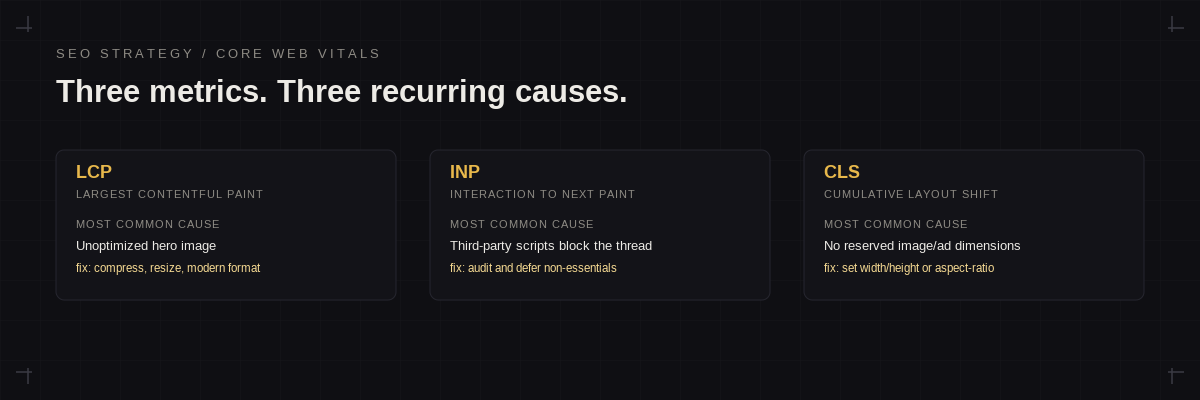
A practical Core Web Vitals fix guide covering LCP, INP, and CLS: the most common cause of each failure and the fix that resolves it without a rebuild.
A content brief template that actually prevents rewrites: the sections every brief needs, and the difference between a brief and a topic assignment.
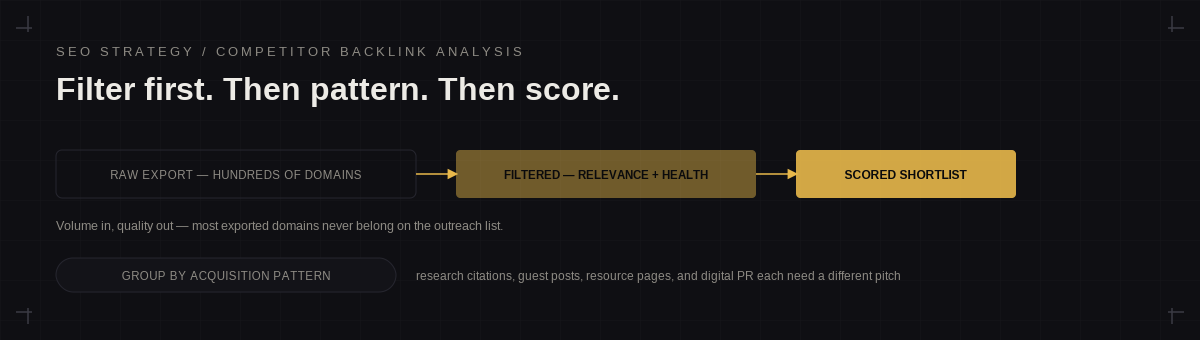
How to run a competitor backlink analysis that produces an actual outreach list, and the quality filters that matter more than volume.
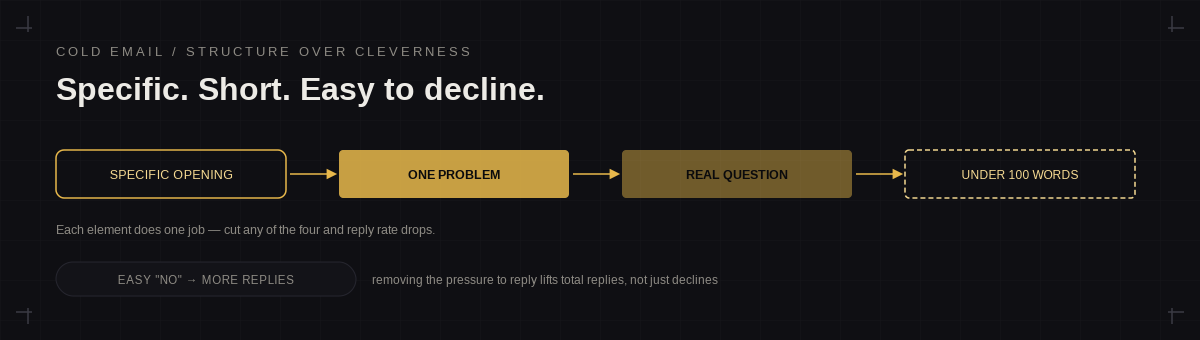
Cold email templates that get replies, broken down by why each element works: specificity, a real question, and the length discipline most templates ignore.
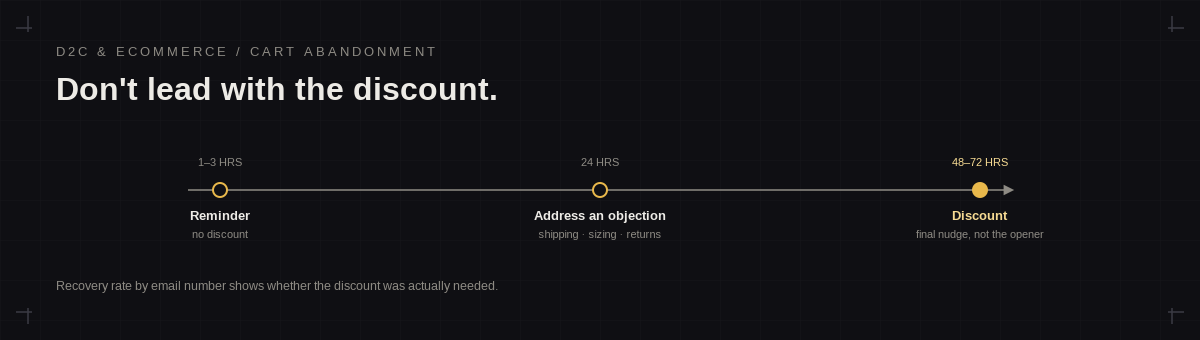
A cart abandonment email sequence built on timing and reason, not just a discount blast: what each email should say and when to actually offer a discount.
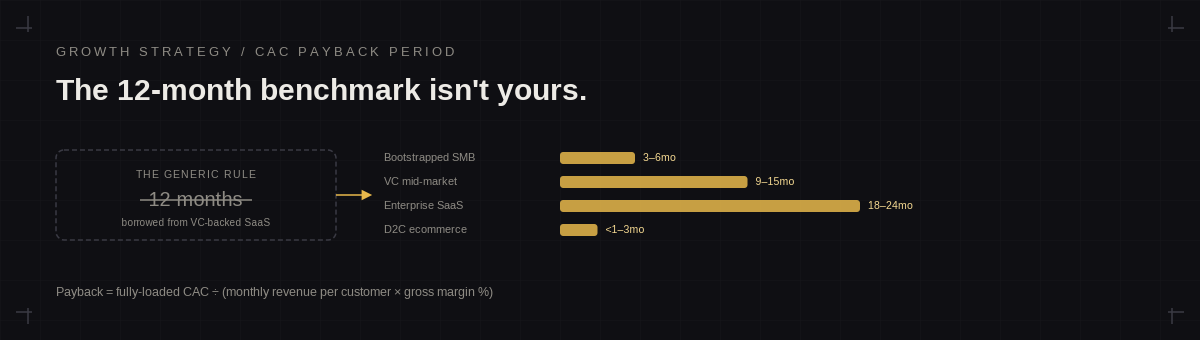
SaaS payback period benchmarks: what a healthy CAC payback period looks like by industry and stage, and why the 12-month rule is the wrong bar.
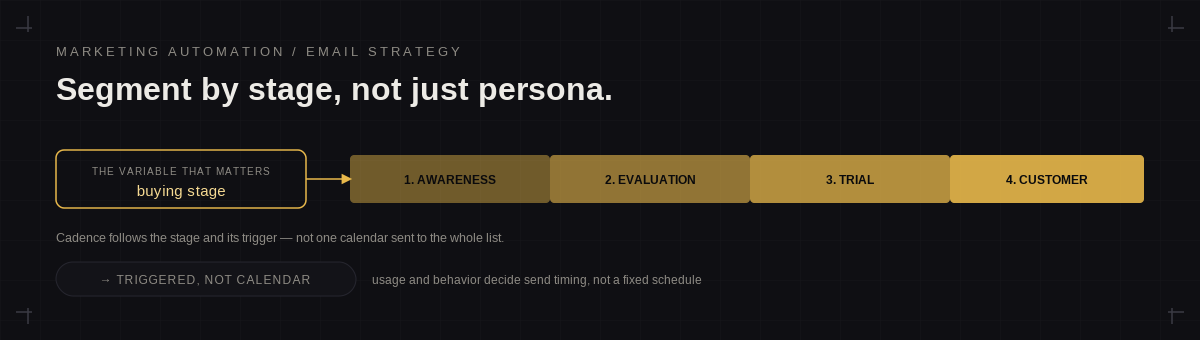
A B2B email marketing framework built around buying-stage segmentation, not send frequency: the sequences and metrics that actually move pipeline.
How to calculate the sample size an A/B test actually needs, why most tests get called too early, and what to do when traffic can't reach significance.
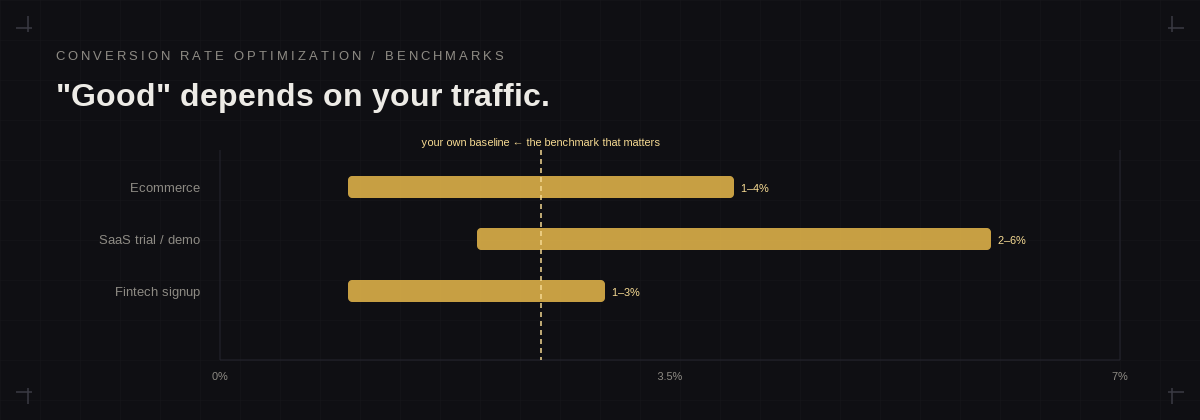
Typical landing page and ecommerce conversion rate ranges for D2C, SaaS, and fintech, and how to know if yours is actually underperforming.
A search engine positioning strategy for competing against larger, established competitors: underserved angles and a genuine content moat.
Typical CPL and CAC ranges for B2B SaaS lead generation in Singapore, and how to budget Google and LinkedIn Ads accordingly.
The right funnel metrics to track at each stage (awareness, consideration, decision, retention), and the vanity metrics that don't belong.
Five marketing automation workflows every SaaS company should have: onboarding, trial nurture, dunning recovery, expansion, and churn-risk re-engagement.
What actually drives marketing automation consultant pricing: platform complexity, migration vs. net-new builds, and what to ask before comparing quotes.
A step-by-step guide to setting up lead scoring in HubSpot: positive/negative criteria, behavioral scoring, and the mistakes that make scores unreliable.
Why published Google Ads CPA benchmarks are a poor target, how to calculate your own valid CPA ceiling, and why CPA varies so much by campaign type.
A category-by-category guide to free lead enrichment tools for startups: what each type adds, realistic free-tier limits, and when it's time to pay.
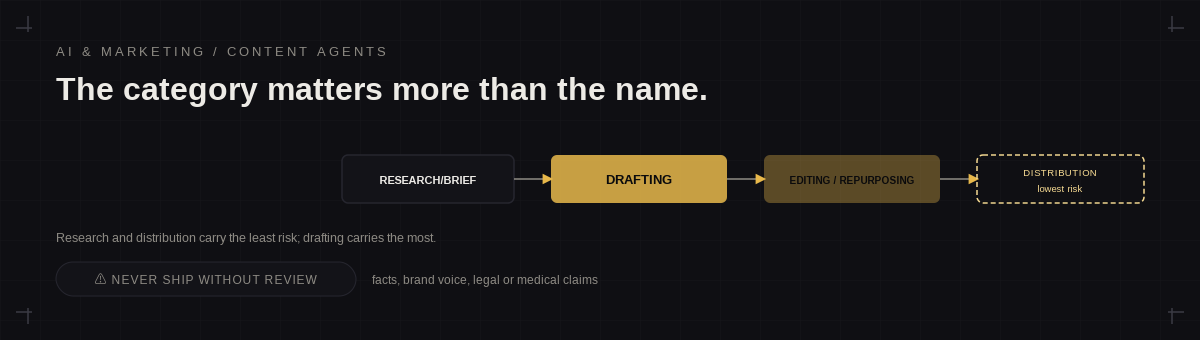
A categorized landscape of AI agent tools for content creation (research, drafting, editing, distribution), and where human review still belongs.
A content strategy built for zero-click searches: measuring brand impact beyond clicks, structuring for AI citations, and what to actually optimize for now.
A diagnostic guide for when Search Console shows dropping clicks but stable impressions: SERP feature changes, AI Overviews, and CTR-specific fixes.
A free interactive user intent mapping tool: paste your keyword list, get a suggested intent type and funnel stage, and export a content mapping table.
How Australian D2C brands should split SEO investment between local search visibility and reaching US/UK/global buyers.
How to optimize Google Ads search query reports on an ongoing basis: negative keyword mining, match type review, and the cadence that keeps spend efficient.
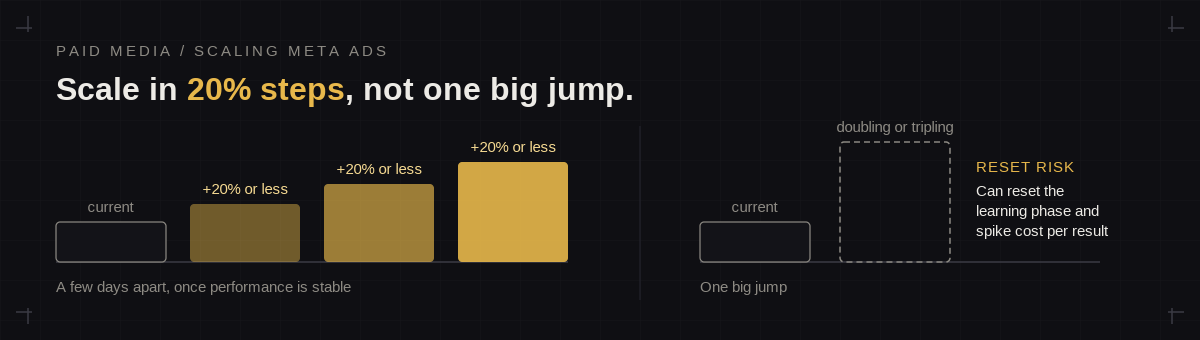
How to scale a Facebook/Meta Ads budget without resetting the learning phase: the safe increment size, timing, and what actually triggers a reset.
What actually changes when scaling a D2C brand from 7 to 8 figures in revenue: operations, team structure, and channel diversification, not just more ad spend.
How to reverse engineer a competitor's paid ad strategy using public ad transparency libraries and landing page analysis: legally, without any paid spy tool.
Programmatic SEO vs. traditional SEO: when templated, data-driven pages make sense, when they don't, and how the two work together.
A beginner's guide to building programmatic SEO pages, picking a data source, building the template, and the technical basics to get right.
A paid media strategy framework structured for a stakeholder presentation: goals, channel mix, KPI tree, and testing roadmap, in the order to present them.
Outbound vs. inbound lead generation compared directly: speed, cost, and durability trade-offs, and how to sequence both rather than picking one permanently.
How to optimize a founder's LinkedIn profile (headline, banner, about section, and featured section), so it works as hard as your content strategy.
Advantage+ audience vs. manual targeting on Meta Ads compared: when each one wins, and how to migrate without losing signal.
Google Local Services Ads optimization tips: how the pay-per-lead model differs from Search ads, and the levers that move ranking and lead quality.
A step-by-step local SEO audit covering Google Business Profile, citation consistency, and local link building: distinct from a general or ecommerce SEO audit.
A LinkedIn thought leadership strategy for founders, choosing a point of view, a posting cadence, and an engagement approach that builds real authority.
A free Lead Velocity Rate (LVR) calculator: enter this month's and last month's qualified leads to get your LVR%, plus benchmarks and what stalls it.
A framework for building a lead generation quiz funnel: question structure, result segmentation, and follow-up sequencing that produces leads.
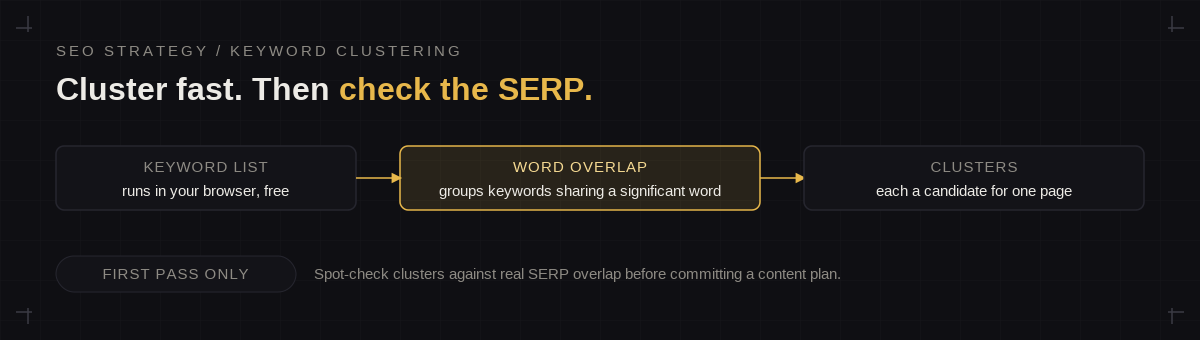
A free keyword clustering tool that groups a keyword list by shared word overlap: a fast first-pass clustering method before deeper SERP-based grouping.
How to increase conversion rate without more ad spend: organic traffic quality, on-site experience, trust signals, and email capture, as a complete strategy.
An overview of inbound lead generation channels for tech startups (content, SEO, community, and partnerships), and how to sequence investment.
How to pitch a content strategy to stakeholders who think in revenue, not blog posts: the framing, evidence, and structure that actually gets budget approved.
How to clean an email list before a campaign: bounce and engagement-based suppression, verification, and how to re-warm a list safely after cleaning.
A high-converting landing page copywriting framework: headline, subhead, proof, and CTA structure, with illustrative before/after patterns.
Growth marketing strategies specific to D2C fashion brands: UGC content, creator partnerships, drop-based launches, and fit content generic advice skips.
What to look for in growth marketing consulting after a Series A: the questions to ask, red flags, and how it should differ from pre-seed advice.
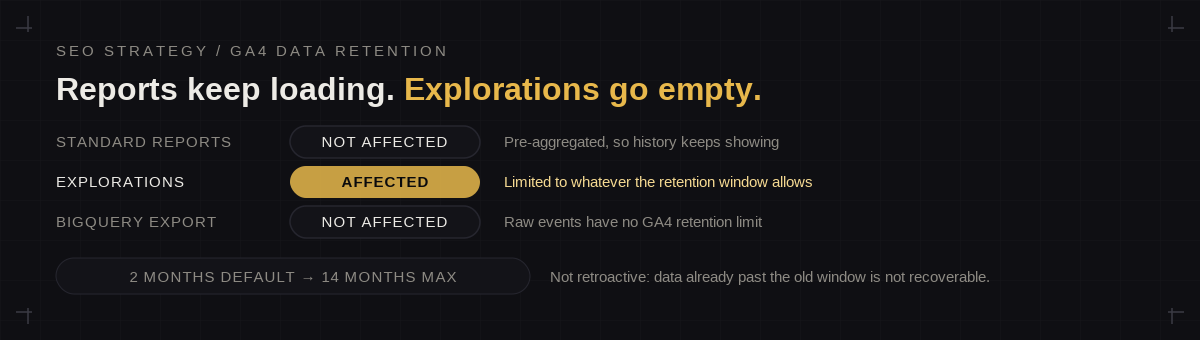
GA4's data retention setting silently deletes event-level data after 2 or 14 months. Here's what it actually controls, why it's easy to miss, and how to fix it.
What counts as a good conversion rate for Meta Ads, broken down by campaign objective and funnel stage, and why comparing across objectives is misleading.
How to build a full-funnel marketing campaign map: matching channel, message, and CTA to each funnel stage so campaigns don't compete with themselves.
How to identify and build evergreen content assets that keep converting for years: the difference between evergreen and just old.
An ecommerce SEO audit checklist covering faceted navigation, product and category duplicate content, and the structured data generic checklists miss.
Dynamic Search Ads (DSA) best practices: when to use them, how to structure targets, and the negative keyword discipline they need.
What determines a digital marketing consultant hourly rate: experience, scope, and how hourly, retainer and project pricing compare, explained honestly.
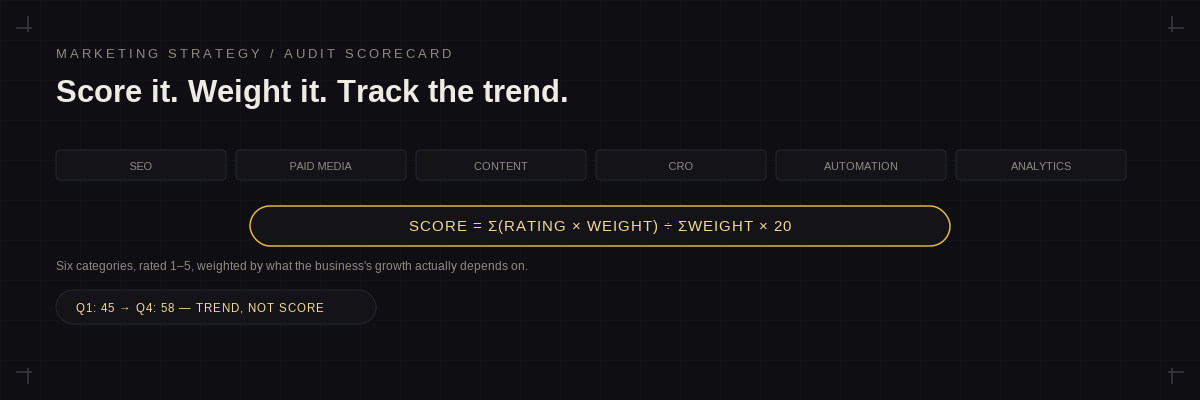
A weighted digital marketing audit scorecard framework: rate SEO, paid media, content, CRO, and analytics quarterly, and track the trend over time.
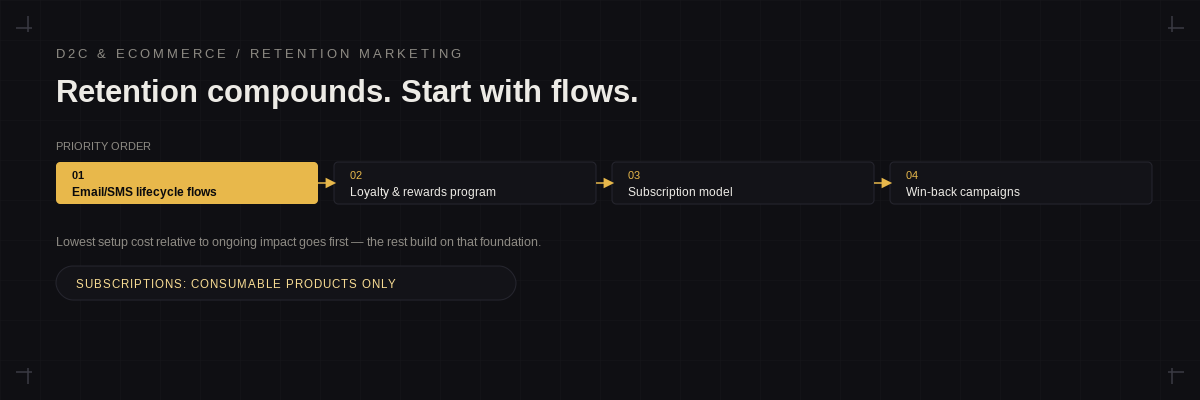
D2C retention marketing strategies: email/SMS flows, loyalty programs, subscription models, and win-back campaigns, and how to prioritize them by impact.
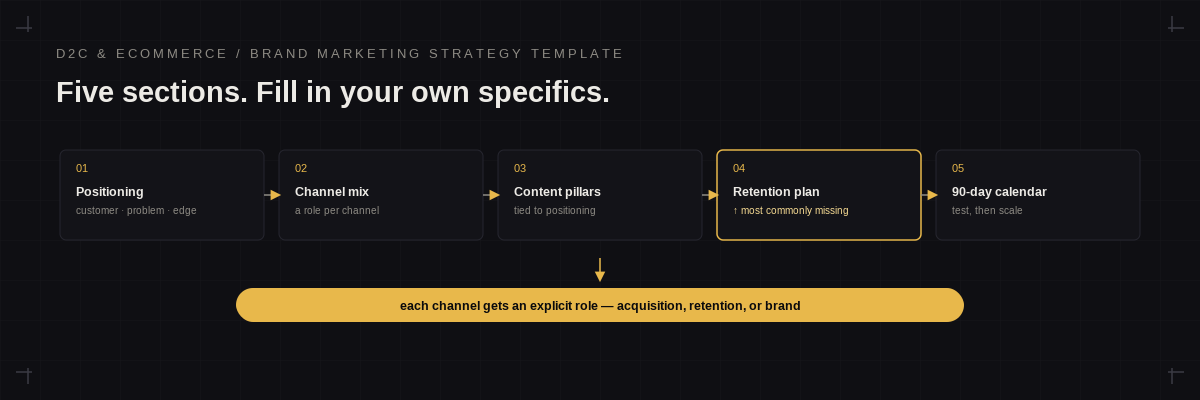
A fill-in-the-blank D2C brand marketing strategy template: positioning, channel mix, content pillars, and a 90-day launch calendar structure.
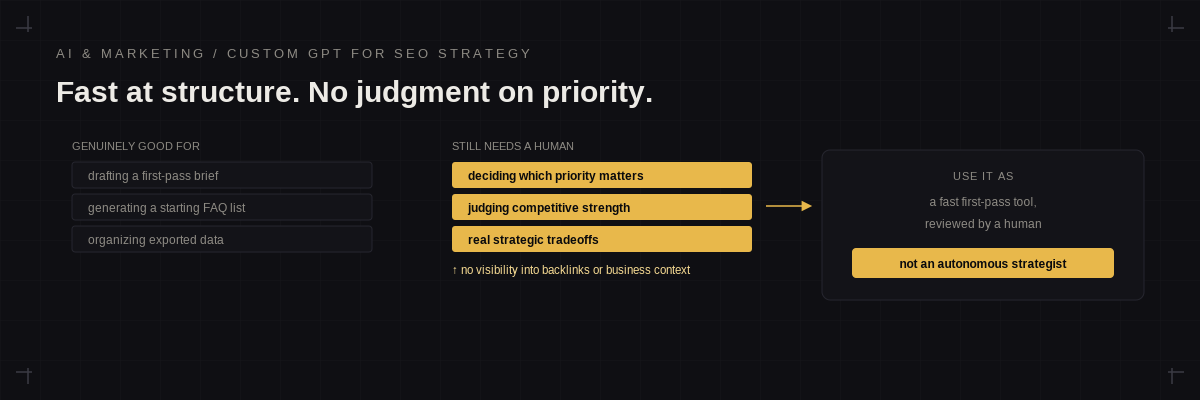
How to build a custom GPT for SEO strategy work: what to actually put in the instructions, what it's good for, and where it still needs a human expert.
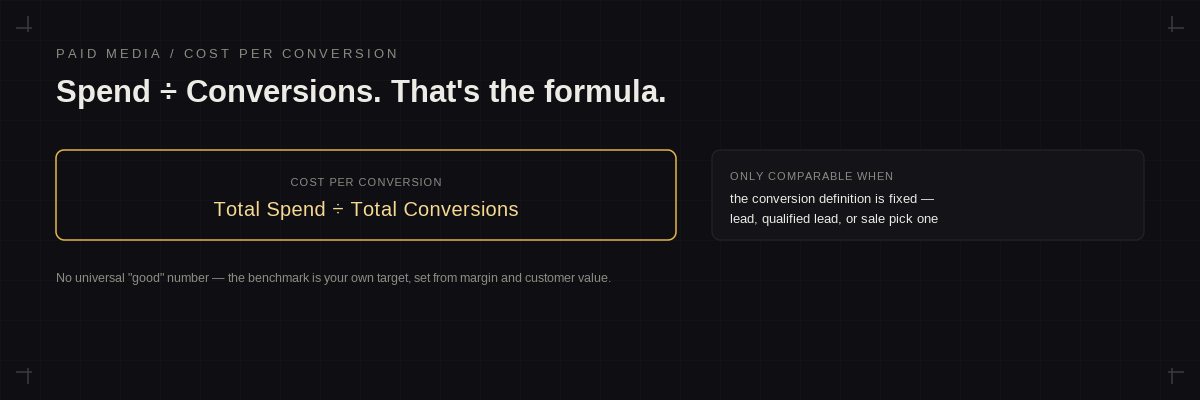
A free cost per conversion calculator: enter ad spend and conversions to get your cost per conversion, plus how to use it to judge efficiency.
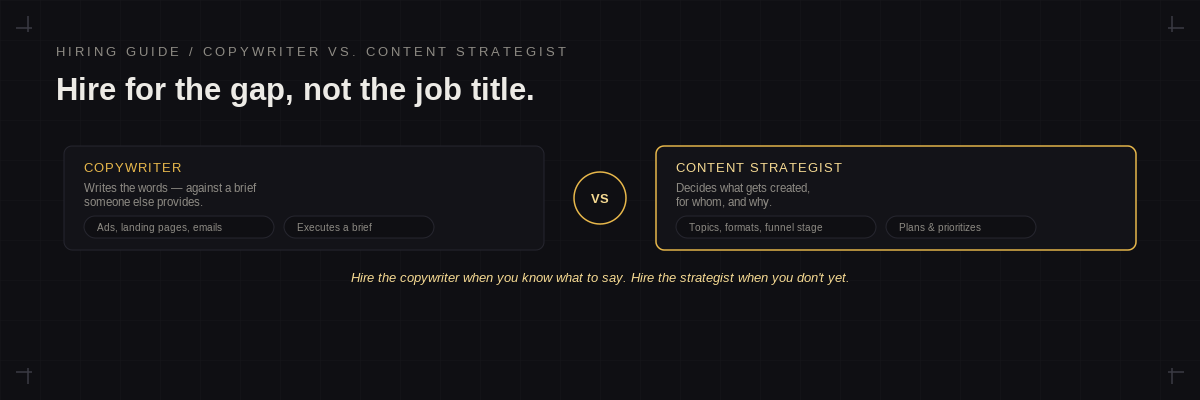
Copywriter vs. content marketing strategist compared: what each role actually owns, when a business needs one, the other, or both.
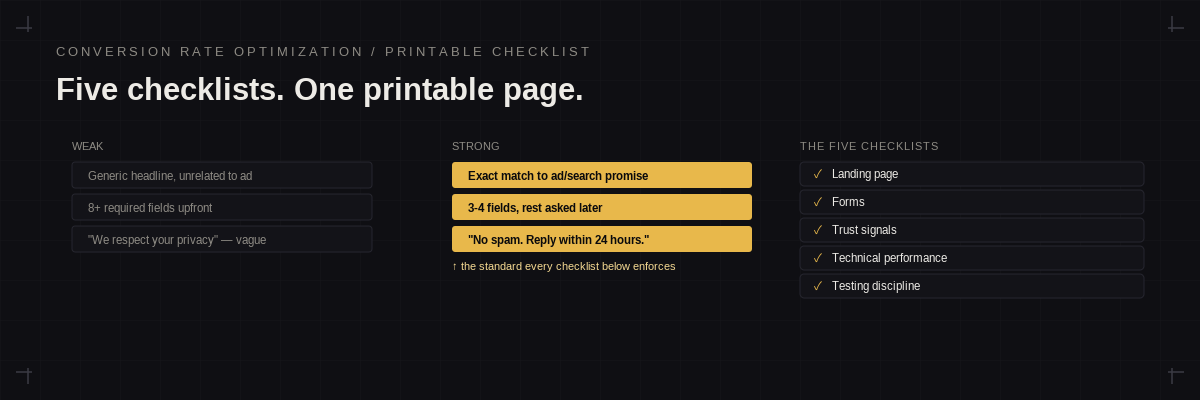
A complete conversion rate optimization checklist, printable as PDF: landing pages, forms, trust signals, technical performance, and testing discipline.
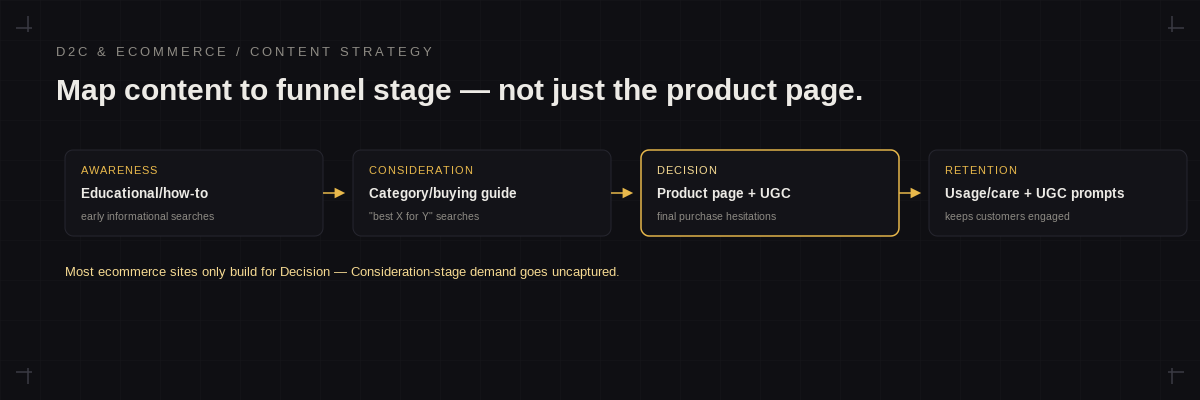
A content strategy framework for ecommerce: product content, category guides, and UGC mapped to funnel stage, distinct from a general D2C brand strategy.
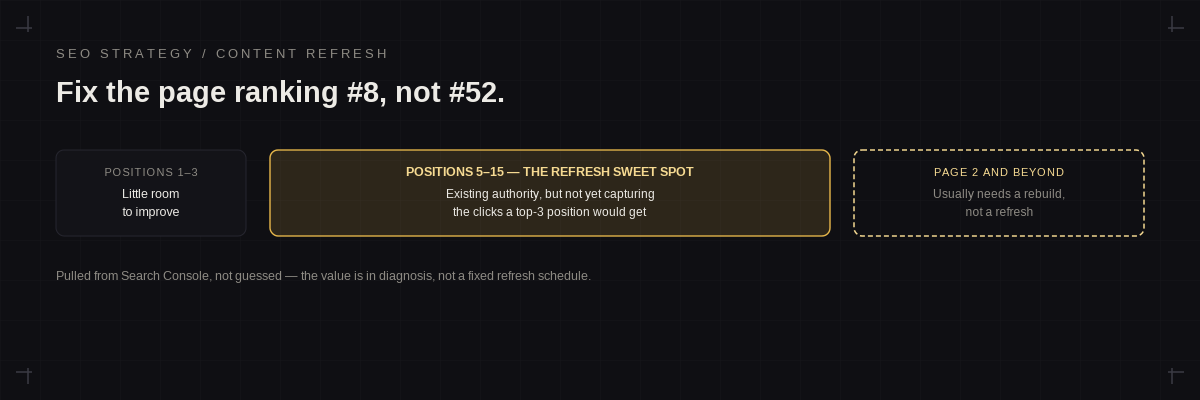
A content refreshing strategy for organic growth: how to find pages worth updating, what to actually change, and how to measure whether the refresh worked.
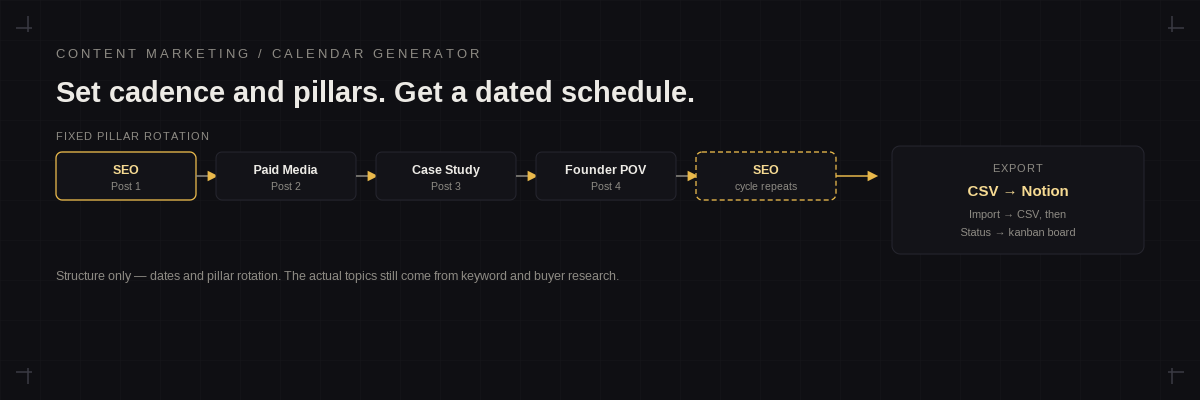
A free content marketing calendar generator: set your start date, cadence, and content pillars, and export a ready-made schedule to Notion or CSV.
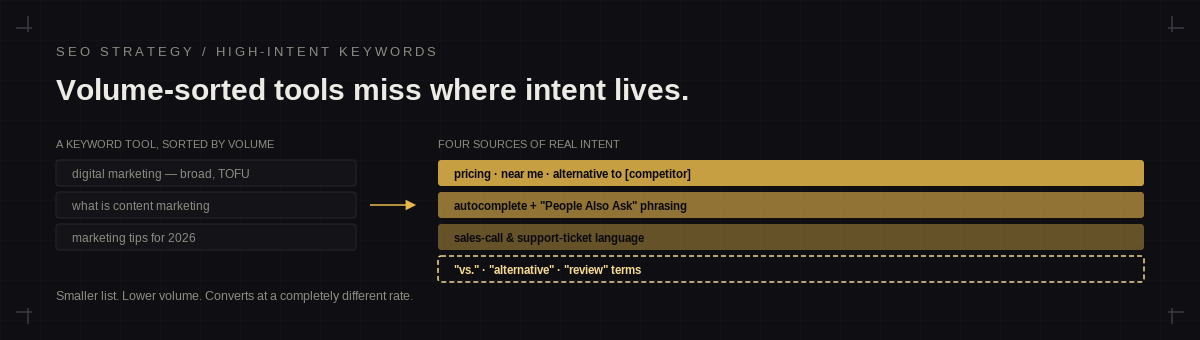
How to build a high-intent keyword list, where to source bottom-of-funnel keywords, and how to tell real buying intent from noise.
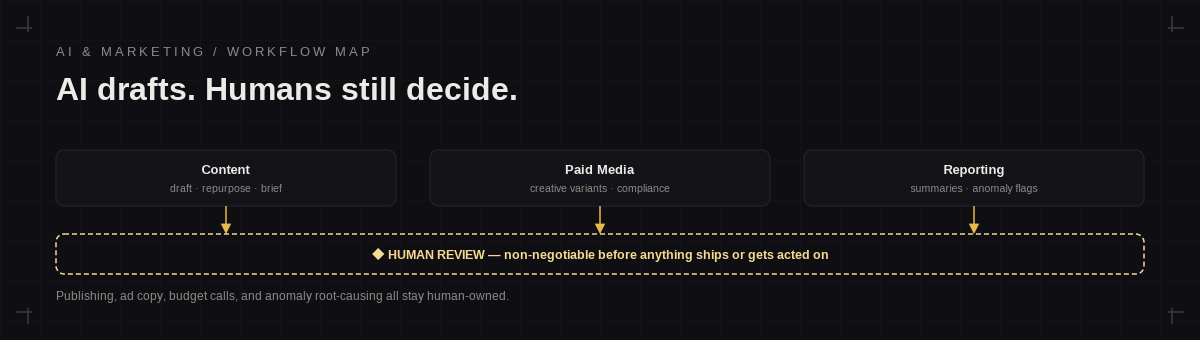
Practical AI workflows for marketing teams across content, paid media, and reporting, not just lead generation, with where human review still belongs in each.
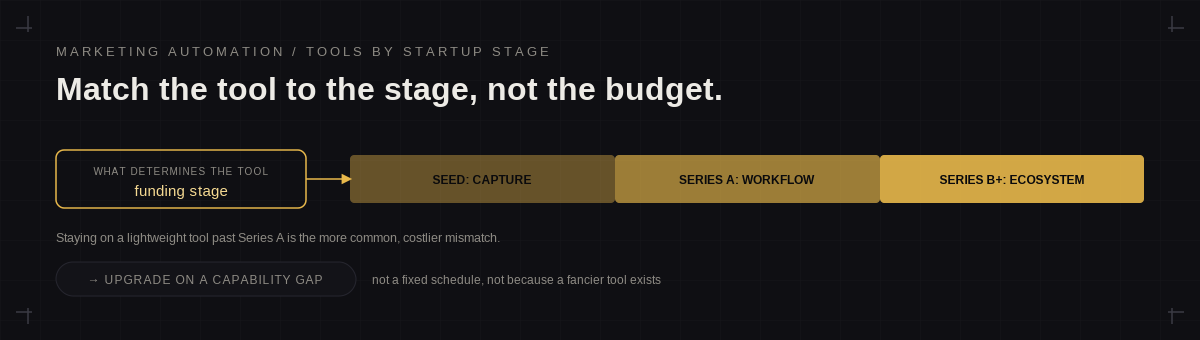
B2B marketing automation tools matched to startup stage (pre-seed/seed, Series A, and Series B+), since the right tool depends more on stage than budget alone.
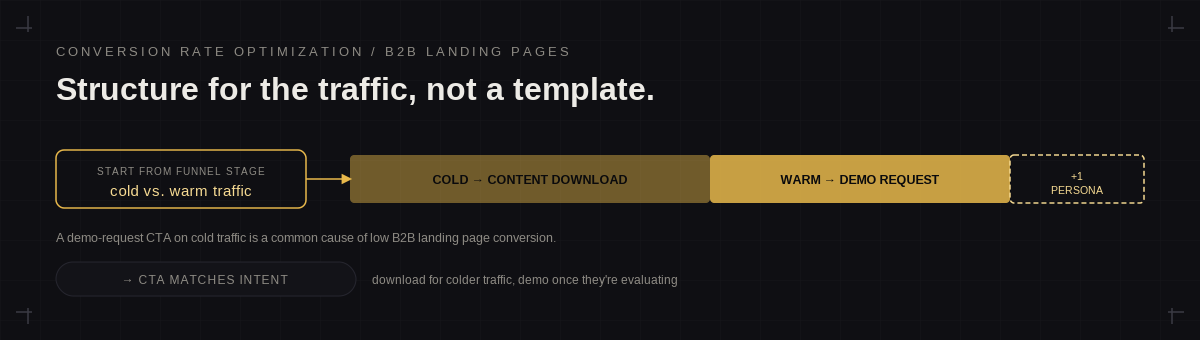
B2B lead generation landing page structure: form placement, B2B-specific proof, and demo vs. content-download CTA choice, illustrated as patterns.
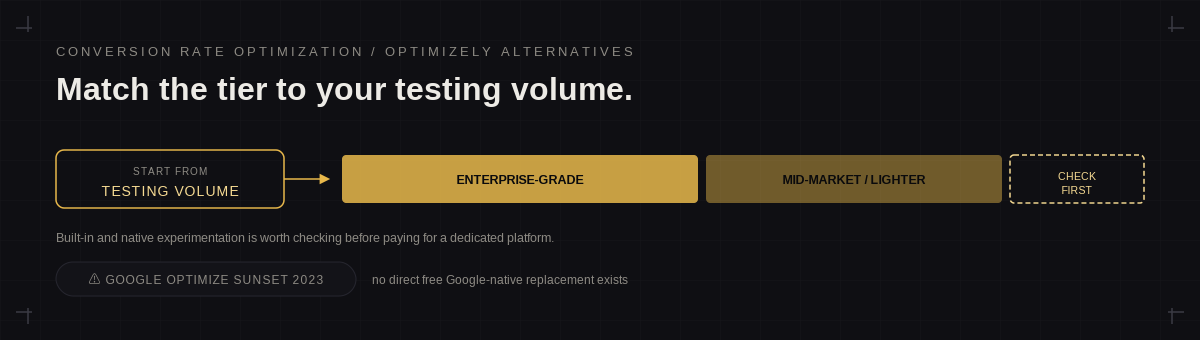
Which Optimizely alternatives for A/B testing fit best: enterprise competitors, mid-market tools, and native options compared by cost and setup complexity.
How to find and fix common tracking pixel implementation errors (Meta Pixel, Google tag, and GA4) before they quietly break your conversion data.
The technical SEO fixes that protect crawl budget on larger sites: cutting wasted crawler requests so search engines spend their time on the pages that matter.
A technical SEO checklist for site migrations (domain changes, replatforming, or URL changes) redirects, sitemaps, and the sequence to avoid losing rankings.
How to scale B2B lead generation using AI agents for research, enrichment, and outreach, without losing personalization or triggering spam filters.
Organic pipeline generation for B2B: how SEO, content and community channels compound into qualified pipeline instead of just visitor counts.
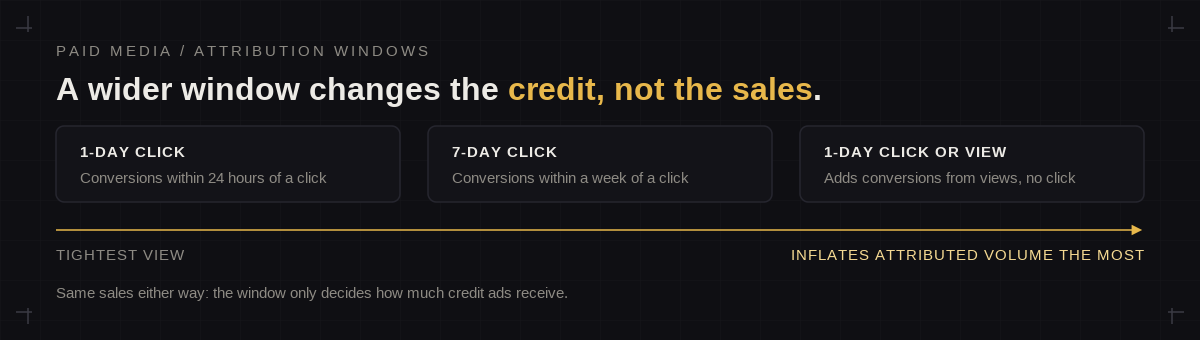
What the Meta Ads attribution window means, how 1-day vs. 7-day click windows change reported results, and how to pick the right one.
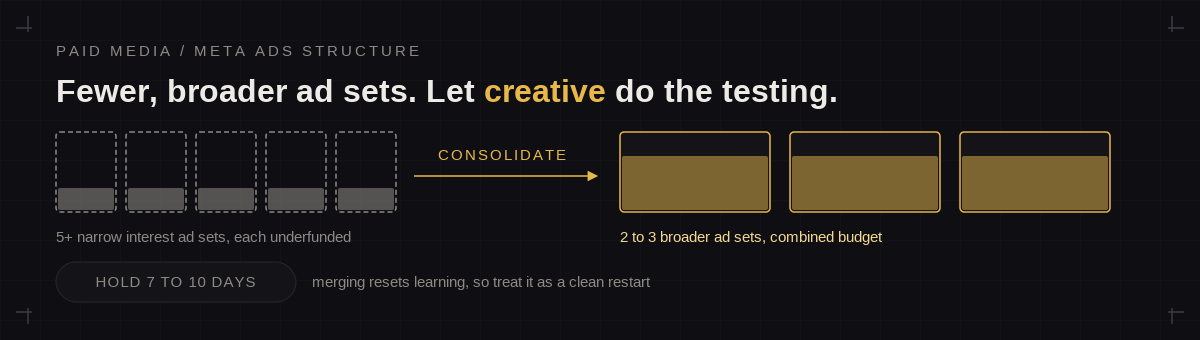
How to fix Meta Ads audience fragmentation (when overlapping ad sets split budget and stall the algorithm's learning phase), with a consolidation framework.
HubSpot vs. ActiveCampaign vs. Klaviyo compared for Canadian startups: pricing model, features, and which fits your stage.
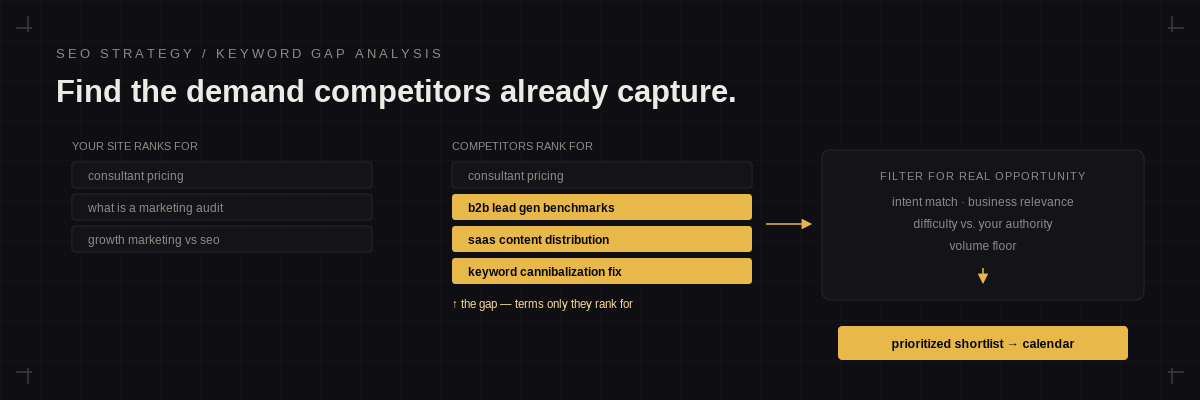
How to run a keyword gap analysis: find keywords competitors rank for that you don't, filter for real opportunity, and prioritize a content plan.
A practical GEO checklist: the technical, content, and structured data changes that get a brand cited inside ChatGPT, Perplexity, and AI Overviews.
An enterprise SEO audit methodology: the systematic, multi-stakeholder process for auditing large websites without missing what moves rankings.
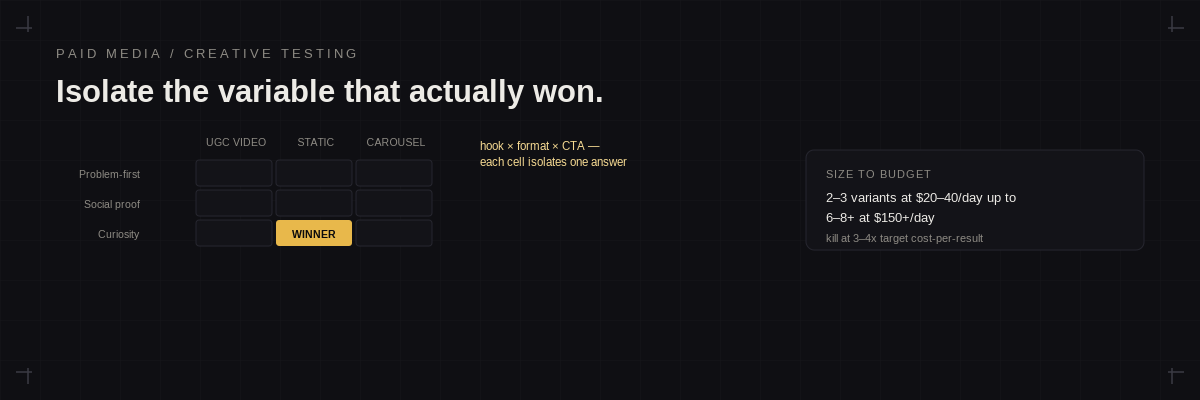
A free interactive creative testing matrix builder for Meta Ads: generate a structured hook x format x CTA test grid sized to your budget.
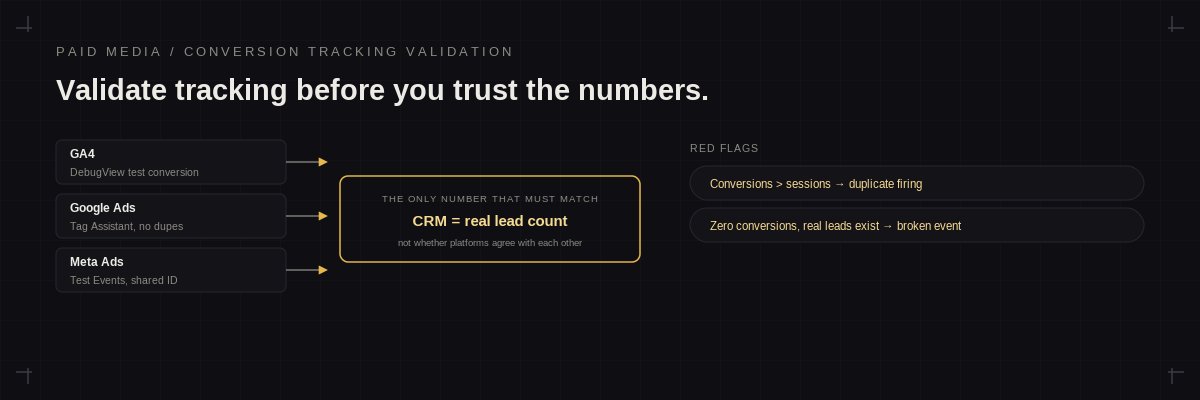
A conversion tracking validation checklist for Google Ads, Meta Ads, and GA4: catch broken pixels and duplicate conversions before they cost you budget.
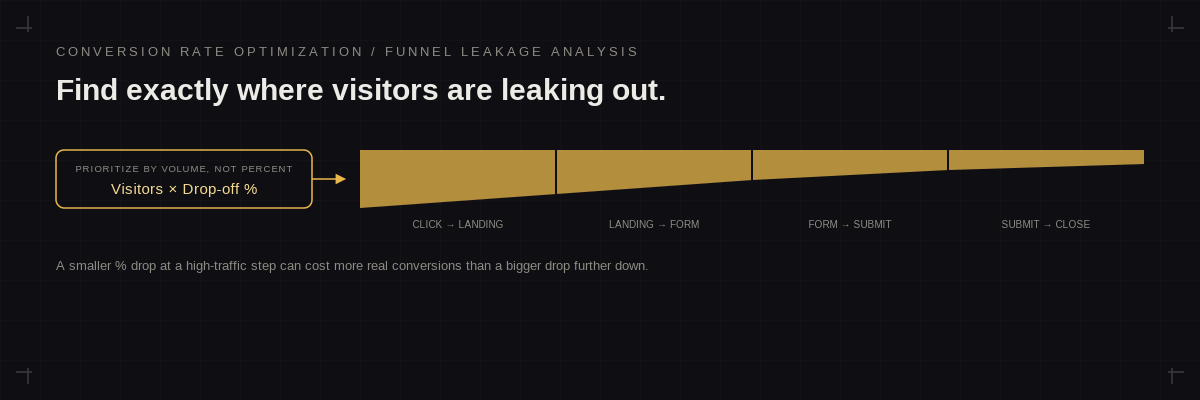
How to run a conversion funnel leakage analysis: find exactly where visitors drop off between click and conversion, and which leaks are worth fixing first.
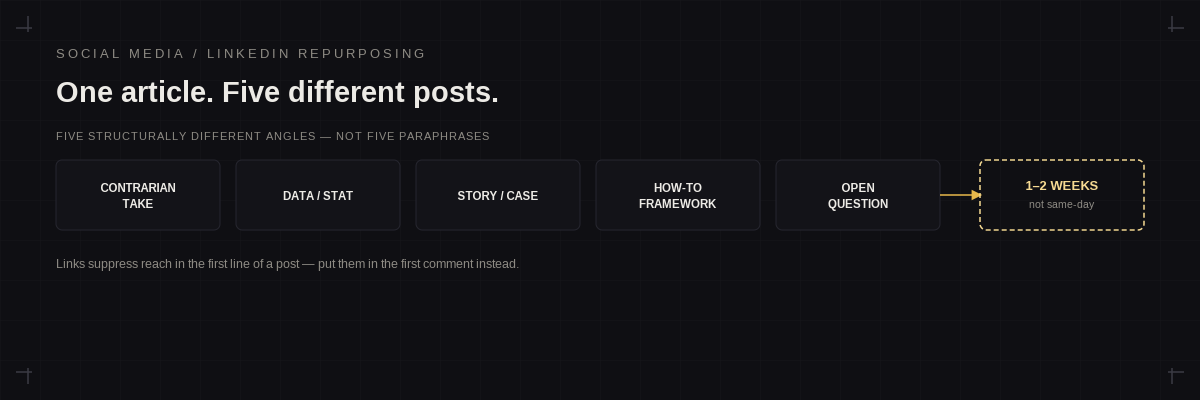
A practical content repurposing framework for turning one piece of long-form content into a week of LinkedIn posts, without sounding like recycled filler.
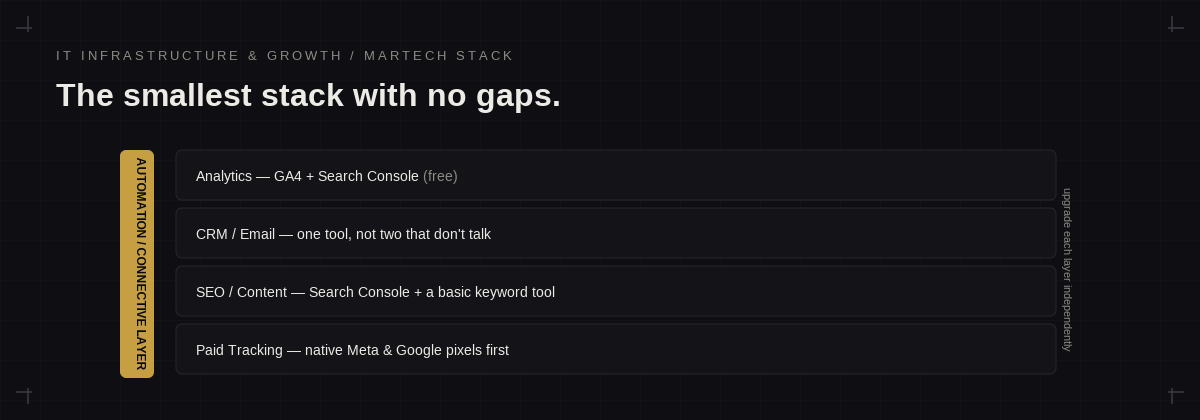
A practical marketing tech stack for a bootstrapped SaaS: the minimum tools that cover analytics, CRM, email, and SEO without the enterprise price tag.
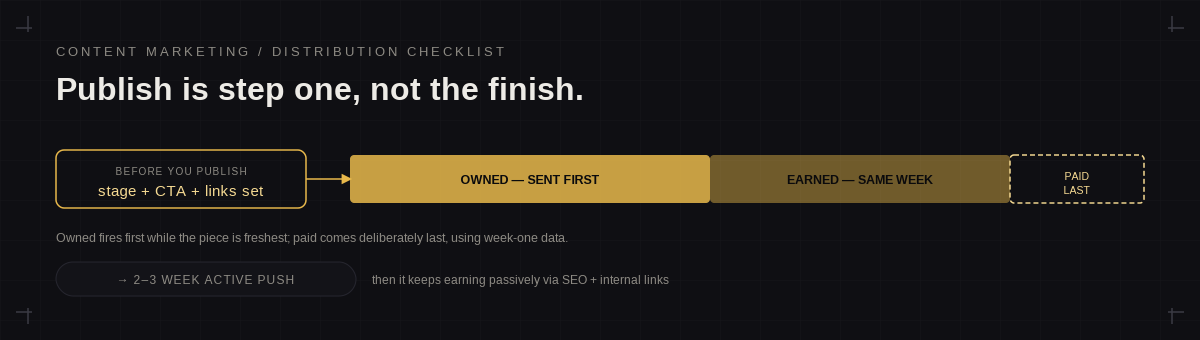
A B2B content distribution checklist covering owned, earned, and paid channels: the sequence to get one piece of content in front of the right buyers.
How UK SEO agency retainers compare to consultant pricing, and which one actually gives you direct access to the person doing the work.
Typical Google Ads CPC ranges, budget minimums, and ROI expectations for UAE businesses across common industries.
A practical guide to running marketing automation and CRM workflows that meet German and EU GDPR requirements without slowing down growth.
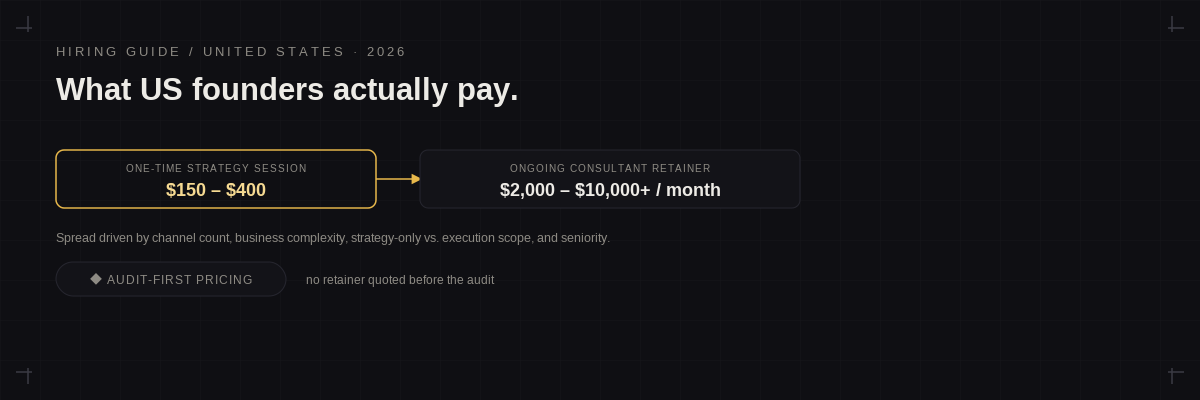
What US founders actually pay for a digital marketing consultant in 2026: hourly, project, and retainer pricing compared to agencies and freelancers.
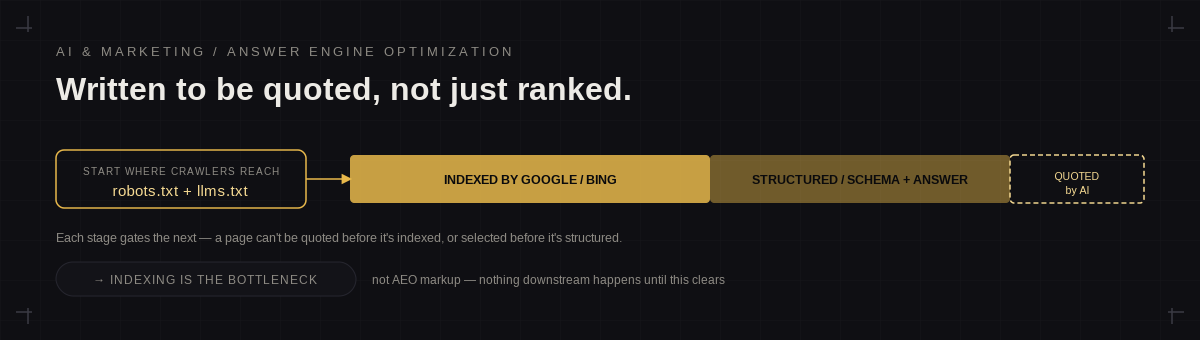
How to get cited by ChatGPT, Perplexity, and Google AI Overviews: structured data, FAQ schema, and content structure that AI answer engines actually pull from.
Which countries Rewansh works with as a remote digital marketing consultant: US, UK, Germany, UAE, Canada, Australia, Singapore, India, and more.
How D2C and SaaS brands should approach social media differently: platform choice, content systems, and why organic social is a trust layer.
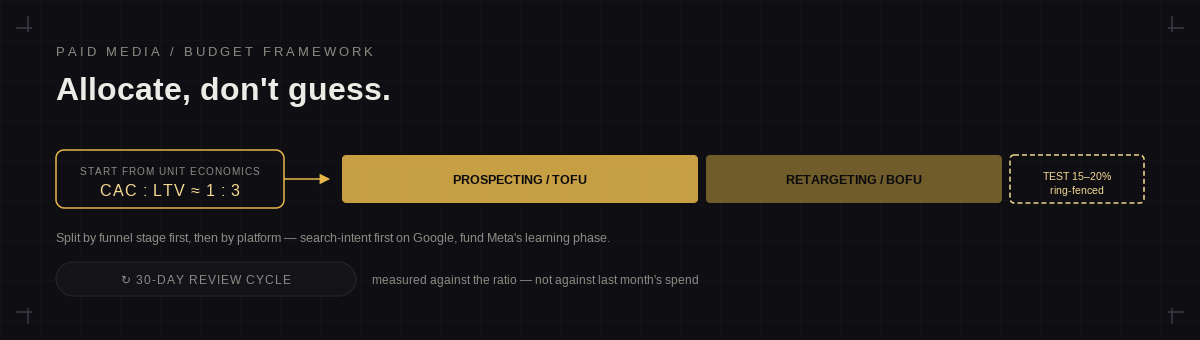
A practical framework for setting a Google and Meta Ads budget: funnel-stage allocation, learning-phase minimums, testing budget, and a 30-day review cycle.
A practical marketing audit checklist covering SEO, paid media, content, conversion, and analytics: the exact framework used before any new client engagement.
How to scale a D2C brand with paid ads without burning cash: build an owned audience early, put retention first, and diversify beyond Meta and Google.
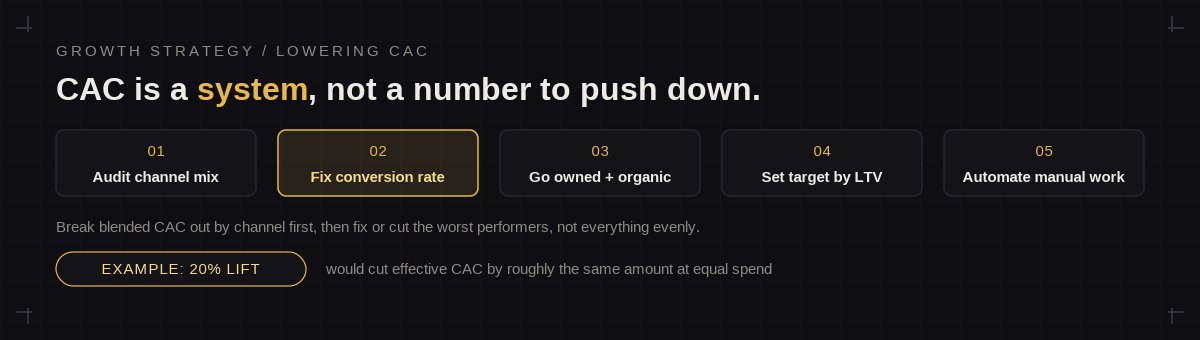
Practical ways to lower customer acquisition cost (CAC) without slowing growth: channel audits, conversion rate fixes, owned-channel investment, and automation.
A practical framework for increasing organic traffic in 2026: technical SEO, intent-mapped content, topical authority, and AI answer engine optimization.
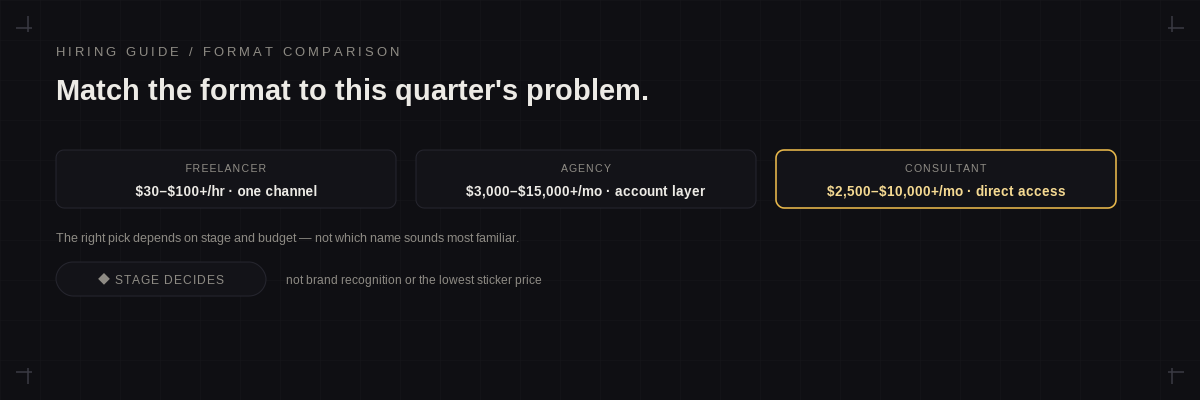
A practical framework for choosing between a consultant, agency, or freelancer: based on stage, budget, and how much direct access you need.
How AI is actually changing digital marketing in 2026: content at scale, AI-driven paid media, and the SEO vs. AI answer engine split.
Free Audit
Tell me where you're stuck. I'll review it and send back a free, anonymized audit of what's going wrong and how I'd fix it.