Short answer: A brand positioning strategist is what a business needs when the problem is that prospects can't articulate why the business wins, who it's for, or how it's different, none of which a new logo, color palette, or website template fixes. A rebrand changes how the business looks. Positioning work changes how the business is understood, and confusing the two is one of the most expensive mistakes a growing company can make.
What a rebrand actually changes
A rebrand is a visual identity project: new logo, new color palette, new typography, sometimes a new website design layered on top. It's real work with real value when the existing identity looks dated or inconsistent, but it operates entirely on the surface. Nothing about a rebrand touches how the sales team explains the pitch, how the website copy frames the problem, or why a prospect should pick this business over the three other tabs open in their browser.
What a positioning strategist actually does instead
A brand strategist working on positioning is answering three questions a logo can't answer: who the business is specifically for, what it stands against, and why it wins against the alternative a prospect is actually comparing it to. This is strategic work, not visual work, and it shows up in messaging, sales conversations, and website copy well before it shows up in any design file. A messaging consultant engaged for this kind of project typically starts by interviewing the sales team and recent customers, not by opening a design tool.
Three signs the problem is messaging, not design
The first sign is a sales team that can't explain the pitch consistently. If five reps give five different thirty-second answers to what the business does, that's a positioning gap no visual refresh will close. The second sign is a rebrand that already happened and didn't move conversion rate, a business that spent real budget on new visuals only to see the same sales cycle length and the same close rate is proof the underlying confusion was never visual in the first place. The third sign is prospects confusing the business with a competitor, which almost always means the differentiation was never clearly stated anywhere a buyer could find it, not that the logo looked too similar to someone else's.
Why the visual-first instinct is so common
Rebranding feels like progress because it produces something tangible fast, a new logo, a new site, a new deck, all deliverable within a few weeks. Positioning work is slower and less visible, it produces a document and a set of decisions before it produces anything a stakeholder can point to and say "that's new." That asymmetry is exactly why so many businesses default to hiring a rebranding consultant when the actual problem sits one layer deeper, because the visual fix is easier to greenlight and easier to see finished.
The cost of getting the order wrong
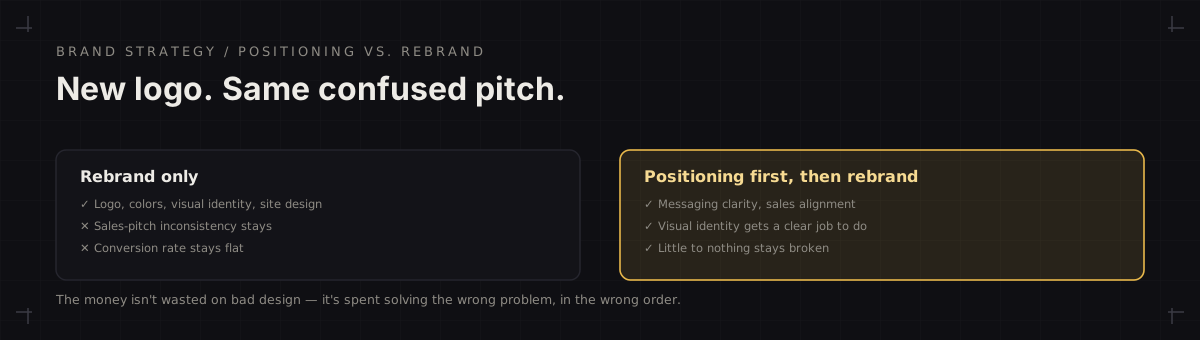
| Approach | What actually changes | What stays broken |
|---|---|---|
| Rebrand only | Logo, colors, visual identity, site design | Sales pitch inconsistency, competitor confusion, flat conversion rate |
| Positioning first, then rebrand | Messaging clarity, sales alignment, then a visual identity built to communicate it | Little to nothing, the visual work now has a clear job to do |
Spending on a visual rebrand while the underlying positioning confusion goes untouched is how a business ends up with a beautiful new website and the exact same close rate six months later. The money wasn't wasted on bad design, it was spent solving the wrong problem.
What the right order looks like
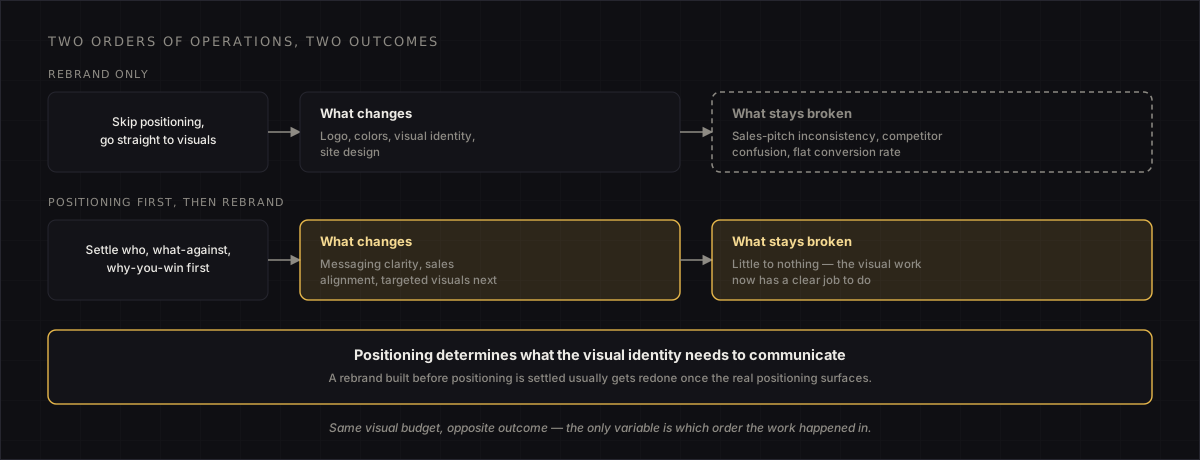
Positioning work should come first because it determines what the visual identity is supposed to communicate. Once the who, what-against, and why-you-win are settled and validated against how the sales team actually pitches and how customers actually describe the business, a rebrand becomes a much more targeted project, one built to express a clear position rather than one hoping a clear position emerges from a new color palette.
Bottom line
A rebrand and a positioning fix solve different problems, and applying the wrong one doesn't just waste budget, it leaves the actual issue, a confused or inconsistent pitch, exactly where it was before the new logo shipped. If the sales team can't explain the business the same way twice, that's the project to run before touching a single visual asset.
FAQ
How do I know if my business has a messaging problem or a design problem?
Ask the sales team to explain the pitch out loud without notes. If three different people give three different answers to what the business does and why it wins, that's a messaging problem no logo change will fix. A design problem shows up as inconsistency in how the brand looks, a messaging problem shows up as inconsistency in how the brand is explained.
- Inconsistent explanations of the pitch across the sales team point to a positioning gap, not a visual one.
- A messaging problem persists through a rebrand because new visuals don't answer who you're for or why you win.
Can a rebrand and a positioning project happen at the same time?
Yes, but the order matters. Positioning work, defining who the business is for, what it's against, and why it wins, should be settled first, because it determines what the new visual identity needs to communicate. Starting with the logo and hoping the positioning falls into place backwards usually produces a nice-looking brand that still can't explain itself.
- Positioning should be settled before visual design work starts, not worked out alongside it.
- A visual identity built before positioning is settled usually has to be redone once the real positioning surfaces.