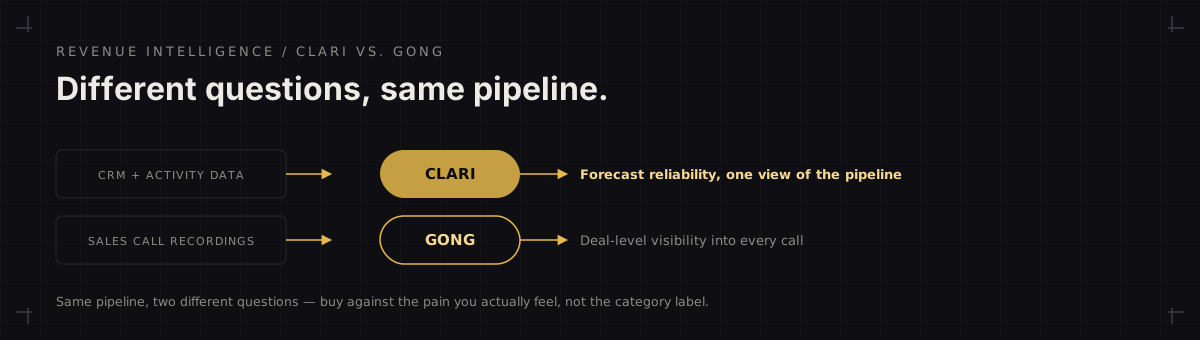
Short answer: choose Clari if your most urgent problem is forecast reliability — leadership can't trust the numbers reps submit. Choose Gong if you're losing deals without knowing why, or want to scale what top performers do on calls. Mature revenue teams often run both; a growing team should buy against the pain it feels right now.
Clari and Gong both get filed under "revenue intelligence," which makes them sound interchangeable, but they're built to answer different questions about the same pipeline. Clari asks what's actually going to close. Gong asks what actually happened on the calls that got a deal there.
Clari: forecasting and pipeline visibility
- Core job. Rolls up CRM and activity data into forecasting views that flag inconsistent rep-level forecasting habits and at-risk deals before they slip.
- Strength. Gives sales leadership one consistent view of the pipeline instead of relying on each rep's individually reported forecast confidence.
- Best fit. Organizations where forecast accuracy and pipeline predictability are the immediate pain point, especially multi-rep or multi-region teams where forecasts have historically varied by who's asked.
Gong: conversation intelligence
- Core job. Records and analyzes sales calls, surfacing talk-to-listen ratio, competitor mentions, objection patterns, and deal risk signals straight from the conversation itself.
- Strength. Gives managers visibility into how deals are actually being run without needing to sit in on every call personally.
- Best fit. Organizations losing deals with no clear visibility into why, or wanting to replicate what top reps do differently in their calls.
Where they overlap, and where they don't
| Capability | Clari | Gong |
|---|---|---|
| Pipeline forecasting | Core strength | Limited, not the primary job |
| Call recording and analysis | Not a core feature | Core strength |
| Deal risk flagging | From CRM and activity data | From conversation content |
| Coaching individual reps | Indirect, via forecast accuracy | Direct, via call review |
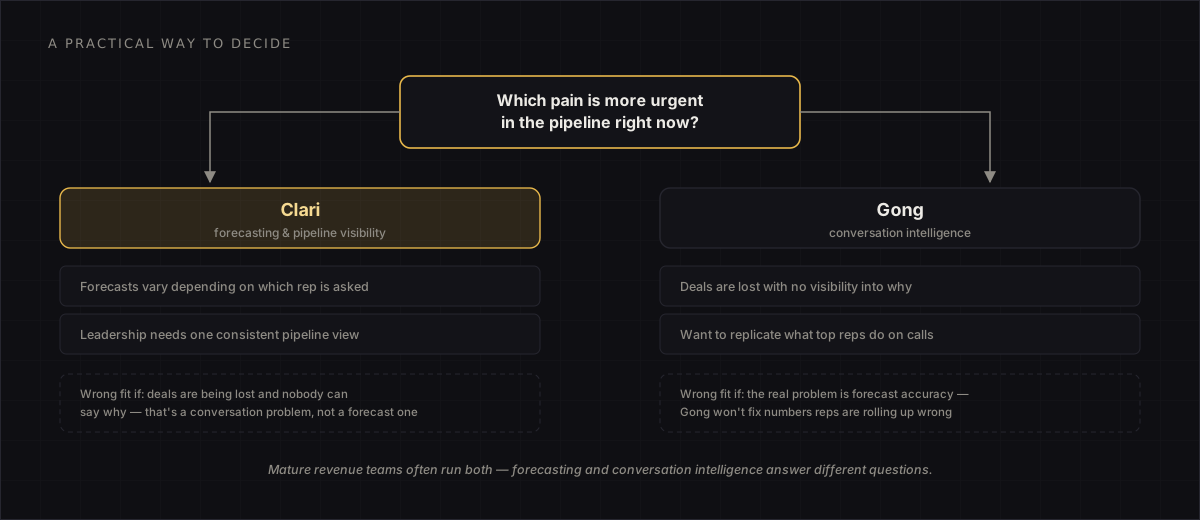
A practical way to decide
A sales organization whose most urgent problem is forecast reliability, where leadership can't trust the numbers coming up from reps, gets more immediate value from Clari. One whose most urgent problem is losing deals without knowing why, or wanting to scale what top performers do differently, gets more from Gong. Larger, more mature revenue teams often end up running both, since accurate forecasting and conversation-level visibility answer genuinely different questions, but a growing team without budget for both should buy against the specific pain being felt right now, not the more popular category label.
FAQ
Do Clari and Gong do the same thing?
They overlap at the edges but start from different core jobs. Clari is built around forecasting accuracy and pipeline visibility, rolling up CRM data into a view of what's likely to close. Gong is built around conversation intelligence, recording and analyzing sales calls to surface what actually happened in a deal. Many larger sales orgs run both because forecasting and conversation analysis answer different questions, not because either alone covers the other's job.
- Clari's core job is forecasting and pipeline visibility from CRM data.
- Gong's core job is analyzing actual sales conversations, a different data source and question.
Which one should a growing sales team buy first?
It depends on which specific problem is being felt. If forecasts vary wildly depending on which rep is asked and leadership can't trust the pipeline numbers, Clari addresses that directly. If deals are being lost and nobody can say why because managers can't listen to every call, Gong addresses that instead. Buying either one to solve the other's problem tends to produce a tool that gets underused.
- Unreliable forecasting points toward Clari.
- Losing deals with no visibility into why points toward Gong.