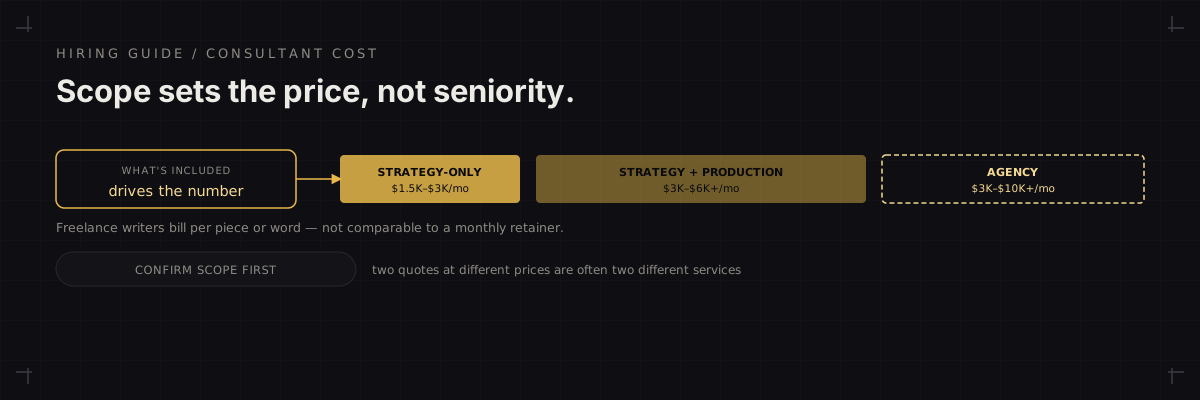
Short answer: a content marketing consultant typically charges $75 to $200+ an hour, or $1,500 to $6,000+ a month for an ongoing retainer, with the range depending mainly on whether the engagement is strategy-only or includes hands-on content production as well.
1. What actually drives the price
The single biggest variable is scope of work, not seniority alone: a strategy-only engagement (editorial calendar, briefs, performance review) costs meaningfully less than one that also includes writing, editing, or managing a team of writers. Beyond that, industry complexity matters, since B2B SaaS or technical content generally commands a premium over general lifestyle or consumer content due to the research and subject-matter depth required per piece.
2. Strategy-only versus strategy-plus-production
| Engagement Type | What's Included | Typical Monthly Range |
|---|---|---|
| Strategy-only | Editorial calendar, briefs, performance review, no drafting | $1,500 to $3,000 |
| Strategy plus production | All of the above, plus writing or managing writers | $3,000 to $6,000+ |
These are illustrative ranges. A company already staffed with capable writers who just needs direction gets the most value from strategy-only; a company with budget but no internal writing capacity usually needs the fuller scope to actually ship content on schedule.
3. How this compares to agencies and freelance writers
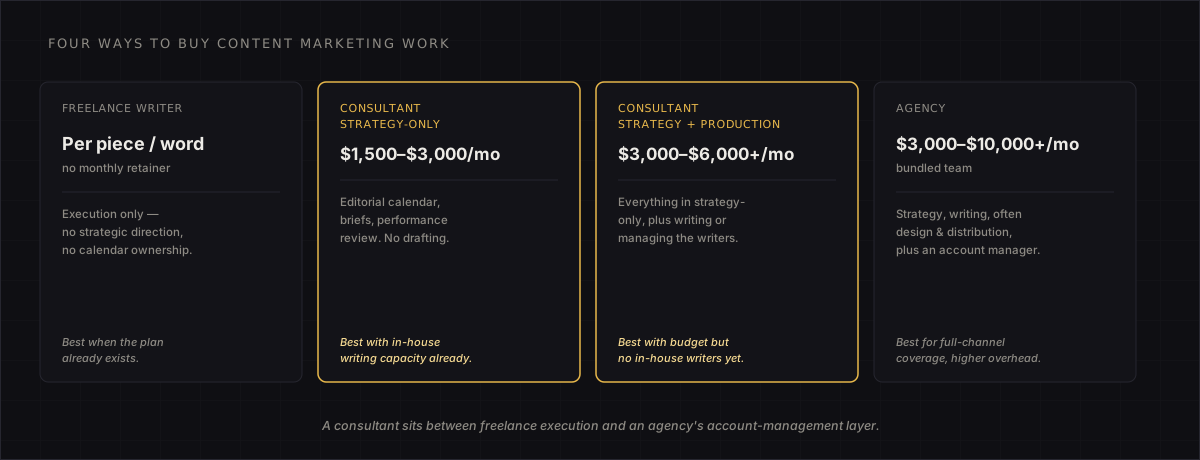
Content agencies typically bill $3,000 to $10,000+ a month and bundle strategy, writing, and sometimes design and distribution, with an account manager coordinating the team. Freelance writers bill per piece or per word, commonly covering execution only with no strategic direction included. A consultant sits between the two, providing strategic direction with either light or full production support, without the account-management layer of an agency.
4. A concrete example
As a reference point, engagements here start with a content audit and gap analysis before any retainer is discussed, so the scope and pricing reflect what the content actually needs rather than a generic package applied regardless of the starting point.
5. Questions to ask before signing anything
- Does the fee include writing, or only strategy and review?
- How is content performance measured, traffic, rankings, or pipeline influence?
- Who owns the final editorial calendar if the engagement ends?
- Is there a minimum content volume commitment, and does it match actual publishing capacity?
Content marketing pricing without a clear scope boundary is where most disappointment comes from, not the hourly rate itself. Get explicit agreement on strategy-only versus full production before comparing two quotes against each other, since they aren't the same service at different prices.
FAQ
Is it cheaper to hire a content marketing consultant or a full-time content marketer?
For a company that needs strategy and direction more than volume, a consultant is usually cheaper than a full-time hire, since it avoids salary, benefits, and tooling overhead for a role that may not need to be full-time yet. Once content production volume is consistently high (multiple pieces a week across formats), the economics tend to favor an in-house hire or a hybrid model with a consultant guiding strategy.
- A consultant is typically cheaper when the need is strategy and direction, not high-volume production.
- High, consistent content volume tends to favor an in-house hire or a hybrid model instead.
Does a content marketing consultant also write the content?
It depends on the engagement. Some consultants work strategy-only, building the content plan, editorial calendar, and briefs while an internal team or freelance writers execute. Others offer strategy plus production, either writing directly or managing a small team of writers. Strategy-only engagements typically cost less, since the consultant's time is spent on planning and review rather than drafting.
- Strategy-only engagements are cheaper but require the client to have or hire writing capacity.
- Strategy-plus-production costs more but removes the need for a separate writing resource.