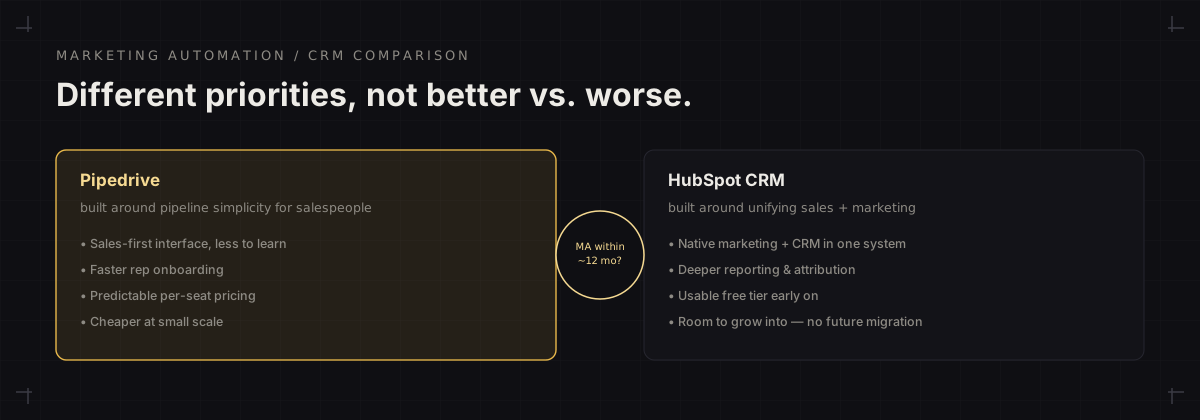
Short answer: Pipedrive is the better fit for a small sales team that just needs pipeline tracking — it's simpler, faster to onboard, and has more predictable per-seat pricing. HubSpot is worth the added complexity and cost only if unifying sales and marketing in one platform, or marketing automation, is a near-term plan (within about a year), not a someday-maybe.
Pipedrive and HubSpot both get recommended to small sales teams constantly, but they're built around different priorities: Pipedrive around pipeline simplicity for salespeople, HubSpot around unifying sales and marketing in one broader platform. The right choice depends on which of those two problems is actually the current bottleneck.
Where Pipedrive wins
- Sales-first simplicity. The interface is built entirely around pipeline and deal management, with none of the marketing-tool complexity a purely sales-focused team doesn't need yet.
- Faster onboarding. A new sales rep typically becomes productive in Pipedrive faster than in HubSpot's broader interface, simply because there's less surface area to learn.
- Predictable per-seat pricing. Cost scales cleanly with headcount, without the tiered feature gates that make HubSpot's pricing harder to project.
Where HubSpot wins
- Native marketing and sales unification. If the team wants marketing automation, landing pages, and CRM in one connected system, HubSpot avoids the integration work of connecting a separate marketing tool to Pipedrive.
- Reporting depth. HubSpot's native reporting, especially multi-touch attribution across marketing and sales activity, goes deeper than what Pipedrive offers natively — and it's what makes native lead scoring in HubSpot workable without bolting on another tool.
- Room to grow into. A company anticipating meaningfully more complex marketing needs within the next year or two avoids a future platform migration by starting on HubSpot, at the cost of more complexity today — the same stage-by-stage logic in B2B marketing automation tools by startup stage.
A practical way to decide
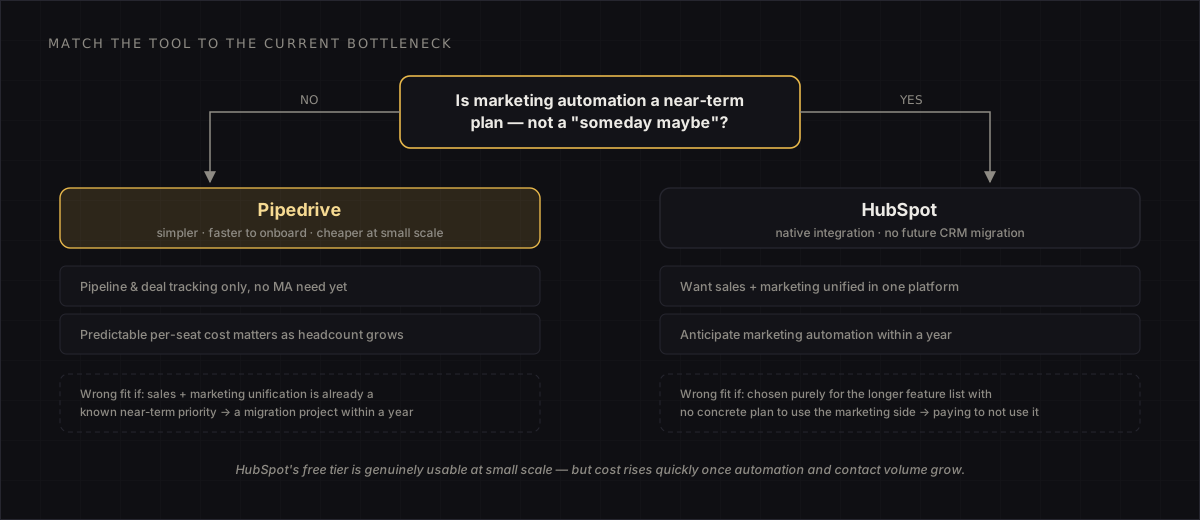
| Priority | Better Fit | Why |
|---|---|---|
| Small sales team, pipeline tracking only, no marketing automation need yet | Pipedrive | Simpler, faster to onboard, cheaper at small scale |
| Want sales and marketing unified in one platform | HubSpot | Native integration, no separate tool to connect |
| Budget-conscious, predictable per-seat cost matters | Pipedrive | Cleaner pricing model as headcount grows |
| Anticipate needing marketing automation within a year | HubSpot | Avoids a future CRM migration once that need arrives |
The mistake worth avoiding
Choosing HubSpot purely for its broader feature set, without a concrete near-term plan to actually use the marketing side, tends to mean paying for and partially learning capability the team never activates. Choosing Pipedrive when marketing and sales unification is already a known, near-term priority tends to mean a migration project within a year that could have been avoided by starting on the right platform. Match the tool to the actual current problem, not the platform with the longer feature list.
If HubSpot is on the shortlist, it's worth also weighing HubSpot vs. ActiveCampaign and HubSpot vs. Salesforce before committing. Picking the right CRM is one of the first things I work through in a marketing automation engagement.
FAQ
Is Pipedrive cheaper than HubSpot for a small sales team?
Yes, generally. Pipedrive's pricing is built around a straightforward per-seat model with predictable cost as the team grows, while HubSpot's free CRM tier is genuinely usable at small scale but costs rise quickly once marketing automation, more contacts, or advanced features get added on top of the base CRM.
- Pipedrive's per-seat pricing is more predictable as a small team scales.
- HubSpot's free tier is usable early, but cost rises quickly once automation and contact volume grow.
Should a small team start with HubSpot even if it doesn't need marketing automation yet?
Only if marketing automation is a near-term plan, not a someday maybe. If the team genuinely just needs pipeline and deal tracking today, starting with Pipedrive avoids paying for and learning a broader platform before there's a real use for its marketing side. HubSpot makes more sense to start with if unifying sales and marketing in one system is a near-term priority, not a distant one.
- Starting with a lighter, sales-only tool avoids overpaying for unused marketing features.
- HubSpot is worth starting with only if unified sales and marketing is a near-term, not hypothetical, need.