
Short answer: A content strategy consultant, sometimes narrowed to a b2b content strategist or seo content strategist, builds owned assets, blog content and resources, that compound in organic search over time. A digital pr consultant earns third-party press coverage and backlinks a brand cannot self-publish its way into. A thought leadership consultant is narrower still, building one executive's individual authority rather than the brand's content library broadly. Most growing brands eventually need more than one of these running at once, not a single choice between them.
What a content strategy consultant is actually building
A content strategy consultant, whether framed as a b2b content strategist or an seo content strategist, is building an owned asset: a library of blog posts, guides, and resources that a brand controls completely and that compounds in organic search traffic over months and years. This is the foundation layer, since it's the destination every other channel, paid, social, PR, eventually points back to.
The limitation is equally structural. A brand can only self-publish its way to so much authority. Search engines and readers alike weight third-party validation, another site linking to or writing about a brand, more heavily than the brand simply saying good things about itself on its own blog, no matter how well-written that content is.
What a digital PR consultant is actually earning
A digital pr consultant's job is securing coverage, mentions, and backlinks from publications and sites the brand doesn't own or control. This does something owned content structurally cannot: it generates third-party credibility signals and high-authority backlinks that move the needle on domain authority and search rankings in a way a brand's own blog posts, however good, can't replicate on their own.
Digital PR is also less predictable and harder to fully control than content strategy. A pitch can land coverage in a top-tier publication or get no response at all, and the timeline for results is measured in relationships and news cycles rather than a content calendar a team controls directly.
What a thought leadership consultant does differently from both
A thought leadership consultant works at a narrower altitude than either of the roles above: instead of building the brand's content library or earning press for the company, the focus is one executive's individual voice, opinions, and public visibility, usually through channels like LinkedIn, bylined articles, or speaking engagements. This matters most for founder-led or expertise-driven businesses, where a buyer's trust in a named individual carries more weight than trust in the brand name alone.
The output looks different too: a thought leadership program produces personal essays and point-of-view content under one person's name, not a brand-voice blog or a press hit, even though the underlying research and topics often overlap with what a content strategist or digital PR consultant is already working on.
How the three levers compare
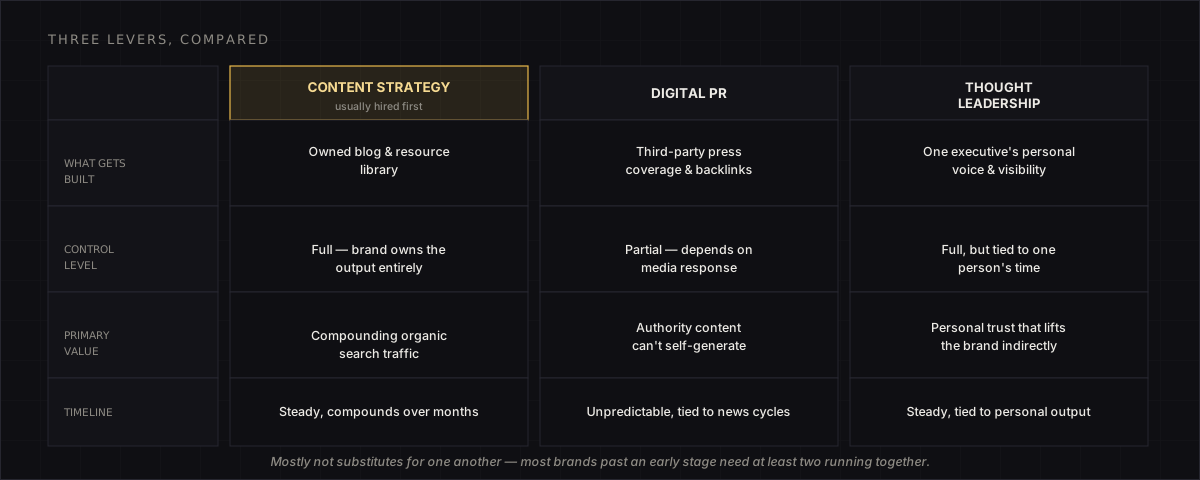
| Factor | Content Strategy Consultant | Digital PR Consultant | Thought Leadership Consultant |
|---|---|---|---|
| What gets built | Owned blog and resource library | Third-party press coverage and backlinks | One executive's personal voice and visibility |
| Control level | Full, brand owns the output entirely | Partial, depends on media response | Full, but tied to one individual's time |
| Primary value | Compounding organic search traffic | Authority and credibility signals content can't self-generate | Personal trust that supports the brand indirectly |
| Timeline | Steady, compounds over months | Unpredictable, tied to relationships and news cycles | Steady, tied to consistent personal output |
When a brand needs more than one running in parallel
A brand with no content foundation at all should start with content strategy, since PR coverage and thought leadership visibility both eventually drive traffic back to owned pages, and that traffic has nowhere useful to land without them. Once a meaningful content library exists, adding digital pr consultant work compounds the SEO value of that content through backlinks and authority signals content alone can't generate. Thought leadership tends to run in parallel with either, since it's tied to one person's ongoing output rather than a project with a clear finish line, and it often supplies raw material, opinions, original takes, that both the content strategist and the PR consultant can build on.
Bottom line
These three roles solve different problems and mostly aren't substitutes for one another. Content strategy builds the foundation, digital PR earns validation content can't self-generate, and thought leadership builds trust in an individual that indirectly lifts the brand. Most brands past an early stage need at least two of the three working together, not a single pick between them.
FAQ
Which one should a brand hire first if it can only afford one?
In most cases, a content strategy consultant first, since owned content is the foundation that digital PR and thought leadership both eventually point back to. Earning press coverage or executive visibility with no substantial content asset behind it wastes a meaningful share of the traffic and authority that coverage generates.
- Owned content is the destination that PR coverage and thought leadership visibility both need to point back to.
- Earning coverage before there's substantial content behind it wastes much of the traffic and authority value of that coverage.
Is a thought leadership consultant the same thing as a content strategist?
No. A content strategy consultant builds the brand's content library broadly, while a thought leadership consultant works narrowly on one executive's individual voice, opinions, and public visibility, often to support the same brand goals but through a distinctly personal lens rather than a company one.
- A content strategist builds brand-level assets; a thought leadership consultant builds one person's public voice.
- The two roles often support the same broader goal but produce very different types of content and require different working relationships.