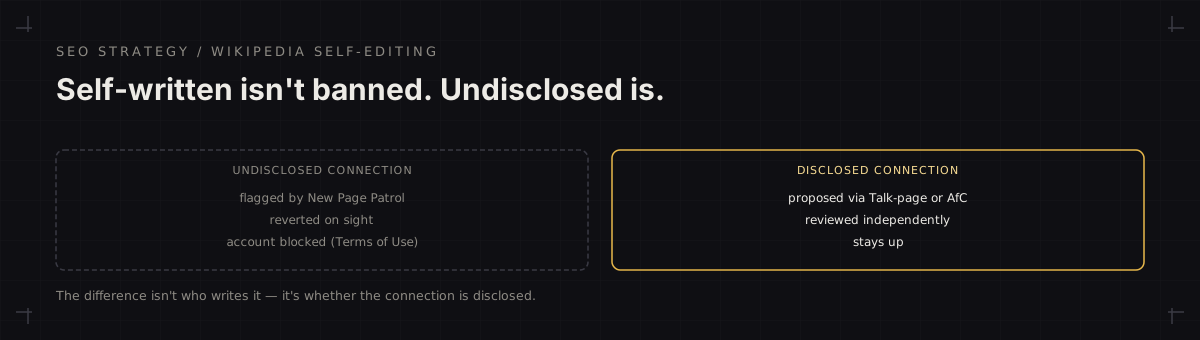
Short answer: Wikipedia does not technically ban writing your own page, but its Terms of Use require disclosure of any paid editing, and its conflict-of-interest guideline strongly discourages editing articles you are connected to. The safer route is to disclose the connection and propose changes through a Talk-page edit request or Articles for Creation, so an independent reviewer checks the sourcing and tone before anything goes live.
Wikipedia's policy on this is more specific than most people expect: it doesn't ban self-written pages outright, but it does require disclosure the moment money or employment is involved, and it strongly discourages the practice even when it isn't. Most pages that get flagged, stripped of content, or deleted over this issue aren't caught because a person wrote about themselves — they're caught because the connection wasn't disclosed the way Wikipedia's own Terms of Use require.
What the policy actually says
| Policy | What it covers | How strict is it |
|---|---|---|
| WP:COI (Conflict of Interest) | Editing any article you, your employer, or a client is connected to | Strongly discouraged, not an outright ban — editors are asked to propose changes rather than edit directly |
| WP:PAID (Paid Editing) | Editing for pay, including in-house marketing staff and agencies | Mandatory disclosure under Wikipedia's Terms of Use since 2014 — not optional, not a style guideline |
| WP:AUTOBIOGRAPHY | Writing an article about yourself specifically | Strongly discouraged; framed as a practical problem (nobody is a neutral judge of their own coverage) rather than a rule violation |
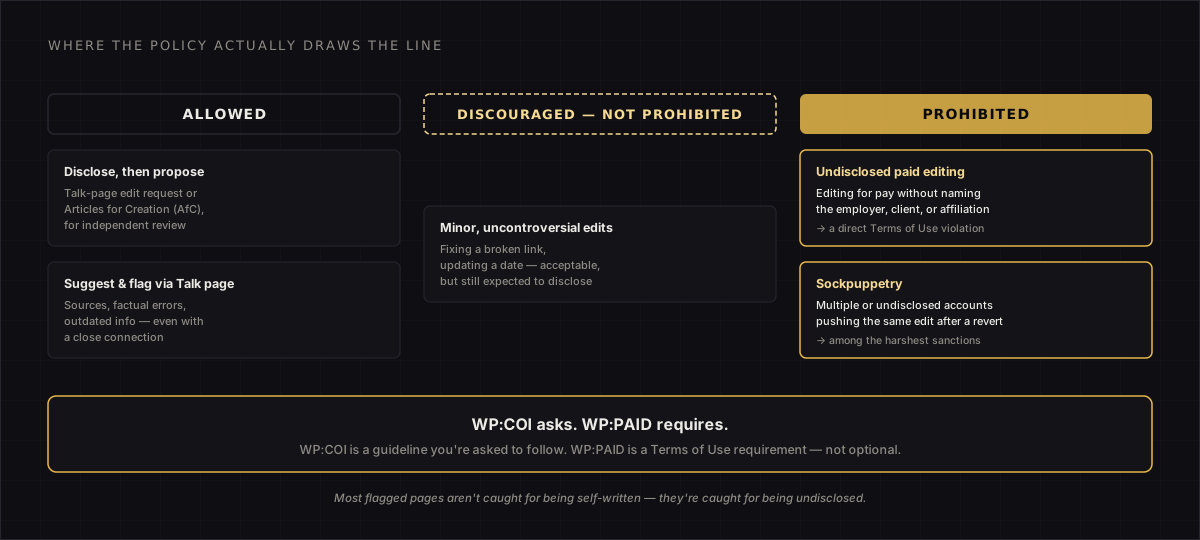
The distinction that matters most is between WP:COI, which is a guideline Wikipedia asks editors to follow, and WP:PAID, which is a hard requirement baked into the site's Terms of Use. You can technically edit an article you have a conflict of interest with and stay within the rules, as long as you're transparent about it and follow the disclosure and edit-request process below. Get paid to do it without disclosing that, and it's a Terms of Use violation regardless of how good the writing is.
What's actually allowed vs. what isn't
- Allowed: disclosing your connection openly on your user page, then proposing changes via a Talk page edit request or submitting a new draft through Articles for Creation (AfC) for independent review.
- Allowed: suggesting sources, correcting factual errors, or flagging outdated information via the Talk page, even for an article you're closely connected to.
- Discouraged but not prohibited: making minor, clearly uncontroversial edits directly (fixing a broken link, updating a date) — acceptable in practice, but still expected to be disclosed if you have a COI.
- Prohibited: editing for pay without disclosing the employer, client, or affiliation — a direct Terms of Use violation, not just a guideline breach.
- Prohibited: using multiple or undisclosed accounts to push the same edits through after being reverted — treated as sockpuppetry, which carries some of the harshest sanctions on the platform.
Why self-written pages get flagged faster, not slower
New pages don't sit quietly waiting to be noticed — they go through New Page Patrol, where reviewers specifically look for the patterns a self-written or agency-written page tends to produce: an account with no other edit history, a page created shortly after account registration, tone that leans promotional even when the underlying facts check out, and sourcing that's technically present but weighted toward interviews, press releases, or "as told to" pieces rather than independent reporting.
None of that is about writing quality. It's that people — and companies writing about themselves — are structurally bad judges of their own neutral tone. A sentence that reads as a simple factual summary to the person who wrote it often reads as promotional to an outside reviewer, and that gap is exactly what triggers a closer look, a neutrality tag, or in the more clear-cut cases, a G11 speedy deletion.
Why disclosed paid editing is the safer path, not just the compliant one
The value of hiring someone to handle this isn't that a professional writes better sentences — it's that the process itself introduces the distance Wikipedia's policy is designed around. A disclosed paid editor states the connection on record, submits through AfC or a Talk-page edit request rather than publishing directly, and lets an independent reviewer confirm the sourcing and tone hold up before anything goes live. That's the same distance a self-written page structurally can't have, no matter how carefully it's worded.
It also avoids the two outcomes that are hardest to undo: an account block for undisclosed paid editing, and a page that gets "salted" — permanently protected against recreation — after repeated undisclosed attempts. Both are more about how the page was created than what it says, which is exactly the part a disclosed, third-party process is built to handle correctly the first time. This is the same eligibility-and-process discipline covered in how Wikipedia page creation actually works, and it's worth reading alongside why pages get deleted in the first place if a page has already run into trouble.
FAQ
Can I legally write my own Wikipedia page?
There's no law against it, and Wikipedia doesn't technically forbid it either — but its Terms of Use require anyone editing for pay (including editing your own company's or your own page as part of your job) to disclose that connection, and its conflict-of-interest guideline strongly discourages editing articles you're connected to at all, even unpaid. "Not illegal" and "not against Wikipedia policy" are different things, and violating the disclosure requirement can get the page deleted and the account blocked regardless of whether the subject is otherwise notable.
- Disclosure is a Terms of Use requirement for paid editing, not an optional courtesy.
- Even unpaid self-editing is discouraged under WP:COI and WP:AUTOBIOGRAPHY, just not banned outright.
What happens if I edit Wikipedia about myself without disclosing it?
If it's discovered — and new-page patrollers actively look for exactly this pattern — the page is likely to be tagged for a neutrality or notability review even if the content is technically accurate, and the editing account can be blocked for violating the Terms of Use's mandatory paid-editing disclosure requirement. Undisclosed edits also tend to get reverted on sight once a conflict of interest is suspected, regardless of whether the specific edit was reasonable.
- New Page Patrol specifically watches for account-history and tone patterns typical of undisclosed COI editing.
- A reasonable edit made undisclosed can still be reverted purely because the connection wasn't declared.
Is it better to hire someone to write my Wikipedia page instead?
It's not about writing quality — it's about disclosure and distance. A properly disclosed paid editor states the connection openly, proposes changes through Talk-page edit requests or Articles for Creation rather than publishing directly, and gives an independent reviewer a chance to confirm the tone and sourcing hold up. That process is what keeps a page from reading as promotional, more than any difference in who typed the sentences.
- The independent-review step is the actual safeguard, not the professional writing itself.
- Disclosed edits submitted via AfC get vetted before publication, catching tone and sourcing problems early.