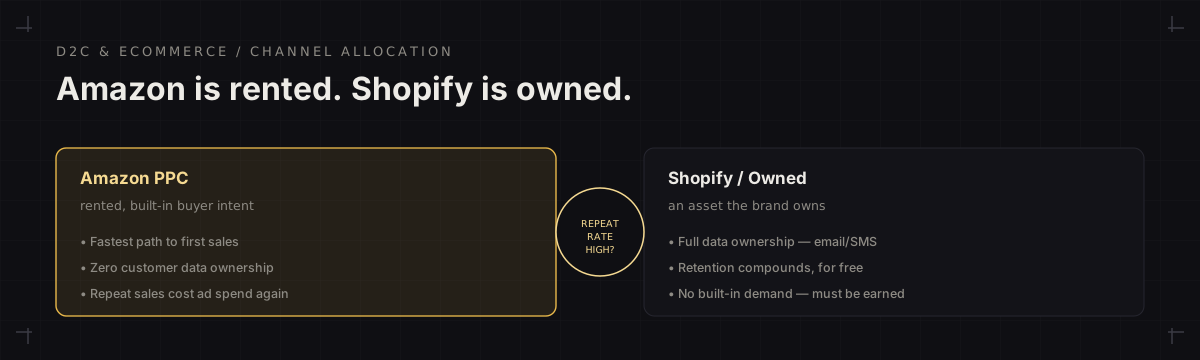
Short answer: An ecommerce growth consultant splits budget between Amazon PPC and Shopify ads based on two things, margin after fees and how much repeat purchase value the product generates, not just which channel currently converts cheaper. Amazon gives a brand intent-rich traffic and a built-in audience, but almost no usable customer data. Shopify gives full data ownership and a real retention lever, but every visitor has to be earned through paid or organic effort with no marketplace demand to lean on.
What Amazon PPC actually gives you
Amazon PPC puts a product in front of shoppers who are already searching with buying intent, which is why it remains the fastest way to generate first sales for a brand nobody has heard of. An amazon ppc consultant earns their fee by controlling the two numbers that make or break this channel: advertising cost of sale and organic rank lift, since a well-run Amazon campaign should be pulling a product up the organic search results over time, not just buying the same sale repeatedly at full price.
The catch is data ownership. Amazon does not hand a brand the customer's email address, purchase history, or any lever to market to that person again outside the platform. Every repeat purchase either happens organically on Amazon or gets paid for again through PPC. This is the single biggest reason brands with genuinely repeat-purchase products eventually need to build a channel Amazon can't touch.
What Shopify ads and owned traffic actually give you
A Shopify store gives a brand full control over the customer record: email, purchase history, on-site behavior, and every future touchpoint through email, SMS, or retargeting. A shopify growth strategist is optimizing a completely different set of levers than an Amazon-focused marketer, checkout conversion rate, average order value, and lifetime value through retention flows, because the store itself is the asset being built, not just a single transaction.
The tradeoff runs the other direction from Amazon. Shopify has no built-in demand. Every visitor has to be acquired through paid social, search ads, SEO, or an existing audience, which usually means a higher blended cost per acquisition in the early months than an equivalent Amazon PPC campaign against a keyword with existing search volume.
The margin and data-ownership tradeoff, side by side
| Factor | Amazon PPC | Shopify ads / owned traffic |
|---|---|---|
| Buyer intent | High, built-in search demand | Has to be created through targeting and content |
| Customer data ownership | None, Amazon owns the relationship | Full, email/SMS/behavioral data is yours |
| Retention lever | Weak, repeat sales still cost ad spend | Strong, email and SMS flows drive free repeat revenue |
| Fees | Referral fee plus PPC plus FBA if used | Payment processing plus ad spend, no referral fee |
| Best fit | New brands, commoditized or search-driven categories | Established brands with strong repeat purchase and brand equity |
A decision guide by brand stage
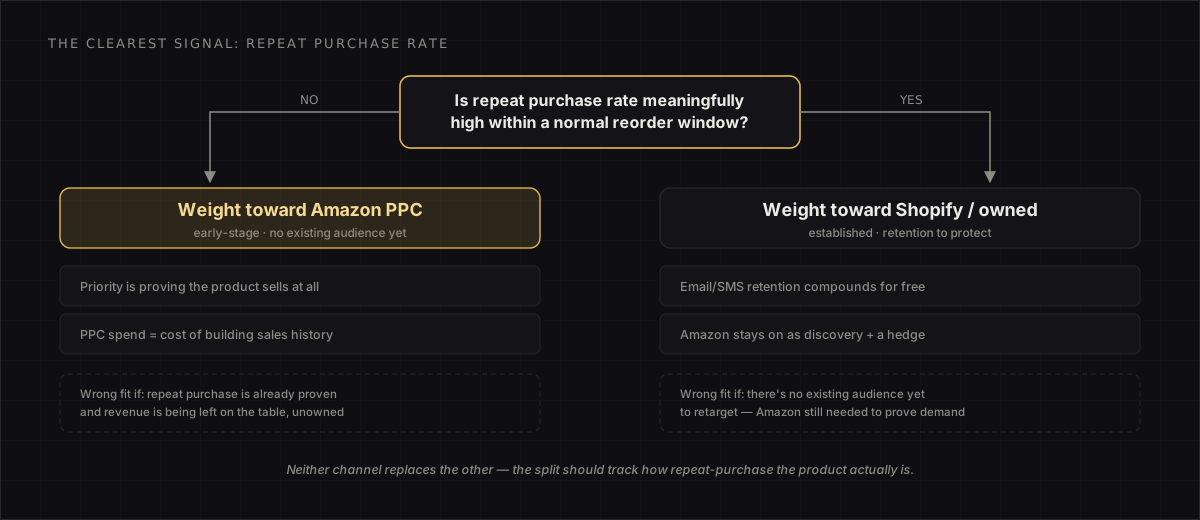
Early-stage brands with no existing audience generally need Amazon's built-in demand more than they need data ownership, since there's no retention program to protect yet and the priority is proving the product sells at all. A marketplace consultant at this stage is usually optimizing for volume and organic rank velocity, treating PPC spend as a cost of building initial sales history rather than a channel expected to be profitable on its own from day one.
Established brands with a proven repeat-purchase product should weight spend more heavily toward Shopify and other owned channels, because every dollar spent acquiring a customer who buys again for free through email or SMS compounds in a way an Amazon-only relationship never can. This doesn't mean abandoning Amazon, it usually still functions as a discovery channel and a hedge against a competitor occupying that search real estate, but the growth budget itself should be shifting where the retention math is stronger.
Running both without fragmenting the brand
The brands that get this wrong usually run Amazon and Shopify as two disconnected businesses with separate pricing, separate promotions, and no shared measurement of what customer acquisition actually costs across both. An ecommerce growth consultant brought in to fix this typically starts by unifying the true cost per acquisition and lifetime value view across both channels before touching a single ad account, because a channel that looks efficient in isolation can be quietly cannibalizing the other.
Bottom line
Neither channel replaces the other. Amazon is a demand engine a brand rents, Shopify is an asset a brand owns, and the right split depends on how repeat-purchase the product actually is and how much margin survives Amazon's fees once PPC is layered on top. Getting that split wrong in either direction is one of the more expensive mistakes a growing ecommerce brand can make, and it's usually worth an outside audit before committing next quarter's budget to either channel.
FAQ
Should a new brand start on Amazon or on its own Shopify store?
Most new brands are better served starting with Amazon PPC because Amazon supplies buyer intent that a brand new store cannot generate on its own. Once the product has proven demand and repeat purchase behavior, shifting more budget toward Shopify becomes worth the higher acquisition cost because the brand starts owning the customer relationship.
- Amazon's built-in demand is the fastest way to validate a new product without paying to build audience awareness from zero.
- The tradeoff is real: Amazon sales generate almost no reusable customer data for the brand.
How do I know when to shift spend away from Amazon toward Shopify?
The clearest signal is repeat purchase rate. If a meaningful share of customers buy again within a normal reorder window, that repeat value is worth capturing directly rather than paying Amazon's referral fee and PPC costs every single time. A rising branded search volume outside Amazon is a second signal that owned channels are ready to carry more weight.
- A high repeat purchase rate means the customer relationship is worth owning directly rather than renting through Amazon.
- Rising branded search outside Amazon is a sign the brand can now support its own paid acquisition efficiently.