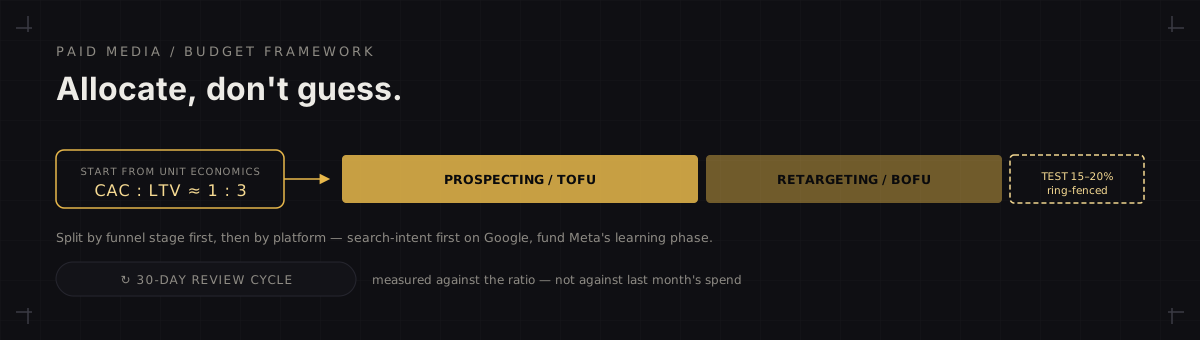
Short answer: There's no universal percentage-of-revenue number — start from a target CAC:LTV ratio (a common benchmark is roughly 1:3) and back into a spend cap per channel from there. Split budget by funnel stage rather than platform, fund Meta ad sets to roughly 50 conversions a week during the learning phase, hold back 15–20% for testing, and reassess every 30 days against the ratio, not last month's spend.
"What should our ad budget be?" almost never has a good answer as a flat number or a percentage of revenue. It has a good answer as a framework — one that starts from unit economics and gets re-evaluated on a fixed cycle, instead of drifting upward because last month felt fine.
1. Start from CAC:LTV, not a percentage-of-revenue rule
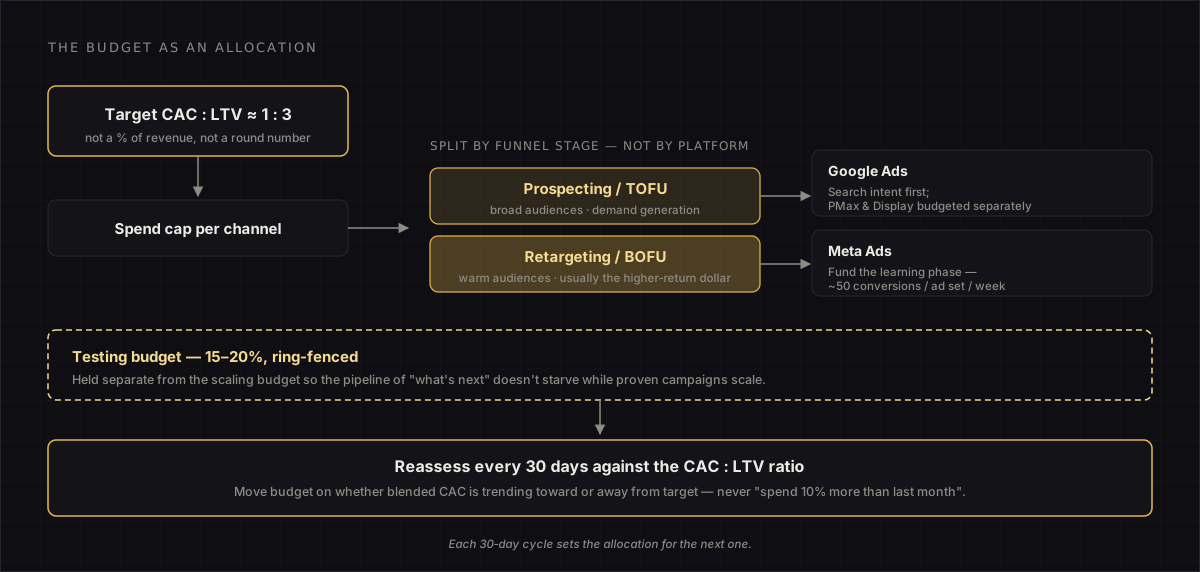
Percentage-of-revenue rules of thumb assume you already know your numbers cold. A more reliable starting point is your target customer acquisition cost to lifetime value ratio — a common benchmark to start from is roughly 1:3 — and to back into a spend cap per channel from there, rather than picking a round number and hoping the ratio works out. If you haven't pinned down your real acquisition economics yet, work through CAC payback period benchmarks by industry before setting any spend cap.
2. Split budget by funnel stage, not by platform
Prospecting and top-of-funnel spend (broad audiences, brand awareness) behaves completely differently from retargeting and bottom-of-funnel spend (warm audiences, direct response). Most accounts overspend on the former and underfund the latter — which is usually the higher-return dollar in the account.
3. Google Ads: prioritize search intent first, discovery second
Search campaigns targeting bottom-funnel keywords should get budget priority, since they capture demand that already exists. Performance Max and Display campaigns are demand-generation, and behave more like Meta prospecting than like search — budget them separately so they don't cannibalize search performance or muddy your reporting.
4. Meta Ads: fund the learning phase before judging results
Meta's delivery system needs a minimum number of conversion events per week per ad set — a common rule of thumb is around 50 — to exit the learning phase and optimize properly. Underfunding a campaign so it never exits learning is one of the most common reasons a brand concludes "Meta doesn't work for us," when the real issue was the budget was never large enough to let the algorithm learn. The same constraint applies when you scale — raising spend too fast can reset the learning phase, which is why scaling a Facebook Ads budget without resetting the learning phase has its own discipline.
5. Set a testing budget separate from your scaling budget
Reserve roughly 15–20% of total paid spend for creative and audience testing. Without a ring-fenced testing budget, it's tempting to keep scaling what's already proven and let the pipeline of what's next quietly starve. A structured approach — like the creative testing matrix for Meta Ads — keeps that budget producing usable results instead of scattered one-off experiments.
6. Reassess every 30 days against the ratio, not against last month's number
Budget changes should be driven by whether blended CAC is trending toward or away from your target CAC:LTV ratio — not by "spend 10% more than last month," which is how ad budgets drift upward without any evidence behind the increase.
A paid media budget isn't a fixed number to set once. It's a moving allocation across funnel stage and platform, re-evaluated monthly against unit economics — not against whatever was spent the month before. If you'd rather have this managed for you, here's how I approach Paid Media & PPC engagements.
FAQ
How should a business decide what its ad budget should be?
Start from a target CAC:LTV ratio — a common benchmark is roughly 1:3 — and back into a spend cap per channel from there, rather than using a flat number or a percentage-of-revenue rule of thumb.
- Budget should be split by funnel stage (prospecting vs. retargeting), not just by platform.
- Reassess every 30 days against the CAC:LTV ratio, not against what was spent the previous month.
Why does a Meta Ads campaign sometimes seem like it doesn't work?
Usually because the campaign is underfunded relative to Meta's learning-phase requirement — a common rule of thumb is roughly 50 conversion events per ad set per week to exit the learning phase and optimize properly.
- Underfunding a campaign so it never exits learning is one of the most common reasons a brand wrongly concludes a channel doesn't work.
- Reserving roughly 15–20% of total paid spend for creative and audience testing keeps a pipeline of what's next from starving while scaling proven campaigns.