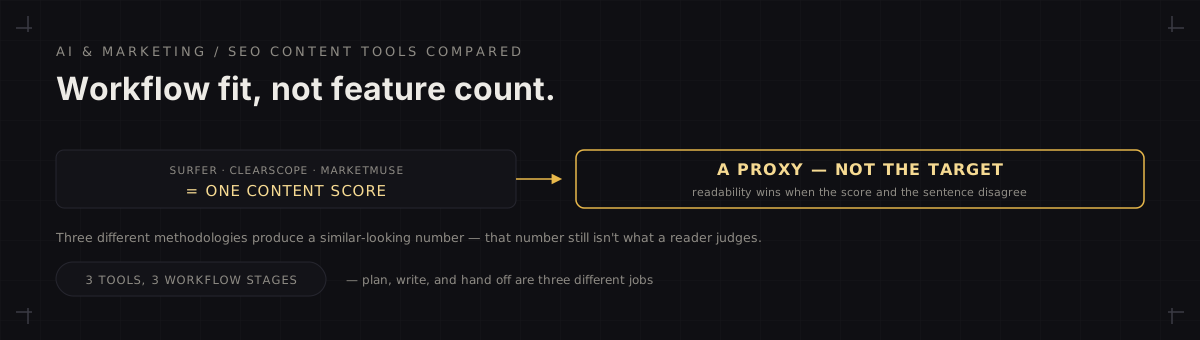
Short answer: Surfer, Clearscope, and MarketMuse differ mainly in workflow fit rather than feature count: Surfer suits high-volume teams optimizing while they write, Clearscope suits teams handing work to non-specialist or freelance writers, and MarketMuse suits teams still deciding what to cover at the site level. All three are optimization layers rather than writers, so treat any AI draft as a scored starting point.
Surfer, Clearscope, and MarketMuse all solve the same core problem, telling a writer what a page needs to cover to compete for a target keyword, but they built genuinely different approaches to getting there, and the right choice depends more on team workflow than raw feature count.
Surfer
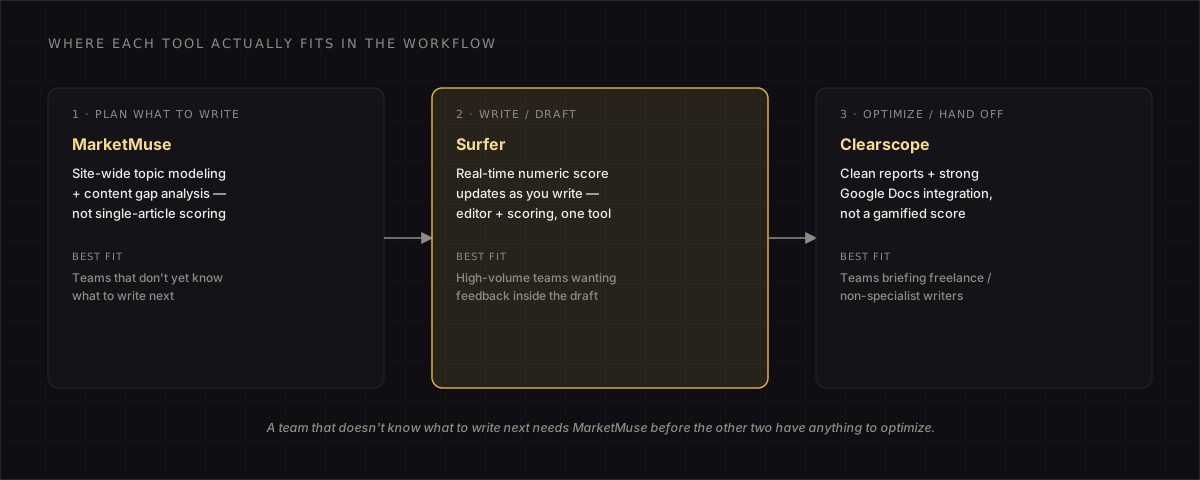
- Positioning. Real-time content editor with a numeric score that updates as you write, built around fast iteration between drafting and optimization checking.
- Strength. Tight integration between the editor and the scoring engine makes it the fastest tool for a writer optimizing in a single sitting.
- Best fit. Content teams producing high volume who want optimization feedback inside the writing process itself, not as a separate audit step.
Clearscope
- Positioning. Built around clean, readable reports and strong Google Docs integration, with less emphasis on gamifying a numeric score.
- Strength. Report clarity makes it easier to hand off to freelance writers who aren't SEO specialists, since the term recommendations read like editorial guidance rather than a technical checklist.
- Best fit. Teams working with external or non-specialist writers who need optimization guidance presented in plain, actionable terms.
MarketMuse
- Positioning. The most research-and-planning-heavy of the three, with topic modeling and content gap analysis across an entire site, not just single-article optimization.
- Strength. Site-wide topical authority modeling helps prioritize which content to create next, not just how to optimize a single piece already being written.
- Best fit. Teams planning a content strategy at the site level, where the question is which topics to cover, not just how to optimize an already-chosen one.
Choosing based on workflow, not feature lists
| Tool | Core Strength | Best Fit |
|---|---|---|
| Surfer | Real-time in-editor scoring | High-volume teams optimizing while writing |
| Clearscope | Clean, writer-friendly reports | Teams working with non-specialist or freelance writers |
| MarketMuse | Site-wide topic and gap modeling | Teams planning content strategy, not just single articles |
The mistake most teams make is picking based on which tool has the highest score cap or the most features, rather than which one fits how content actually gets planned and written on the team. A team that outsources writing gets more from Clearscope's clarity, a team optimizing in-house benefits from Surfer's speed, and a team that still doesn't know what to write next needs MarketMuse's planning layer before either of the other two tools has anything useful to optimize.
FAQ
Do these tools write content, or just optimize it?
All three are primarily optimization layers, not writers. They analyze top-ranking pages for a target keyword and recommend terms, structure, and depth a draft should include, and most now offer AI drafting features on top of that analysis, but the core value is still the optimization scoring, not the writing itself. Treating the AI draft as a finished piece rather than a scored starting point is where most teams get disappointing results from any of them.
- Core value is optimization scoring based on top-ranking pages, not the writing itself.
- AI drafting features exist but work best as a scored starting point, not a finished piece.
Can over-optimizing for one of these tools' scores hurt rankings?
Yes, if a writer chases the score instead of genuine topical coverage. Stuffing in every recommended term without regard for readability produces content that scores well in the tool but reads awkwardly and can underperform content that covers the topic more naturally with a lower score. The score is a useful proxy for topical completeness, not a target to max out at the expense of actually answering the query well.
- Chasing a perfect score over readability can produce awkward content that underperforms.
- The score is a proxy for topical completeness, not a target to maximize regardless of readability.