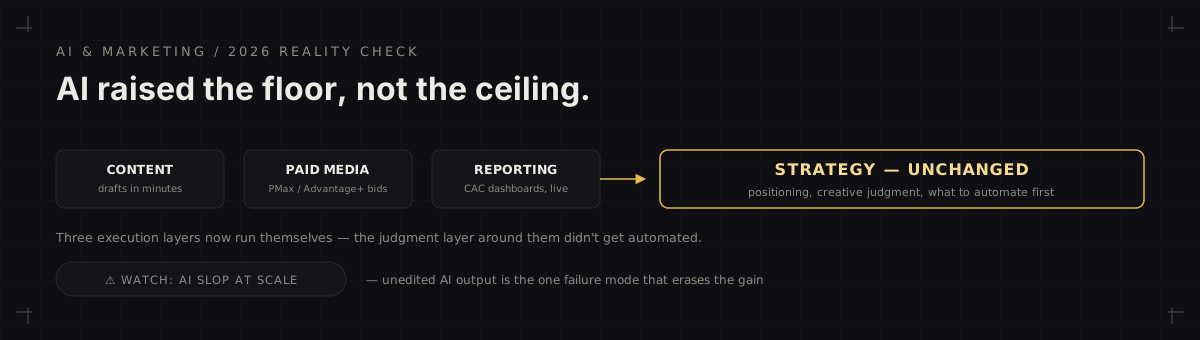
Short answer: AI has raised the floor on execution speed in content, paid media, and reporting, but it has not replaced the need for human strategy and judgment. The real risk is not using AI but publishing unedited AI output at scale, which Google's helpful-content system penalizes.
Every year brings a "how AI is changing marketing" article; most of them overstate the change. Here's a more grounded look at what's actually different in 2026, and what isn't.
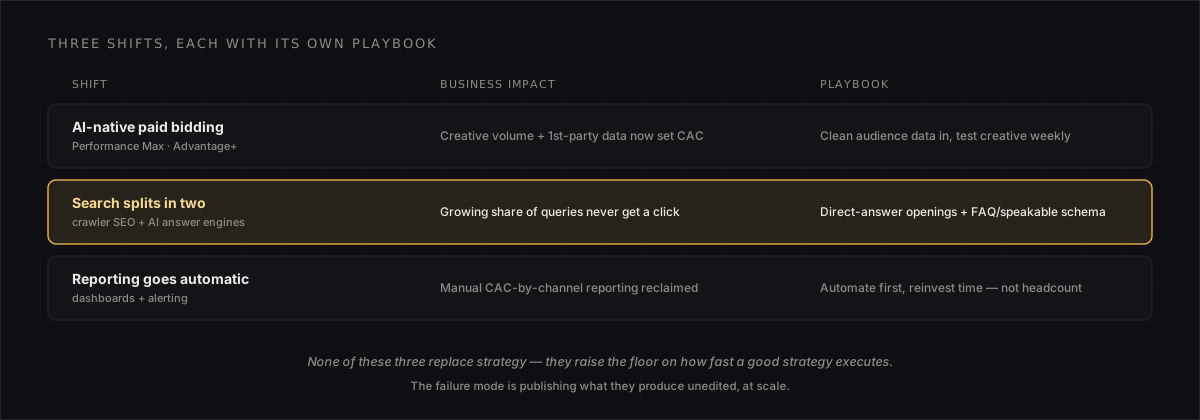
| AI Trend (2026/2027) | Core Business Impact | Actionable Playbook Framework |
|---|---|---|
| AI-native paid media bidding (Performance Max, Advantage+) | Manual audience-building matters less; creative volume and first-party data quality become the main lever on CAC | Feed platforms clean first-party audience data and test creative variations weekly instead of manually adjusting targeting |
| Search splitting into crawler SEO + AI answer engines | A growing share of buyer queries never produce a click, so visibility depends on being cited inside AI answers, not just ranking #1 | Structure content with direct-answer openings and schema markup (FAQPage, speakable) built for answer engine optimization (AEO) |
| AI-assisted reporting and ops automation | Hours previously spent on manual CAC-by-channel reporting are reclaimed for testing and channel strategy | Automate dashboards and alerting first, then reinvest the freed time into creative testing and channel expansion, not headcount cuts |
1. Content production at scale — with human strategy still required
AI has made first-draft content production dramatically faster: outlines, variations, repurposing one asset into five formats. What hasn't changed is that strategy — what to say, to whom, and why it matters — still requires a human who understands the business. The brands winning with AI content are using it to execute a strategy faster, not to replace having one.
2. AI-driven personalization in paid media
Ad platforms now handle audience targeting and bidding through their own AI systems (Performance Max, Advantage+), which shifts the marketer's job from manual audience-building to feeding the system better creative and first-party data. The accounts winning aren't the ones fighting the automation — they're the ones testing more creative variations and structuring their data cleanly enough for the algorithms to use, which is the core of how I run Paid Media & PPC accounts today.
3. Search is splitting into two channels
Traditional search (blue links) still matters, but a growing share of queries now get answered inside AI chat interfaces and AI Overviews without a click at all. This means "SEO" now has two audiences: search engine crawlers and AI answer engines, which reward slightly different things — the latter favors clear, directly-stated answers and structured data (schema markup) over keyword density. This dual-audience approach is central to how I handle SEO & Search Growth today.
4. Automation replacing manual reporting and ops
Pulling CAC by channel, building weekly reports, and triaging campaign performance used to eat hours every week. AI-assisted dashboards and automated alerting have made this largely automatic — provided the underlying IT infrastructure connecting those tools was actually built to support it, rather than five disconnected platforms none of which talk to each other. This is the exact shift I help clients make in Marketing Automation engagements.
5. The real risk: AI slop, not AI itself
The failure mode isn't using AI — it's publishing unedited AI output at scale, which Google has explicitly started penalizing as part of its "helpful content" enforcement, and which readers can usually spot within a sentence or two. The brands actually benefiting from AI treat it as a faster first draft, with a human still doing the editing, fact-checking, and strategic judgment before anything ships. The net effect: AI has raised the floor on execution speed, but it hasn't lowered the value of strategy — if anything, it's made good strategy more valuable, since execution alone is no longer a differentiator.
FAQ
What is the biggest change AI has brought to digital marketing in 2026?
AI has raised the floor on execution speed, not the value of strategy — content drafts, ad bidding, and reporting now happen automatically, but the businesses winning are the ones still applying human judgment to positioning, creative quality, and what to automate first.
- Ad platforms now handle targeting and bidding; the differentiator is creative volume and first-party data quality, not manual audience-building.
- Search traffic is splitting between traditional rankings and AI answer engines, each rewarding different content structures.
- Automated reporting frees up time for strategy, but only if a human still edits and fact-checks AI output before it ships.
Should businesses worry about AI replacing their marketing team?
No — AI replaces repetitive execution like drafting, bidding, and reporting, not strategic judgment; the real risk is publishing unedited AI output at scale, which Google's helpful-content system actively penalizes and readers can usually spot within a sentence or two, not AI itself replacing marketers.
- The failure mode is "AI slop" — unedited, generic output at scale — not the use of AI itself.
- Google's helpful-content system already penalizes low-effort AI content in rankings.
- Teams that treat AI as a faster first draft, with human editing and fact-checking before publishing, are the ones seeing gains.