Short answer: A B2B case study gets used in sales when it is built around one specific objection that sales hears often, not a generic success story. It should state that objection near the top, give a specific starting baseline, explain what changed mechanically, and attribute a checkable result to a named customer.
Most B2B case studies follow the same generic problem-solution-result template, get published, and then sit unused because sales never actually needed a generic success story. What sales needs in the room is a specific answer to a specific doubt a prospect just raised, and a case study built for that purpose gets used constantly.
Start with the objection, not the customer
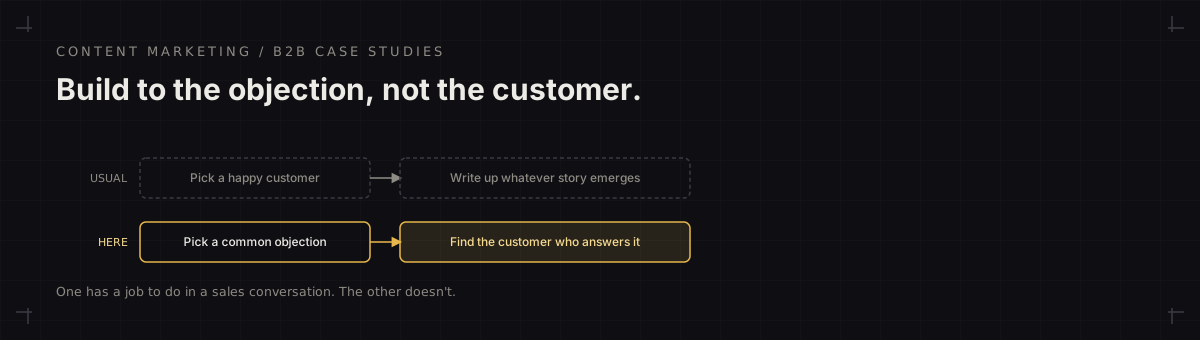
Before choosing which customer to feature, identify a specific objection that comes up often in real sales conversations: "this seems too complex to implement," "we tried something similar and it didn't work," "we're too small for this to matter." Then find the customer whose story genuinely answers that exact objection. This inverts the usual process (pick a happy customer, then write up whatever story emerges) and produces a case study with a clear job to do, rather than a pleasant but purpose-less success story.
The structure that makes a case study usable in a sales conversation
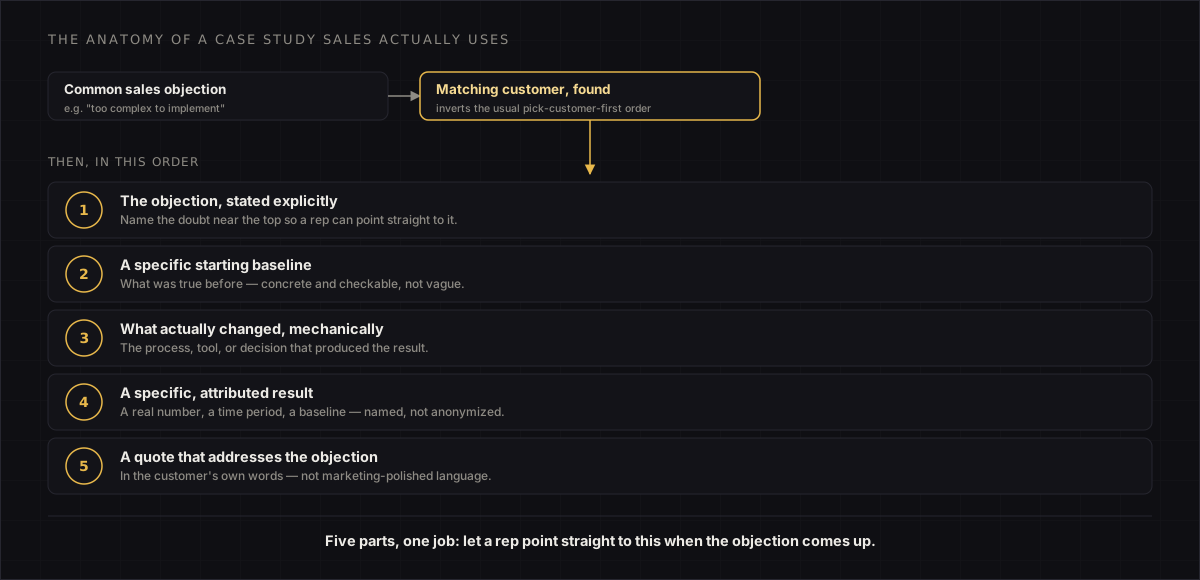
- The objection, stated explicitly near the top. Name the doubt directly ("Company X was skeptical this would work for a team their size") so a sales rep can point to it in the exact moment a prospect raises the same concern.
- A specific starting baseline. What was true before, in concrete, checkable terms, not a vague description of "struggling with growth."
- What actually changed, mechanically. The specific process, tool, or decision that produced the result, not just the result itself. This is what lets a prospect evaluate whether their situation is similar enough for the same outcome to be plausible.
- A specific, attributed result. A real number, with a stated time period and baseline, ideally with the customer's name attached rather than anonymized (anonymized results carry noticeably less weight).
- A quote that addresses the objection directly, in the customer's own words, not marketing-polished language that sounds written rather than said.
Why anonymized case studies underperform
An anonymized "a mid-market SaaS company" case study is sometimes unavoidable due to customer approval constraints, but it should be treated as a fallback, not a default. A named customer with a logo, a named person, and an attributed quote is measurably more persuasive than the same story anonymized, because prospects can verify it's real. If a customer won't go on record, it's often worth asking for a narrower, lower-stakes result they're comfortable naming rather than defaulting straight to full anonymization.
Getting sales to actually use what you build
The single biggest reason case studies go unused isn't quality; it's that sales doesn't know they exist or doesn't know which one answers which objection. Tag each case study by the specific objection it addresses, not just by industry or company size, and make that tag visible in whatever tool sales actually uses day to day (a CRM note, a shared doc, a sales enablement platform). A great case study that sales can't quickly find in the moment a prospect raises the exact objection it answers might as well not exist.
FAQ
What makes a B2B case study actually get used by sales?
A case study built to overcome one specific, common objection sales hears in real deals, not a generic success story. Sales teams reach for case studies when a prospect raises a doubt in the room; a case study that maps directly to a recurring objection gets used repeatedly, while a generic "we helped X achieve Y" story usually sits unused because it doesn't answer any specific question a prospect is actually asking.
- Build each case study around one specific objection sales hears often, not a generic success narrative.
- Ask the sales team what objections come up before writing the next case study.
How specific should the numbers in a case study be?
As specific as the customer will approve, and specific enough to be checkable rather than vague. A concrete number like a stated percentage improvement over a stated time period with a stated starting baseline is far more credible than a rounded, unattributed claim, even if the concrete number is smaller and less impressive-sounding.
- A specific, checkable number is more credible than a rounder, vaguer one, even if it's less dramatic.
- Always include the starting baseline and time period, not just the improvement figure.