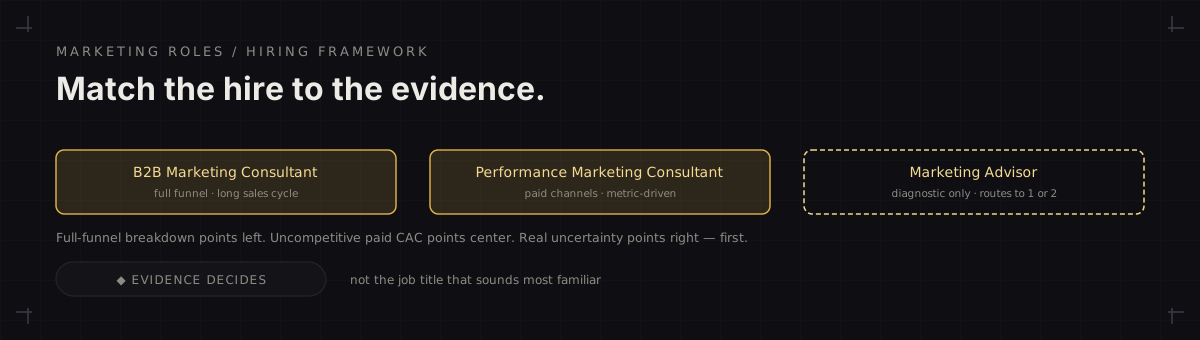
Short answer: A b2b marketing consultant works channel-agnostically across a long, multi-stakeholder sales cycle, a performance marketing consultant is narrowly focused on paid channels and direct-response metrics, and a marketing advisor sits above both, useful only when a business does not yet know which specialist actually matches its problem.
What a b2b marketing consultant actually does
A b2b marketing consultant is built for complexity that spans months, not clicks. B2B sales cycles usually involve multiple stakeholders, a buying committee rather than a single decision-maker, and a journey that moves through content, email, sales enablement, and paid channels all at once. This consultant's job is to design and connect that whole system, deciding what content a prospect needs at each stage, how sales and marketing hand off a lead, and which channels earn budget based on where deals actually stall. The work is channel-agnostic by design, because the bottleneck in a long B2B cycle is rarely one channel underperforming, it is usually a gap between stages that no single channel owns.
What a performance marketing consultant actually does
A performance marketing consultant is narrower on purpose. The job is optimizing spend inside paid channels, search, social, or programmatic, against a direct-response goal like cost per lead or return on ad spend. This role lives inside the platforms daily: adjusting bids, testing creative, restructuring campaigns, and reading attribution data to decide where the next dollar of budget goes. A performance marketing consultant is the right hire when the problem is genuinely a paid-channel efficiency problem, spend is going out and the return is not competitive, not when the deeper issue is that the funnel itself has gaps a bigger ad budget cannot fix.
Where a marketing advisor fits above both
A marketing advisor is a generalist, and that is the point. This role exists for the businesses that have not yet diagnosed their own bottleneck well enough to know whether they need channel-agnostic B2B strategy, paid-channel optimization, or something else entirely, like positioning or pricing. An advisor engagement is typically short, focused on audit and diagnosis, and ends with a clear recommendation for what specialist to bring in next, rather than ongoing execution of any one channel. Hiring a specialist before that diagnosis happens is how businesses end up paying for the wrong kind of expertise. More on how this differs from other engagement types is covered on the about page.
Comparing the three side by side
| Role | Scope | Best fit when |
|---|---|---|
| B2B marketing consultant | Full funnel, channel-agnostic, long sales cycle | Pipeline stalls across stages, not inside one channel |
| Performance marketing consultant | Paid channels, metric-driven, short feedback loop | Spend is live but return is not competitive |
| Marketing advisor | Diagnostic, generalist, short engagement | The business does not know which specialist it needs yet |
A framework for choosing based on the actual problem
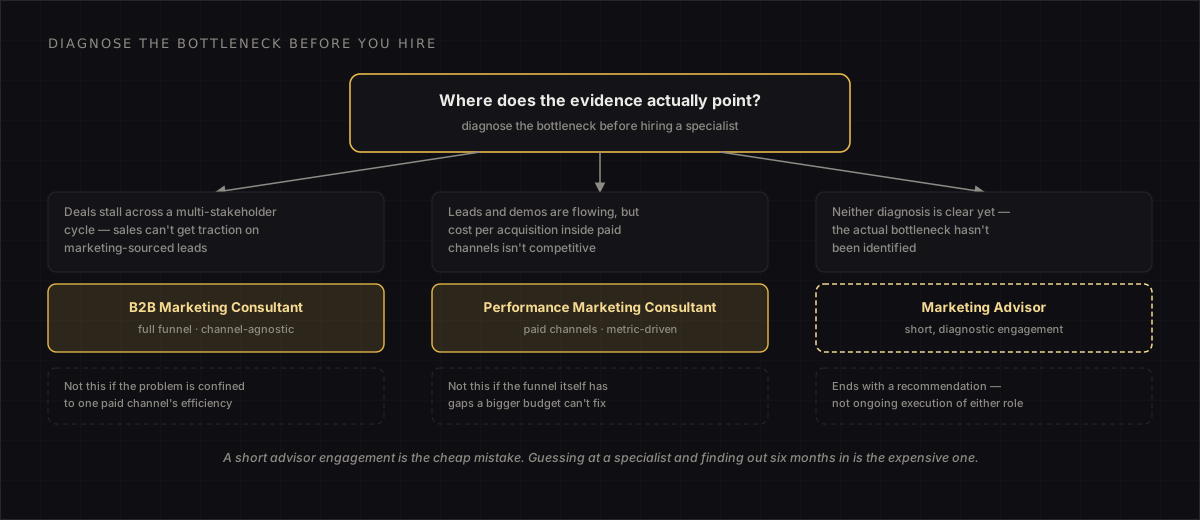
Start with where the evidence points, not with the job title that sounds most familiar. If deals are stalling somewhere in a multi-stakeholder cycle, sales cannot get traction on marketing-sourced leads, or content and sales enablement feel disconnected, that is a b2b marketing consultant problem. If leads or demos are flowing but the cost per acquisition inside paid channels is uncompetitive against what the business can actually afford, that is a performance marketing consultant problem. If neither diagnosis is clear yet, an advisor engagement is the cheaper mistake to make, since it is built to answer that exact question before committing budget to a specialist. Pricing for each engagement type differs meaningfully by scope, which is worth reviewing on the pricing page before deciding.
Bottom line
These three roles are not interchangeable, and hiring the wrong one for the actual bottleneck is a common way businesses waste a marketing budget without realizing it. Match the hire to the evidence: full-funnel breakdown calls for a b2b marketing consultant, paid-channel inefficiency calls for a performance marketing consultant, and genuine uncertainty about which is true calls for a marketing advisor first.
FAQ
Can one person be both a b2b marketing consultant and a performance marketing consultant?
Some consultants operate across both, but it is rare for one person to be genuinely excellent at long-cycle, multi-stakeholder B2B strategy and at daily bid, creative, and budget optimization inside ad platforms. Most engagements work better when the two functions are staffed separately, even if they report into the same strategic plan.
- The two skill sets rarely peak in the same person because the daily work looks nothing alike.
- Separate staffing under one shared plan usually outperforms asking one generalist to do both well.
Should a marketing advisor be hired before or after a specialist consultant?
Before, if the business genuinely does not know which specialist it needs yet. A marketing advisor's job in that situation is to diagnose the actual bottleneck first, which usually saves money compared to guessing at a specialist and discovering the wrong one was hired six months in.
- An advisor engagement is short and diagnostic, meant to point at the right specialist, not replace one.
- Skipping this step is how businesses end up paying for the wrong kind of expertise for months.