The Pattern
A founder or company submits a draft Wikipedia article that reads like a profile. It is declined for lack of notability or for promotional tone, and each resubmission gets the same answer.
What Teams Usually Try First
The usual moves are to add more detail, add more links to the company's own site and press releases, resubmit repeatedly, or edit the article directly.
Where It Stalls
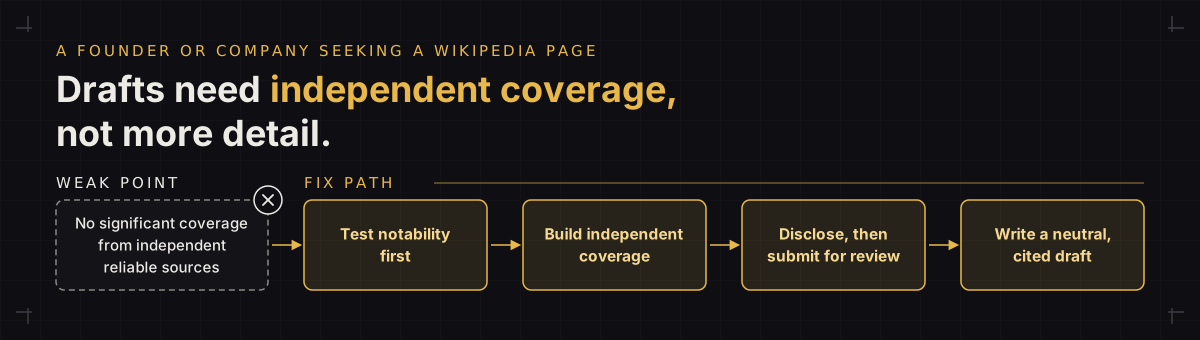
Wikipedia requires significant coverage of the subject in reliable sources that are independent of it. Self-published material, press releases and interviews where the subject speaks for itself do not establish that. Editing about yourself or being paid to do so also raises conflict-of-interest and disclosure requirements that undisclosed drafts breach.
Recommended Approach
- Test notability before writing anything: list the independent, in-depth coverage that exists (not passing mentions, not press releases, not interviews alone), and stop if there is very little
- If the sources are thin, build independent coverage and recognition first through earned media, industry awards and published research, because a page cannot be argued into existence without them
- Disclose the conflict of interest and any paid relationship as Wikipedia's rules require, and submit through the Articles for Creation review process instead of publishing directly
- Write a neutral, source-led draft in which every claim has a citation to an independent source and promotional wording is removed
- Treat a decline as specific feedback: address the reviewer's stated reason and resubmit only when something material has changed
What It Aims to Achieve
Aims to give an honest read on whether a page is viable now, and a path of coverage building and a compliant draft if it is not. Acceptance is decided by Wikipedia's volunteer editors, and no draft can be guaranteed to be accepted.