The Pattern
Many regional law firms see steady visits to their practice-area pages and blog, yet the phone stays quiet and the contact form rarely fires. Most visitors are researching a problem, not ready to hire, and the site is usually written around the firm (its history, its awards) rather than the visitor's urgent situation and what happens if they get in touch.
What Teams Usually Try First
Teams in this position typically publish more blog posts, buy pay-per-click ads for broad legal terms, or commission a redesign, on the assumption that more traffic or a newer look will produce more consultations.
Where It Stalls
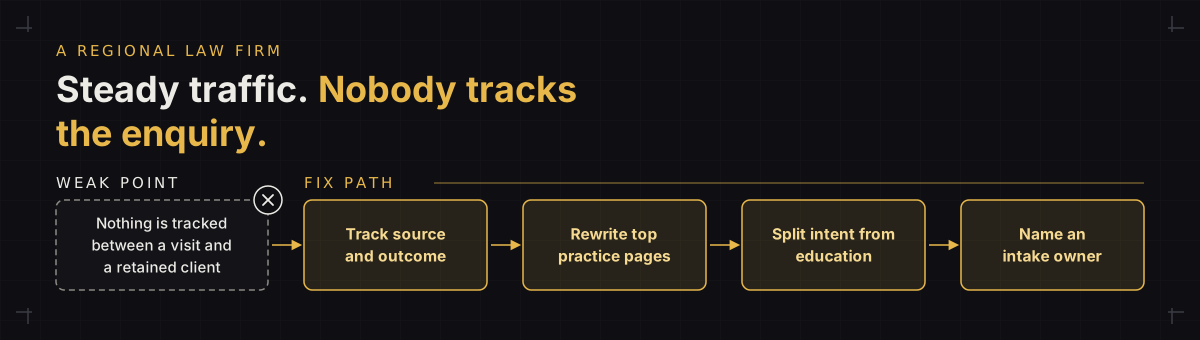
Nobody has tracked what happens between a visit and a retained client. Phone calls are not attributed to a source, form enquiries and calls are counted separately, and intake is not measured, so the firm cannot tell whether the problem is traffic quality, the page, or how enquiries are handled once they arrive.
Recommended Approach
- Set up call tracking and form tracking so every enquiry carries a source, and have intake record the outcome of each one (enquiry, consultation booked, retained) in one simple sheet or CRM view
- Rewrite the three to five highest-traffic practice-area pages around the client's situation and next step: the problem in plain language, what happens after contact, a visible phone number, and a short form instead of a generic contact page
- Separate high-intent pages (a practice area in a specific city) from educational content, and give educational readers a softer next step such as a checklist or a short guide in place of a hard 'book now' push
- Fix the intake side: name one person who owns new enquiries, set a response-time standard including after hours, and test it by sending in mystery enquiries, because people with a legal problem usually contact several firms at once
- Check the advertising and solicitation rules of the relevant bar or regulator before publishing testimonials, results or comparative claims, so the conversion work does not create a compliance problem
What It Aims to Achieve
Aims to give the firm a clear picture of where enquiries are being lost, so it can work on the consultation rate from traffic it already has before paying for more, plus a measurement setup that shows which pages and channels produce clients.