The Pattern
A site that has published steadily for a year has service pages, guides and posts that overlap on the same search terms. In Search Console, a query shows one URL one week and another the next, and positions bounce instead of climbing.
What Teams Usually Try First
Teams usually publish yet another post on the topic, retitle whichever page is currently ranking, or build links to the page that happens to be ahead that week.
Where It Stalls
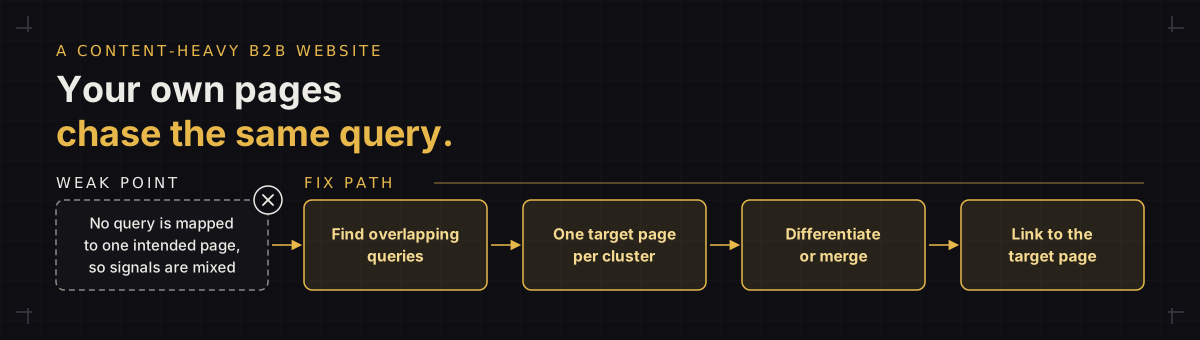
Nobody mapped each important query to one intended page. Titles, headings and internal links send mixed signals, and every edit resets how the pages are evaluated, which makes the swapping look random.
Recommended Approach
- Export query and page pairs from Search Console and list the queries where two or more URLs appear; these are the cannibalization candidates
- Decide a single target page for each cluster: the commercial query goes to the service page, the how-to or explainer query goes to the guide
- Differentiate the page that should lose: retarget its title and heading to a distinct intent, or merge it into the stronger page with a permanent redirect when the two are thin and similar
- Link from the supporting page to the target page with a descriptive anchor, high in the body, and keep the sitewide navigation consistent with the same choice
- Then freeze titles and headings on those pages for several weeks and judge the result on 28-day figures, not daily position, since constant tweaking is itself a cause of instability
What It Aims to Achieve
Aims to give each query one clear page, a quieter pattern of ranking changes, and a measurement habit that separates real movement from noise, so ranking strength can build on a single URL.