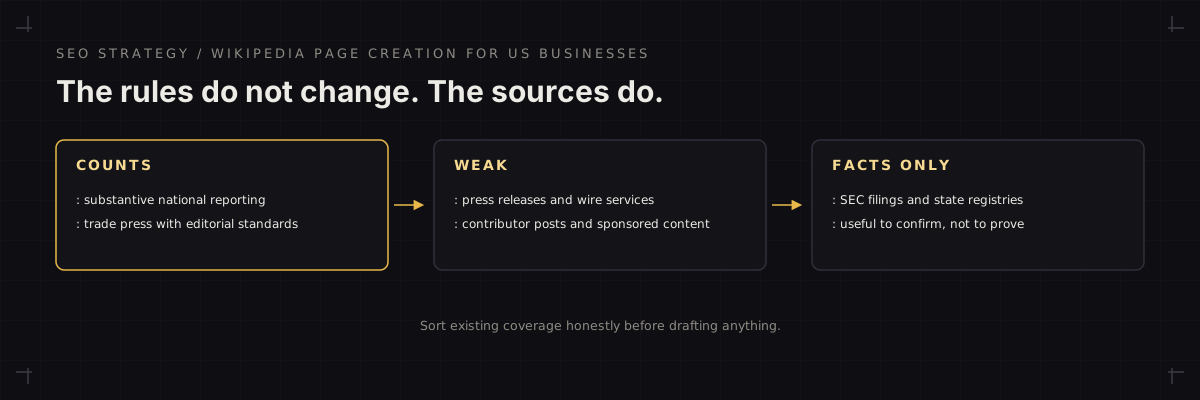
Short answer: Wikipedia's notability guidelines do not change for a US company or founder. What changes is which American sources a reviewer will recognize as genuinely independent: substantive reporting from national outlets and trade press with editorial standards generally counts, while press releases, wire distribution, contributor-written posts and sponsored content generally do not.
1. What stays the same
The general notability guideline (significant independent coverage), NCORP for companies and the biography guideline for individuals apply identically in every country. A US subject does not get an easier or harder bar by default. The same policies on conflict of interest and paid editing apply as well, and paid contributors must disclose under the Wikimedia Terms of Use wherever they are based.
2. US-specific sourcing patterns worth knowing
- National newspapers and broadcasters. In-depth reporting from major national outlets is generally strong sourcing when it is substantive rather than a passing mention.
- Wire services. Original reporting by news agencies can count. Press-release distribution services such as PR Newswire, Business Wire and GlobeNewswire publish company-submitted text and do not.
- Trade and industry press. Publications with real editorial standards can carry weight, though reviewers look at the specific article and the outlet's record.
- Local business journals. Helpful as supporting coverage but usually weaker alone for a case that needs national significance.
- Primary records. SEC filings, state business registries and patent records confirm facts. They carry no notability weight by themselves.
3. Common US-specific pitfalls
Many American drafts lean on content that looks like press but is not independent: contributor-written articles on large business sites, paid membership columns, sponsored content, "as seen in" packages and syndicated releases. Reviewers recognize these patterns and discount them, and staff-written reporting on the same site is judged separately from contributor posts. A case built mostly on this kind of material tends not to hold up.
| Source type | Typical weight |
|---|---|
| Substantive national reporting | Strong |
| Trade press with editorial standards | Moderate to strong |
| Local business journal | Moderate, weaker alone |
| Contributor posts, sponsored content | Weak to none |
| Press releases and wire distribution | None |
| SEC filings, state registries | None, factual confirmation only |
4. The practical first step
Before drafting, sort every existing mention of the company or founder into those categories honestly. A pile of releases and contributor posts can feel like substantial coverage while adding almost nothing to a notability case. The result is a realistic view of whether independent coverage exists yet, and if it does not, what would need to happen first. No one can promise a page will be accepted, since that decision rests with Wikipedia's volunteer editors.
For the mechanics this sourcing feeds into, read the NCORP guidelines guide, the paid editing disclosure rules and the UK version of this guide. My Wikipedia page creation service for US businesses and the general Wikipedia page creation service apply depending on where you are in this process.
To sort your existing coverage into these categories, use the free Wikipedia notability checker.
FAQ
Do SEC filings help establish Wikipedia notability?
They help confirm basic facts such as leadership and ownership, but they are primary documents and do not contribute to notability on their own, because notability rests on significant coverage by independent reliable sources.
- Filings confirm facts such as leadership and ownership.
- Notability needs independent secondary coverage.
Does a press release or wire distribution count as a source?
No. Distribution services publish what the company submits, so reviewers treat them as non-independent. Coverage a journalist wrote after their own research can count, even when a release prompted it.
- Wire distribution is treated as non-independent.
- Independent journalism prompted by a release can still count.