The Pattern
A D2C brand raises its Google Ads budget on Shopping and Performance Max campaigns. Platform-reported return looks acceptable or mediocre, yet profit does not improve, and a large share of the reported conversions come from branded searches and existing customers.
What Teams Usually Try First
More budget, a switch to automated bidding, extra campaigns, and ad hoc pausing of products that looked weak on a single week of data.
Where It Stalls
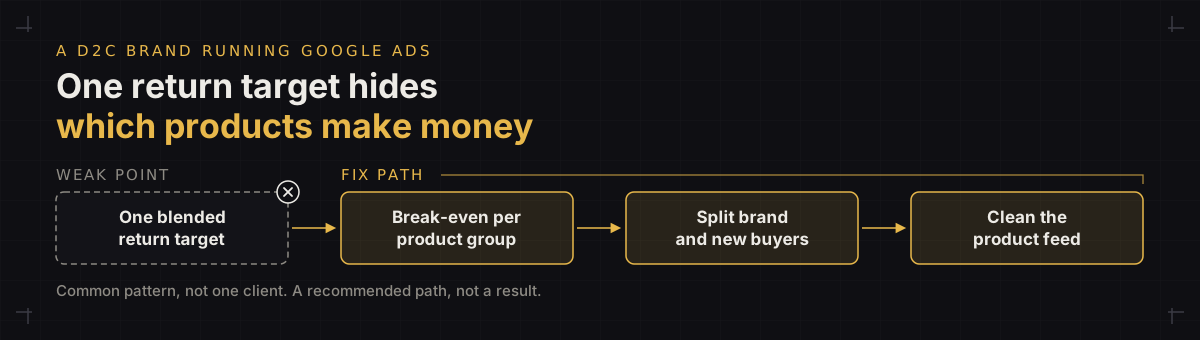
Campaigns are run against one blended return target with no link to product margin, no split between brand and non-brand demand, and no view of new versus returning customers. Weak product feed data limits what the campaigns can show, and nobody has checked that the conversion values being optimized are correct.
Recommended Approach
- Work out the break-even return per product group from real margins (not average margin), and use it as the floor each campaign must clear
- Separate brand from non-brand and new from returning customers in reporting, and use new-customer goals and brand exclusions where the platform supports them
- Clean the product feed (titles, identifiers, categories, images and availability), since feed quality decides what Shopping and Performance Max can show and to whom
- Structure campaigns around margin tiers with a target for each tier, in place of one account-wide target that treats high and low margin products the same
- Verify conversion tracking before trusting any return figure: duplicate purchases, the value being passed (tax and shipping), and consent-related data loss
What It Aims to Achieve
Aims to direct spend by margin and by new-customer value rather than by blended platform return, with numbers the team can trust.