The Pattern
A D2C brand grows its email list through pop-ups and first-order discounts, and sends most campaigns to everyone on it. The list keeps growing, but opens and clicks decline and email revenue does not follow the list size.
What Teams Usually Try First
Typically more campaigns, deeper discounts, subject-line tests and larger sends, all of which treat the list as one audience.
Where It Stalls
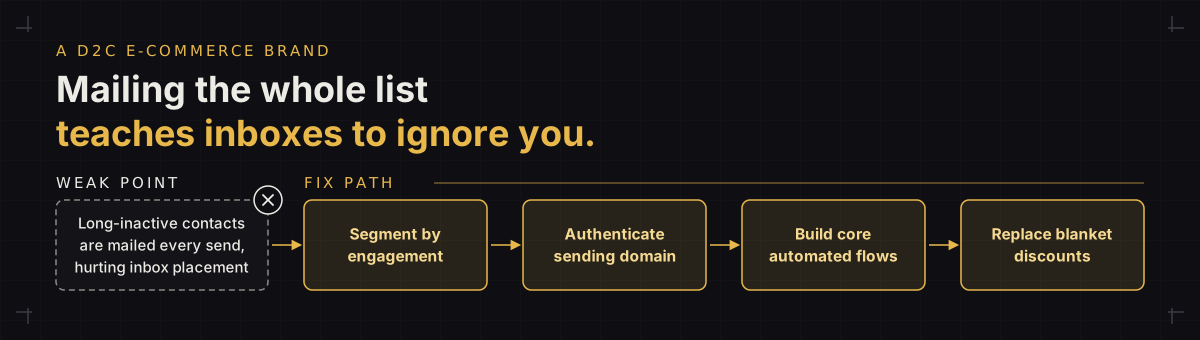
Mailing the long-inactive part of the list lowers engagement and raises complaints, which hurts inbox placement for everyone, including the best customers. Meanwhile the automated flows that earn the most per send (welcome, abandoned cart, post-purchase) are missing, thin or left on defaults, and opens are used as a success measure even though privacy features in mail apps inflate them.
Recommended Approach
- Segment by engagement recency and stop sending routine campaigns to the long-inactive segment; run one clear re-engagement sequence, then suppress those who do not respond
- Authenticate the sending domain (SPF, DKIM and DMARC), provide one-click unsubscribe, and watch bounce and complaint rates, since mailbox providers publish thresholds for bulk senders
- Build the core automated flows first (welcome, browse and cart abandonment, post-purchase, replenishment or win-back) and report them separately from one-off campaigns
- Replace blanket discounts with offers by segment: a first-purchase incentive for new subscribers, and product, early-access or loyalty hooks for existing customers
- Measure revenue per recipient by segment and by flow versus campaign, and treat open rate as a rough signal only
What It Aims to Achieve
Aims to give the brand a smaller, healthier send list, flows that carry more of the revenue, and reporting that shows which segments and messages earn money, with the intent of supporting inbox placement and revenue per email without relying on list growth.